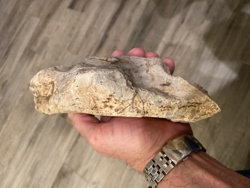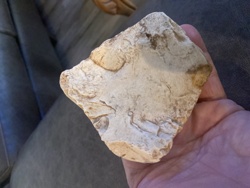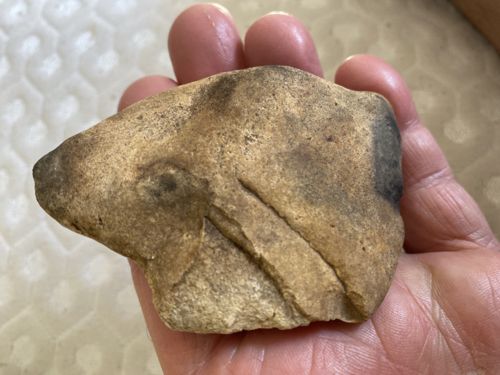
Paleolithic Biface Chert Tool
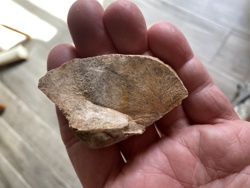
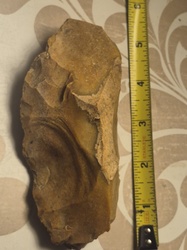
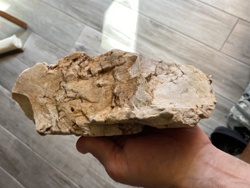
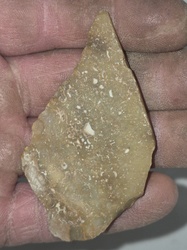
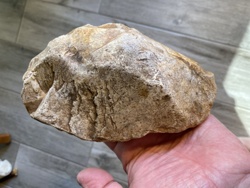
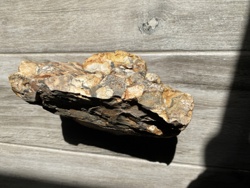
This artifact is a bifacial stone tool, specifically a hand-held scraper or small axe head, measuring approximately 3 inches in length by 1.75 inches in width. It is crafted from a tan-colored, fine-grained chert material consistent with the lithic resources found in the Oklahoma region. The tool exhibits characteristic percussion flaking along its edges to create a functional cutting or scraping surface. Its shape is roughly ovoid or teardrop-shaped, tapering to a rounded point. A significant portion of the surface shows a heavy, weathered patina with yellowish-tan mineral staining, indicating considerable age and long-term exposure to the elements or burial in soil. Notable features include visible flake scars and a prominent ridge where material was struck away to thin the piece. There are also darker mineral inclusions or possibly manganese spotting on the surface. The piece shows edge wear and minor step fractures, which are consistent with prehistoric utility and subsequent geological movement. While there are no modern maker's marks, the craftsmanship demonstrates deliberate human modification rather than natural breakage, likely dating to the Paleo-Indian or Archaic period of North America.
AI-Generated Appraisal Disclaimer
Estimated Value
$45.00 - $85.00
Basic Information
Category
Archeological Artifacts
Appraised On
February 24, 2026
Estimated Value
$45.00 - $85.00
Additional Details Provided By Owner
User Provided Information
Paleolithic chert Bi face scraper or axe head tool found in Guthrie OK measuring 3" x 1.75
Item Description
This artifact is a bifacial stone tool, specifically a hand-held scraper or small axe head, measuring approximately 3 inches in length by 1.75 inches in width. It is crafted from a tan-colored, fine-grained chert material consistent with the lithic resources found in the Oklahoma region. The tool exhibits characteristic percussion flaking along its edges to create a functional cutting or scraping surface. Its shape is roughly ovoid or teardrop-shaped, tapering to a rounded point. A significant portion of the surface shows a heavy, weathered patina with yellowish-tan mineral staining, indicating considerable age and long-term exposure to the elements or burial in soil. Notable features include visible flake scars and a prominent ridge where material was struck away to thin the piece. There are also darker mineral inclusions or possibly manganese spotting on the surface. The piece shows edge wear and minor step fractures, which are consistent with prehistoric utility and subsequent geological movement. While there are no modern maker's marks, the craftsmanship demonstrates deliberate human modification rather than natural breakage, likely dating to the Paleo-Indian or Archaic period of North America.
Get Your Items Appraised
Instant estimates of your treasures with AI-powered instant appraisals