AI identification & appraisal estimate

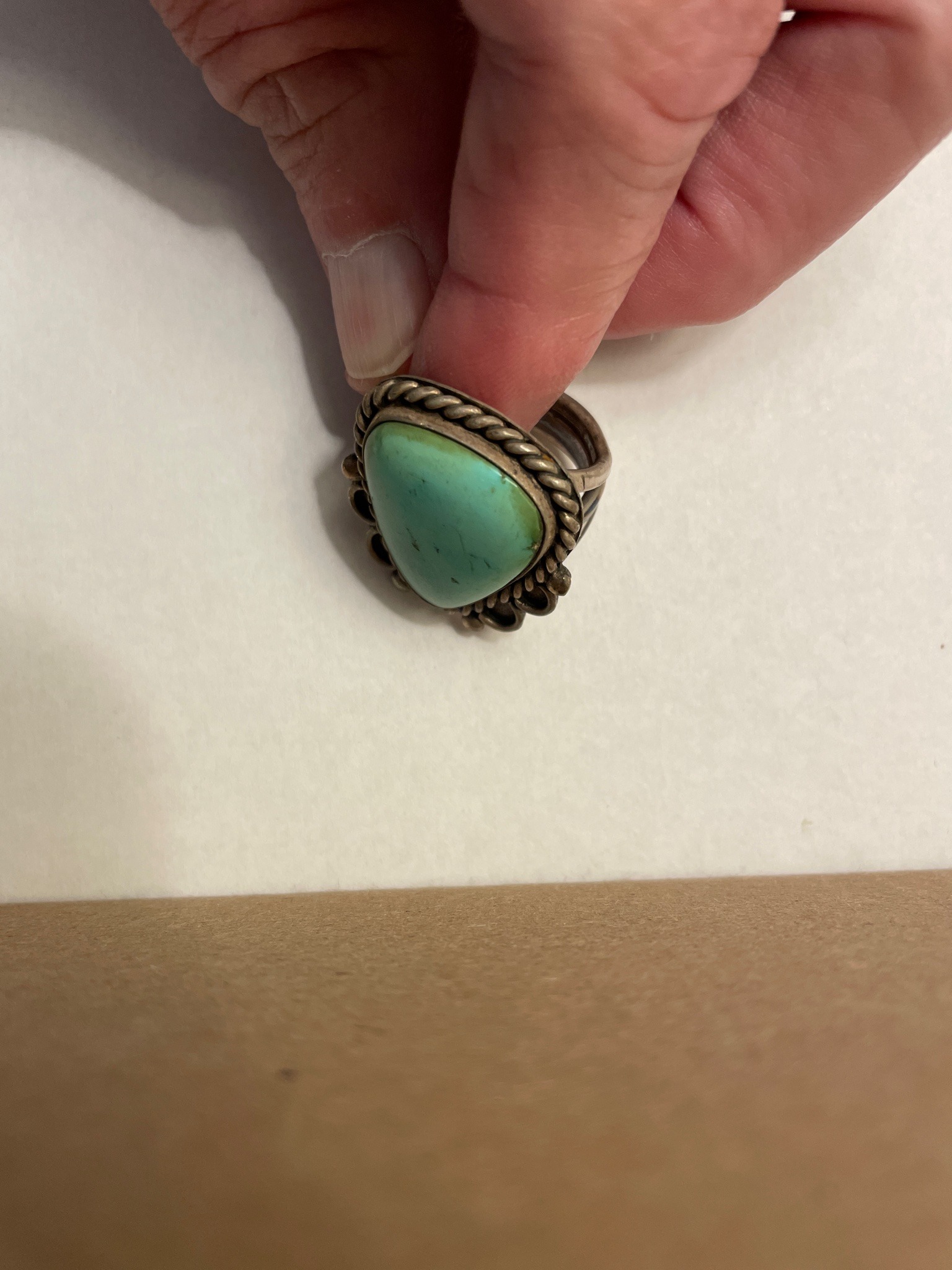
Southwestern style sterling silver and turquoise ring

Submitted photo of Southwestern style sterling silver and turquoise ring
Photo submitted by the user — not generated by AI

AI Estimated Value

Not an official valuation

$150-$300

AI estimate as of September 14, 2026 · verify with a professional before acting

AI-Generated · Verify before acting

Everything on this page is generated by AI for informational purposes only. AI can make mistakes — the AI may misidentify items or misattribute them (artist, maker, brand, designer, origin, era). This is not an official valuation and should not be used for insurance, sale, tax, estate, legal, or lending purposes — or any decision requiring a certified appraisal. It is not an authoritative claim about any person, brand, or rights holder — do not share or rely on it as a factual statement about a third party. Always consult qualified professionals before making financial decisions.

Read the full disclaimer

AI Item Analysis

This handcrafted finger ring displays distinct physical characteristics commonly associated with Southwestern Native American jewelry traditions, specifically Diné (Navajo) or Zuni silversmithing techniques. The item features a prominent, triangular cut of natural green-to-blue matrix turquoise securely bezel-set in polished metal that is visibly tarnished, indicating a substantial silver content likely consistent with sterling silver. The central gemstone is framed by a heavily textured twisted wire rope border, which is further embellished by small applied silver droplets or rosettes along the lower outer edge. The band appears to be constructed from split wire or multiple thin shanks soldered together, showing typical signs of age, wear, and surface patina. There are no visible maker's marks, hallmarks, or stamps clearly legible in this particular photograph, meaning the attribution rests purely upon the visual design elements, bezel setting, twisted wire work, and materials used. The stylistic presentation suggests a mid-to-late 20th-century origin, though age cannot be precisely determined without physical inspection, and the item remains unauthenticated. The overall craftsmanship reflects traditional silversmithing methods, including hand-twisting wire and bezel manipulation around an irregular stone shape.
AI Appraisal Report

Based on what I can see in the photograph, this handcrafted finger ring exhibits visual characteristics commonly associated with mid-to-late 20th-century Southwestern Native American silversmithing, specifically Diné or Zuni traditions. The item features a triangular natural turquoise stone with a matrix, a twisted wire rope bezel setting, applied silver droplets, and a split wire band with noticeable surface patina and tarnish consistent with sterling silver. However, I can't verify the metal purity or stone treatment from a photo alone, and there are no legible maker's marks or hallmarks visible to evaluate authorship. Because visual attributes can be replicated, I must treat the stylistic attribution merely as a working hypothesis rather than a confirmed identification. Assuming the attribution to traditional Southwestern craftsmanship is correct, similar vintage sterling silver and turquoise rings typically trade in the $150 to $300 range in the current secondary market, driven by steady collector demand for vintage regional jewelry. If physical inspection reveals the piece to be a modern reproduction, replica, or made simply in the style of Southwestern jewelry without actual heritage fabrication, the market value would likely decrease significantly, closer to $50 to $100. To fully confirm the authenticity, material composition, and precise cultural origin, an in-person examination by a qualified expert appraiser, along with potential scientific testing for metal content and stone matrix evaluation, would be required.

Keep exploring

More jewelry appraisals

Get your items appraised

Instant AI-powered appraisal estimates from a photo

Browse More Appraisals