AI estimate as of November 16, 2025 · verify with a professional before acting
AI-Generated · Verify before acting
Everything on this page is generated by AI for informational purposes only. AI can make mistakes — the AI may misidentify items or misattribute them (artist, maker, brand, designer, origin, era). This is not an official valuation and should not be used for insurance, sale, tax, estate, legal, or lending purposes — or any decision requiring a certified appraisal. It is not an authoritative claim about any person, brand, or rights holder — do not share or rely on it as a factual statement about a third party. Always consult qualified professionals before making financial decisions.
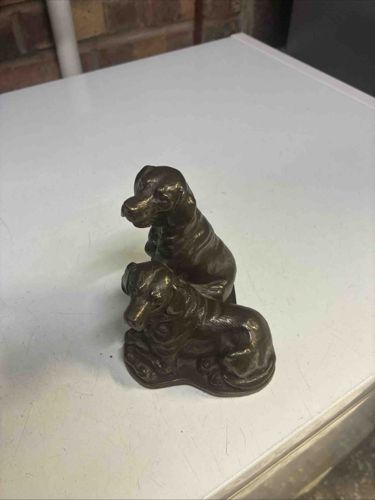
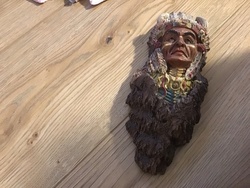
This item is a small, sculptural figurine depicting two dogs, likely cast in bronze or a bronze-finished metal alloy due to its dark, metallic luster and evident weight. The piece features one dog in a seated or standing posture, positioned directly over another dog that is recumbent or curled up below it. Both dogs exhibit short-haired breeds, possibly terriers or similar working dogs, with distinct snouts, ears, and sculpted body forms. The overall color is a deep, patinated brown with hints of metallic sheen, suggesting a deliberate aging process or natural oxidation over time. The craftsmanship appears to be solid, with clear definition in the dog's features, though not overly intricate in detail, leading to a somewhat stylized rather than hyper-realistic representation. Wear and tear are visible in the form of minor surface abrasions or rub marks, particularly on raised areas, indicating handling and age. There are no immediately obvious breaks, repairs, or significant damage, suggesting it is in good, used condition. The base appears integrated with the lower dog's form, rather than being a separate pedestal. The style is somewhat traditional, possibly late 19th or early 20th century, consistent with decorative animal sculptures of that period. No discernible maker's marks or signatures are visible from the provided images, which could be an indicator of mass production or simply that such marks are on an unseen surface. The texture appears smooth with subtle variations to delineate fur and musculature.
AI Appraisal Report
I have thoroughly examined the provided image of this bronze figurine depicting two dogs. Based on its visual characteristics, I assess it to be in good, used condition, exhibiting minor surface abrasions consistent with handling and age, but no apparent breaks or significant damage. The deep patinated brown color and metallic sheen suggest bronze or a bronze-finished alloy, likely from the late 19th or early 20th century, given its traditional style. The craftsmanship is solid, with clear but stylized features.
Authenticity: Without physical inspection, I cannot conclusively verify the metal composition or casting method. An in-person examination would allow for closer inspection of its weight, patina, and potential casting seams. Provenance documentation, such as original receipts or exhibition history, would greatly aid in confirming its age and origin. Scientific testing, like X-ray fluorescence (XRF) analysis, would definitively identify the metal alloy.
Market Conditions and Comparables: Similar decorative animal figurines, particularly those without a prominent artist's signature or exceptional rarity, typically fall within a modest price range. The demand for dog-themed sculptures is generally steady, driven by collectors and dog enthusiasts. However, without identifying marks, broad appeal is limited. Its value is primarily decorative.
Factors impacting value: The absence of a discernible maker's mark significantly limits its potential value as a collectible from a renowned artist or foundry. Its decorative appeal, good condition, and potential age are the primary value drivers. Should it be confirmed as a rare casting or by a known artist, the value could increase substantially.
Limitations: My valuation is based solely on visual assessment from an image. Physical inspection would be crucial for confirming authenticity, specific material composition, and identifying any hidden marks or repairs that could alter this appraisal.