AI Appraisal Estimate

AI-generated estimates · not official valuations

From the user

What was submitted

Photo and notes provided by the user — not generated by AI

Submitted item photo
Submitted photo · May 27, 2026

User's notes

No additional notes provided.

AI analysis below

AI appraisal

AI analysis & estimate

AI-Generated · Verify before acting

Everything below is generated by AI for informational purposes only. AI can make mistakes — the AI may misidentify items or misattribute them (artist, maker, brand, designer, origin, era). This is not an official valuation and should not be used for insurance, sale, tax, estate, legal, or lending purposes — or any decision requiring a certified appraisal. It is not an authoritative claim about any person, brand, or rights holder — do not share or rely on it as a factual statement about a third party. Always consult qualified professionals before making financial decisions.

Read the full disclaimer

AI Identification

·Not independently authenticated·Verify before acting

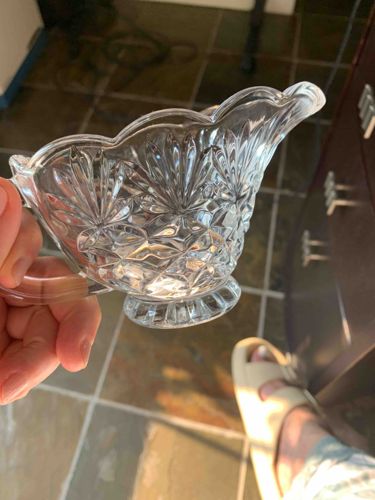
Pressed Glass Creamer/Gravy Boat

Tableware/Glassware

AI Estimated Value

·Not an official valuation·Verify before acting

$20-30

As of May 27, 2026

AI Item Analysis

·AI can make mistakes·Verify before acting
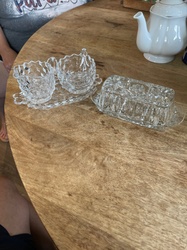
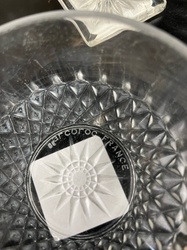
This item is a clear glass creamer or small gravy boat, characterized by its ornate pressed glass pattern. It features a decorative, scalloped rim, which adds a delicate touch to its overall aesthetic. The body of the creamer is adorned with a prominent pattern that appears to be a variation of the 'Thumbprint' or 'Daisy and Button' pattern, commonly seen in pressed glass. This particular pattern is composed of a series of radiating starburst or fan-like motifs alternating with diamond-cut or hobnail-like elements, creating a textured and light-refracting surface. The handle is an applied glass loop, smoothly integrated into the body, offering a comfortable grip. The base is sturdy and circular, with a slightly flared foot that provides stability, also featuring a continuation of the pressed glass pattern. While it's difficult to determine exact dimensions without a scale, it appears to be a standard size for a creamer, likely holding between 4-8 ounces. The glass is clear and exhibits good transparency, indicative of quality glassmaking. There are no immediately visible chips, cracks, or significant damage, suggesting it is in good vintage condition. Minor wear consistent with age and use, such as light scratching or subtle hazing, may be present but is not apparent from the image. No specific manufacturer's marks or signatures are visible. Based on the style and typical patterns, this piece likely dates from the late 19th to mid-20th century, a period when pressed glass was widely popular for its affordability and decorative appeal. The craftsmanship, though mass-produced, shows a good level of detail for pressed glass, allowing for the intricate patterns to be clearly defined.
AI Appraisal Report

·AI can make mistakes·Verify before acting
Upon visual examination of the provided images, this pressed glass creamer, likely also usable as a small gravy boat, appears to be a fine example from the late 19th or early 20th century. The pattern, a variant possibly related to 'Daisy and Button' or similar widely produced EAPG (Early American Pattern Glass) designs, is well-defined and intricate. The glass presents with excellent clarity and shows no obvious signs of major damage such as chips or cracks, which I assess as very good to excellent vintage condition. The market for common EAPG patterns is generally stable but modest. While intricate, this specific pattern does not immediately suggest a rare or highly sought-after design from a major manufacturer like McKee or Hobbs, Brockunier & Co. without a definitive pattern identification, which can be challenging from photos alone. Similar unmarked pressed glass creamers in comparable condition are readily available on the market, with prices typically ranging from $15 to $35. The primary value driver for this piece is its decorative appeal and condition rather than rarity. Full authentication would require in-person examination to identify any maker's marks, feel for glass quality, check for wear under magnification, and confirm the pattern against established EAPG reference guides. Without physical inspection or provenance, I cannot definitively attribute it to a specific maker or rule out a later reproduction, though its style is consistent with the period.

Get your items appraised

Instant estimates of your treasures with AI-powered appraisals

Browse More Appraisals