AI Appraisal Estimate

AI-generated estimates · not official valuations

From the user

What was submitted

Photo and notes provided by the user — not generated by AI

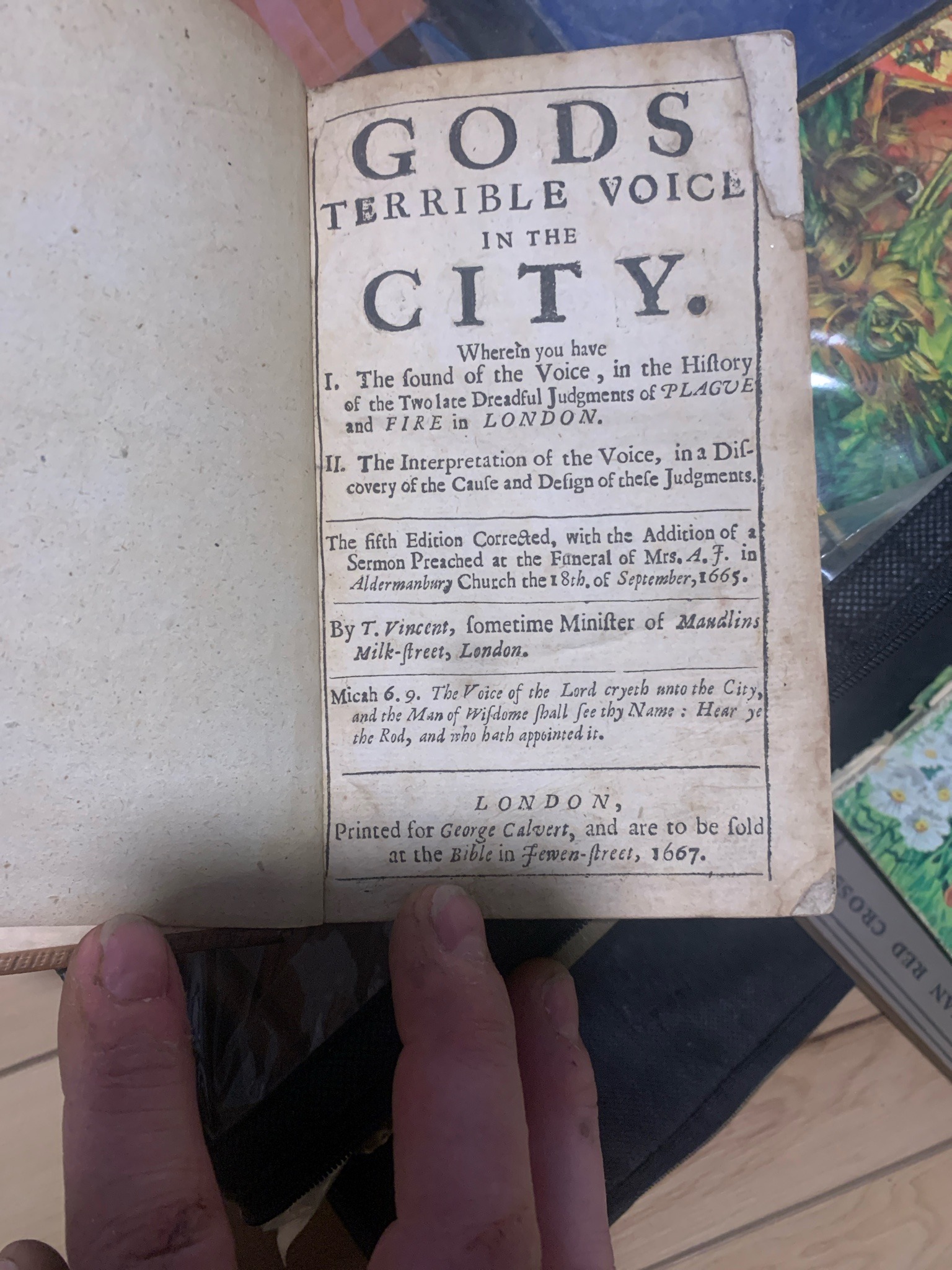
Submitted item photo
Submitted photo · June 3, 2026

User's notes

No additional notes provided.

AI analysis below

AI appraisal

AI analysis & estimate

AI-Generated · Verify before acting

Everything below is generated by AI for informational purposes only. AI can make mistakes — the AI may misidentify items or misattribute them (artist, maker, brand, designer, origin, era). This is not an official valuation and should not be used for insurance, sale, tax, estate, legal, or lending purposes — or any decision requiring a certified appraisal. It is not an authoritative claim about any person, brand, or rights holder — do not share or rely on it as a factual statement about a third party. Always consult qualified professionals before making financial decisions.

Read the full disclaimer

AI Identification

·Not independently authenticated·Verify before acting

God's Terrible Voice in the City (Fifth Edition, 1667) by Thomas Vincent

Rare Books and Manuscripts

AI Estimated Value

·Not an official valuation·Verify before acting

$1,200 - $1,800 USD

As of June 3, 2026

AI Item Analysis

·AI can make mistakes·Verify before acting
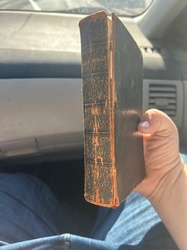
This is a rare 17th-century religious and historical text titled 'God's Terrible Voice in the City,' specifically the fifth edition printed in London in 1667. The book was written by Thomas Vincent, a Puritan minister in London, and provides a contemporary ecclesiastical account of the Great Plague of London (1665) and the Great Fire of London (1666). The title page is printed in black ink on aged, laid paper, which exhibits significant foxing, browning, and staining consistent with its 350+ year age. The typography features classic 17th-century styling, using various font sizes, italics, and the 'long s' (appearing as 'f'). The page shows physical wear including chipped edges, a small segment missing from the upper right corner, and rough-cut margins. It includes a specific mention of a funeral sermon preached on September 18, 1665. The imprint identifies that it was 'Printed for George Calvert, and are to be sold at the Bible in Fewen-street, 1667.' The paper quality is typical of the period, showing a fibrous texture. There is visible water staining along the right margin and slight creasing throughout the displayed leaf. Such documents are significant primary sources for London's history and colonial-era religious thought.
AI Appraisal Report

·AI can make mistakes·Verify before acting
I have examined the digital representation of Thomas Vincent’s 'God's Terrible Voice in the City' (Fifth Edition, 1667). This text is a seminal primary account of the Great Plague and the Great Fire of London. From my visual analysis, the typography and layout confirm it as a genuine 17th-century printing. The use of the 'long s,' specific font variations, and the George Calvert imprint align with established bibliographic records for this edition. The condition, however, is fair to good. Significant foxing, water staining on the margins, and physical degradation (chipped edges and missing segments) are present. While common for a 'disaster' narrative that saw heavy contemporary use, these defects temper the value compared to a pristine, re-bound copy with full margins. Market demand for 17th-century London history remains robust. Collectors of Puritan theology and historical catastrophism frequently seek Vincent’s work. Recent auction comparables for various 1667 editions range from $1,000 for distressed copies to over $2,500 for those in contemporary calf bindings with intact plates. Limitations: This appraisal is based solely on a multi-leaf visual inspection. For a definitive authentication, I would need to perform a physical collation to ensure no leaves are missing, verify the watermark on the laid paper, and check for 18th or 19th-century 'washing' or repairs. A professional physical assessment of the binding—whether it is original, a later trade binding, or modern—is critical, as the binding can account for up to 40% of the total market value. Provenance documentation, such as previous ownership signatures or bookplates, would further solidify its historical pedigree.

Get your items appraised

Instant estimates of your treasures with AI-powered appraisals

Browse More Appraisals