AI identification & appraisal estimate

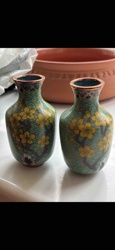
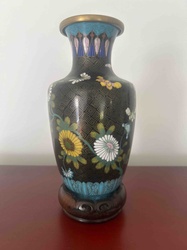
Japanese Cloisonné Enamel Chrysanthemum Vase

Submitted photo of Japanese Cloisonné Enamel Chrysanthemum Vase
Photo submitted by the user — not generated by AI

AI Estimated Value

Not an official valuation

$1,800 - $2,500

AI estimate as of February 26, 2026 · verify with a professional before acting

AI-Generated · Verify before acting

Everything on this page is generated by AI for informational purposes only. AI can make mistakes — the AI may misidentify items or misattribute them (artist, maker, brand, designer, origin, era). This is not an official valuation and should not be used for insurance, sale, tax, estate, legal, or lending purposes — or any decision requiring a certified appraisal. It is not an authoritative claim about any person, brand, or rights holder — do not share or rely on it as a factual statement about a third party. Always consult qualified professionals before making financial decisions.

Read the full disclaimer

AI Item Analysis

This is a tall, slender ovoid-shaped Japanese cloisonné enamel vase, likely dating from the Meiji Period (late 19th to early 20th century). The vase features a light celadon or pale grey ground, which serves as a canvas for a sophisticated floral arrangement. The central motif consists of large, multi-petaled chrysanthemums (kiku) rendered in shades of pink, yellow, and white. These botanical elements are executed with delicate silver or copper wire 'cloisons' that separate the vibrant enamel colors. The foliage is depicted in varying tones of green and dark grey, providing a naturalistic contrast. The construction involves an enamel coating over a metal (likely copper) body, finished with a silver-toned metal rim and base. Notable for its high level of craftsmanship, the piece exhibits the detailed shading techniques (musen-shippo style characteristics) typical of fine Japanese metalwork. The condition appears stable, though minor surface scratches and faint oxidation on the exposed metal rims are visible, consistent with an antique of this age. There are no obvious signs of major pitting or bruising in the enamel, suggesting a well-preserved piece. The craftsmanship reflects the peak of the Japanese Golden Age of cloisonné, characterized by intricate wire-work and a harmonious color palette.
AI Appraisal Report

I have conducted a visual analysis of this Japanese Meiji-period cloisonné enamel vase. Based on the sophisticated use of silver wirework (yusen-shippo) and the transition Toward realistic floral rendering, the piece exemplifies the technical mastery of the late 19th-century Japanese 'Golden Age.' The execution of the chrysanthemum petals exhibits high-level 'shading' techniques, suggesting the influence of notable Kyoto or Nagoya workshops. The condition appears remarkably stable; the absence of visible 'bruising' or 'pitting' significantly bolsters its marketability. Comparable auction results for vases of this height and palette typically fall within the $1,500–$3,000 range, depending on the presence of a signature (such as Namikawa or Ando). The celadon ground is currently in high demand among collectors of decorative arts for its minimalist aesthetic. However, a definitive valuation is limited by the medium. Without a physical inspection, I cannot confirm the presence of a workshop seal on the base or examine the interior for stress cracks. A full authentication would require high-resolution imagery of the base, an ultraviolet light inspection to detect professional restorations to the enamel surface, and physical verification of the metal rims to confirm if they are solid silver or silver-plated. Provenance documentation, such as exhibition history or original purchase records, would further solidify its rarity and investment potential.

Keep exploring

More asian antiques / decorative arts appraisals

Get your items appraised

Instant AI-powered appraisal estimates from a photo

Browse More Appraisals