AI estimate as of August 8, 2025 · verify with a professional before acting
AI-Generated · Verify before acting
Everything on this page is generated by AI for informational purposes only. AI can make mistakes — the AI may misidentify items or misattribute them (artist, maker, brand, designer, origin, era). This is not an official valuation and should not be used for insurance, sale, tax, estate, legal, or lending purposes — or any decision requiring a certified appraisal. It is not an authoritative claim about any person, brand, or rights holder — do not share or rely on it as a factual statement about a third party. Always consult qualified professionals before making financial decisions.
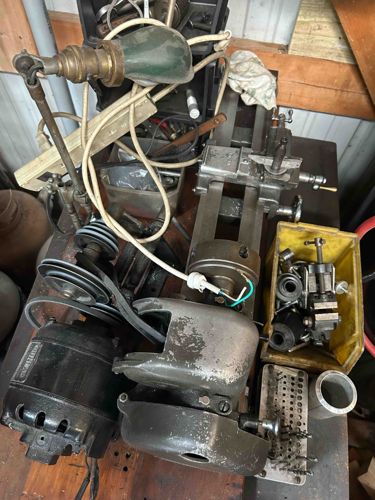
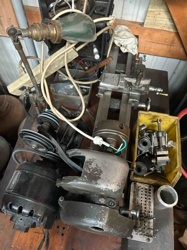
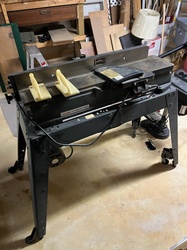
This assembly appears to be various components of a vintage tabletop or benchtop metalworking lathe, likely including parts of the headstock, tailstock, carriage, and possibly a drive system. The primary visible component is a heavily constructed, gray-painted cast iron or steel frame, which forms the bed and possibly part of the headstock. It shows significant wear, including chipped paint, scratches, and surface grime, indicating prolonged use and storage in a workshop environment. A dark gray or black electric motor, possibly an old 'Westinghouse' model given the partially visible label, is present with a belt and pulleys attached, suggesting an external drive mechanism for the lathe. The motor also exhibits wear, dust, and minor surface oxidation. A loose, vintage industrial-style lamp with a green-painted metal shade and a brass-colored base is also part of the collection, featuring an old, brittle-looking white electrical cord and a standard lightbulb socket. Various smaller metal components, gears, and potential tooling are loosely placed in a yellow plastic bin and on a perforated metal plate, indicating ancillary parts or accessories for the lathe. The overall condition suggests that the item is disassembled or in need of substantial restoration. The visible patina and design elements, such as the heavy castings and exposed electrical components, point to a manufacturing period likely in the mid-20th century, possibly from the 1940s to 1960s. The craftsmanship appears robust, typical of industrial-grade machinery of that era, built for durability rather than aesthetic refinement. No clear maker's marks or serial numbers are discernible on the main lathe components from the provided view, though the motor might yield more information if cleaned.
AI Appraisal Report
I have carefully examined the provided image of this disassembled vintage metalworking lathe components. The primary visible component is a heavily constructed, gray-painted cast iron or steel frame, likely forming the bed and part of the headstock. Its condition indicates significant wear, including chipped paint, scratches, and surface grime, typical of prolonged workshop use and storage. The presence of a dark gray electric motor, possibly an old 'Westinghouse' model as suggested by the partially visible label, complete with a belt and pulleys, points to an external drive system. The motor shows wear, dust, and minor oxidation. A loose vintage industrial-style lamp with a green-painted metal shade and a brass-colored base, featuring an old, brittle electrical cord, is also noted. Various smaller metal components, gears, and potential tooling are visible in a yellow plastic bin and on a perforated metal plate.
Authenticity: Based on the robust design, heavy castings, and visible wear, the components appear authentically vintage, likely mid-20th century (1940s-1960s). The craftsmanship aligns with industrial machinery of that era, built for durability. However, definitive authentication of specific manufacturers or models is limited without a physical inspection for clear maker's marks or serial numbers. Provenance documentation would significantly aid authenticity and value assessment.
Market Conditions & Demand: There's a niche but consistent demand for vintage metalworking lathes, particularly for hobbyists, restorers, and small workshops. However, the disassembled nature and incomplete appearance (missing many smaller parts, full extent of wear unknown) significantly impact its immediate usability and thus its value.
Factors Impacting Value: The disassembled state, evident wear and grime, and the unknown completeness of the components are major depreciating factors. The potential for missing critical parts for reassembly is high. The vintage motor adds some value, especially if functional, and the lamp is a nice accessory. Restoration will require considerable time and expense.
Limitations: My assessment is based solely on the provided image. A physical inspection is crucial to verify the completeness of parts, assess the internal condition of components (e.g., bearings, gears), test the motor, and identify any hidden damage or missing critical pieces. Without these, the full extent of a restoration project cannot be accurately valued. Clear maker's marks would also allow for better market comparison.