AI Appraisal Estimate

AI-generated estimates · not official valuations

From the user

What was submitted

Photo and notes provided by the user — not generated by AI

Submitted item photo
Submitted photo · June 18, 2026

User's notes

Kupfer

AI analysis below

AI appraisal

AI analysis & estimate

AI-Generated · Verify before acting

Everything below is generated by AI for informational purposes only. AI can make mistakes — the AI may misidentify items or misattribute them (artist, maker, brand, designer, origin, era). This is not an official valuation and should not be used for insurance, sale, tax, estate, legal, or lending purposes — or any decision requiring a certified appraisal. It is not an authoritative claim about any person, brand, or rights holder — do not share or rely on it as a factual statement about a third party. Always consult qualified professionals before making financial decisions.

Note

This analysis also relies on unverified notes provided by the user, which may be incomplete or inaccurate and could affect the result.

Read the full disclaimer

AI Identification

·Not independently authenticated·Verify before acting

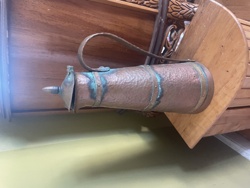
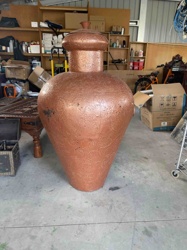
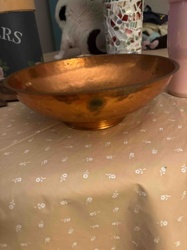
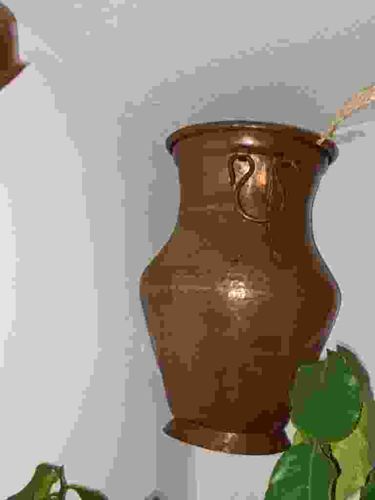
Hand-Hammered Antique Copper Vase

Antique Metalware / Copper Decorative Arts

AI Estimated Value

·Not an official valuation·Verify before acting

$250 - $450

As of June 18, 2026

AI Item Analysis

·AI can make mistakes·Verify before acting
This is a hand-wrought copper vessel, likely of European or Middle Eastern origin, characterized by its distinctive hammered finish (martelé). The item serves as a decorative vase or pitcher, exhibiting a traditional swelling body that tapers to a narrow neck with a flared rim, supported by a slightly wider pedestal base. The material is genuine copper, displaying a deep bronze-like patina with varying shades of reddish-brown and darkened oxidation in the recessed hammer marks. One of the most notable features is the presence of an integrated metal ring or handle attachment on the side, suggesting it may have originally been part of a pair or designed for suspension. The surface texture shows consistent, artisanal craftsmanship through thousands of individual hammer strikes. In terms of condition, the piece shows signs of age-related wear including minor surface scratches and a significant buildup of natural patina, which is desirable for collectors. There are no immediate signs of large dents or structural repairs visible from this angle. The style is indicative of the late 19th to early 20th century Arts and Crafts movement or traditional folk metalware. It is a solid utilitarian piece that has transitioned into a decorative object, showcasing heavy-gauge metal construction and excellent durability.
AI Appraisal Report

·AI can make mistakes·Verify before acting
I have conducted a visual analysis of this hand-wrought copper vessel. The item displays high-quality 'martelé' craftsmanship consistent with the Arts and Crafts movement or traditional European folk metalware, likely dating from 1890 to 1920. The deep oxidation and irregular strike patterns suggest an authentic antique origin rather than a modern machine-pressed reproduction. The heavy-gauge construction and integrated suspension ring add to its appeal as a robust, utilitarian-style decorative object. The global market for hand-hammered copper remains stable, particularly for pieces that retain their original patina. Recent auction results for unsigned copper vessels of this size and condition typically fall within the $200 to $500 range. The value is buoyed by the current interior design trend favoring 'Rustic Chic' and artisanal metalware. However, the lack of a visible maker's mark (such as Roycroft or Stickley) prevents it from reaching high-end collectible tiers. A significant limitation of this appraisal is the inability to physically inspect the base and interior for hidden repairs or hallmark stamps. To provide a definitive authentication, an in-person examination is required to verify the weight/density of the metal and check for lead solder vs. dovetailed seams. Documentation regarding provenance—specifically its geographic origin (e.g., Balkan vs. German)—would further refine the valuation. Scientific testing, though likely cost-prohibitive for this item's value, could confirm the metallurgical composition of the alloy to precisely date the piece.

Get your items appraised

Instant estimates of your treasures with AI-powered appraisals

Browse More Appraisals