AI estimate as of July 25, 2025 · verify with a professional before acting
AI-Generated · Verify before acting
Everything on this page is generated by AI for informational purposes only. AI can make mistakes — the AI may misidentify items or misattribute them (artist, maker, brand, designer, origin, era). This is not an official valuation and should not be used for insurance, sale, tax, estate, legal, or lending purposes — or any decision requiring a certified appraisal. It is not an authoritative claim about any person, brand, or rights holder — do not share or rely on it as a factual statement about a third party. Always consult qualified professionals before making financial decisions.
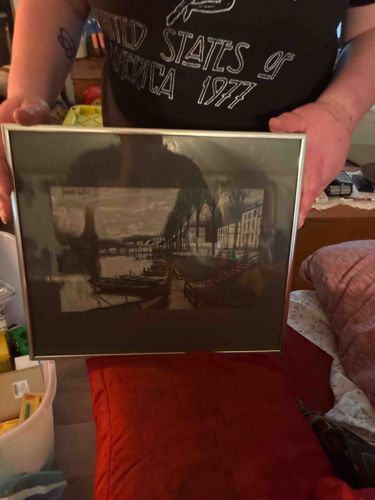
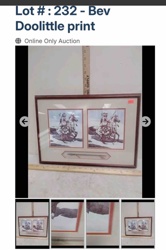
The item is a framed art print depicting a scenic townscape, likely a port or canal scene, characterized by its monochromatic or sepia tone appearance, suggesting it might be a reproduction of an older photograph, etching, or an intentionally stylized modern print. The print itself is housed within a simple, sleek metallic frame, likely aluminum or chrome, given its matte silver finish and slender profile. The framing appears contemporary, with clean lines that do not distract from the artwork. Visible within the print are several buildings with multiple stories, lining what appears to be a waterfront or canal. Multiple boats are docked or moored in the foreground, indicating a navigable waterway, possibly a port or a river. A prominent spire or tower, likely part of a church or significant building, is visible in the background, adding a focal point to the composition. The print seems to be matted with a dark, possibly black or dark grey, mat board, which creates a strong contrast and draws the eye towards the central image. The matting appears to be in good condition without visible buckling or discoloration. The glass covering the print shows some glare, suggesting it is standard glazing rather than museum-quality non-reflective glass. There are no obvious signs of significant damage to the print itself, such as tears, fading, or water stains, though a full assessment would require removal from the frame. The frame itself shows minor scuffs or wear consistent with handling, as evidenced by the person holding it. The overall aesthetic suggests a timeless, possibly European or North American, architectural and nautical scene. Based on the style and general appearance, it could be a reproduction of an image from the late 19th to mid-20th century, or a modern print made in that style. There are no visible artist signatures, edition numbers, or publisher marks from the provided image that would indicate manufacturing details or a specific artist.
AI Appraisal Report
Upon visual examination of the provided image, this framed art print depicts a monochromatic canal or port scene. The print itself appears to be a reproduction, potentially of an etching, photograph, or similar artwork from the late 19th to mid-20th century. The subject matter – a European-style townscape with a waterway and boats – is aesthetically pleasing and generally has broad appeal. The print is housed in a contemporary, sleek metallic frame, likely aluminum, with a dark, perhaps black or dark grey, mat board. The framing choice is modern and complements the monochromatic print well, creating a cohesive presentation.
From the image, the print seems to be in good condition with no apparent tears, fading, or significant discoloration. The matting also appears well-preserved. The glass shows typical glare for standard glazing, which doesn't detract from value but isn't museum-quality. The frame exhibits minor scuffs consistent with handling, but no major damage.
Authenticity verification is highly limited by image alone. Without physical inspection, I cannot confirm if this is an original print, a vintage reproduction, or a recent mass-produced decorative item. There are no visible artist signatures, edition numbers, or publisher marks. The major limitation is that the print’s origin (artist, printmaker, date of creation, and edition details) is unknown. Full authentication would require in-person examination to assess print quality, paper type, watermark (if any), and potential hidden markings. Provenance documentation (prior ownership, purchase receipts, or certificates of authenticity) would also be crucial. Scientific testing, such as dating analysis, could be considered if the print appears to be of significant age.
Market conditions for decorative art prints vary widely based on the artist, scarcity, and quality. Generic, unsigned decorative prints typically hold modest value. Comparable sales for similar framed decorative prints of unknown origin tend to fall within the lower range of the art market. Demand is generally consistent for aesthetically pleasing, well-framed pieces that suit modern home decor, but rarity is not a factor here without specific attribution.
Factors significantly impacting value include the unknown authenticity and origin. If it were definitively identified as an original print by a recognized artist or a rare vintage reproduction, the value would increase substantially. However, as an unattributed decorative print, its value primarily derives from its aesthetic appeal and the cost of framing.
Given the limitations of assessing value solely from an image and the unknown provenance of the print, I appraise this as a decorative item rather than a fine art piece with significant artistic or historical value.