These notes were written by the person who submitted this item. Appraiser.AI has not verified them, and the AI's identification and estimate may rely on them.
AI Estimated Value
Not an official valuation
$30-50
AI estimate as of July 19, 2025 · verify with a professional before acting
AI-Generated · Verify before acting
Everything on this page is generated by AI for informational purposes only. AI can make mistakes — the AI may misidentify items or misattribute them (artist, maker, brand, designer, origin, era). This is not an official valuation and should not be used for insurance, sale, tax, estate, legal, or lending purposes — or any decision requiring a certified appraisal. It is not an authoritative claim about any person, brand, or rights holder — do not share or rely on it as a factual statement about a third party. Always consult qualified professionals before making financial decisions.
This analysis also relies on unverified notes provided by the user, which may be incomplete or inaccurate and could affect the result.
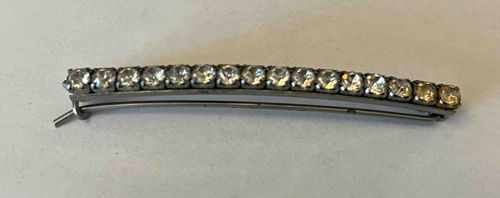
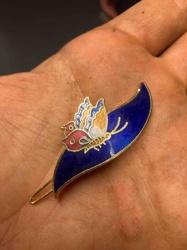
This item is a vintage-style hair barrette, approximately 7cm in length, featuring a single row of clear, round-cut rhinestones set into a silver-toned metal channel. The rhinestones are individually prong-set within their bezels, creating a continuous, glittering line along the top of the barrette. Most of the stones appear clear and sparkling, though a few at the far right end show a yellowish discoloration, suggesting some oxidation or age-related changes to either the rhinestones themselves or the foil backing. The metal setting exhibits a darkened patina, particularly in the recessed areas around the stones, which enhances the vintage aesthetic and indicates its age. The underside of the barrette reveals a simple spring-loaded mechanism, typical of conventional hair barrettes, made from a thin, curved metal rod that secures into a small catch on the main body. There are no discernible maker's marks, signatures, or stamps visible in the provided images. The overall construction appears solid, with no immediate signs of loose stones or significant damage, though the general wear and minor discoloration are consistent with an item of considerable age. The design is classic and elegant, reminiscent of pieces from the mid-20th century, often referred to as 'costume jewelry' due to the use of rhinestones instead of genuine diamonds. The craftsmanship, while not intricate, is functional and sturdy, ensuring the enduring quality of the piece for its intended use as a hair ornament. The discoloration of some stones is the primary visible condition issue, which while affecting sparkle, also contributes to its aged character.
AI Appraisal Report
Upon my virtual examination of this vintage rhinestone hair barrette, approximately 7cm in length, I observe a classic design consistent with mid-20th-century costume jewelry. The single row of clear, round-cut rhinestones, individually prong-set into a silver-toned channel, presents an elegant aesthetic. The overall construction appears solid and functional, with a typical spring-loaded mechanism. Authenticity, based solely on visual assessment of the provided images, points to a genuine vintage piece, not a modern reproduction, given the darkened patina on the metal setting and the characteristic yellowish discoloration on a few rhinestones at the far right end—likely due to age-related oxidation of the foil backing or the stones themselves. This minor discoloration, while affecting some sparkle, contributes to its aged character rather than detracting significantly from its value as a vintage item.
Market conditions for vintage costume jewelry, especially unmarked pieces like this, are generally stable but not exceptionally strong unless an item is rare or exceptionally ornate. Comparables for unsigned rhinestone barrettes of this era typically fall into the modest collectible range. The demand for such pieces is present among vintage jewelry enthusiasts and those seeking unique hair accessories, but rarity is low as similar items were mass-produced. Factors impacting value include the good overall condition despite the discoloration, and the classic, wearable design. The absence of maker's marks, signatures, or stamps limits specific provenance research and thus keeps its value in the general vintage category, rather than a higher designer tier.
Limitations in authenticity verification from images alone are significant. While the visual cues strongly suggest genuine age, an in-person examination would allow for definitive assessment of the rhinestone material (glass vs. early plastic), the quality of the metal, and the integrity of the settings. Microscopic inspection could confirm the nature of the discoloration and rule out modern treatments. Provenance documentation, if available, such as original sales receipts or family history, could further enhance its authenticity and historical context. Scientific testing, such as basic material analysis, would confirm the composition of the stones and metal if absolute certainty were required, though for a piece of this type, it's rarely economically justified.