AI estimate as of October 2, 2025 · verify with a professional before acting
AI-Generated · Verify before acting
Everything on this page is generated by AI for informational purposes only. AI can make mistakes — the AI may misidentify items or misattribute them (artist, maker, brand, designer, origin, era). This is not an official valuation and should not be used for insurance, sale, tax, estate, legal, or lending purposes — or any decision requiring a certified appraisal. It is not an authoritative claim about any person, brand, or rights holder — do not share or rely on it as a factual statement about a third party. Always consult qualified professionals before making financial decisions.
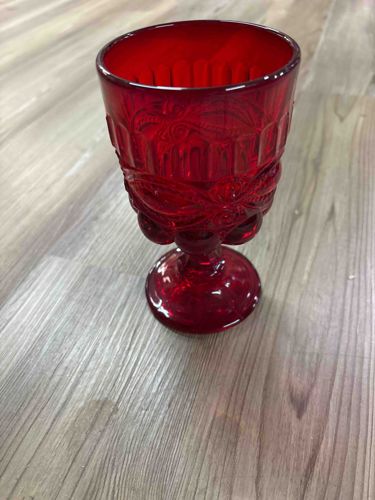
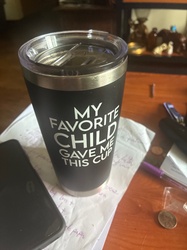
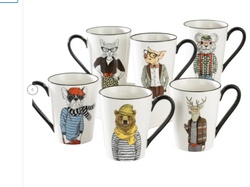
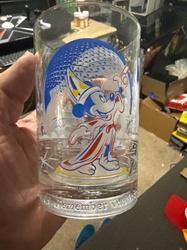
This is a single goblet crafted from ruby red pressed glass. The goblet features a rich, translucent red hue that allows light to pass through, showcasing its decorative patterns. The bowl of the goblet is cylindrical in shape, tapering slightly towards the stem. It is heavily adorned with intricate pressed glass patterns; the upper portion of the bowl displays a series of vertical, rectangular panels, while the mid-section features a repeating embossed design of swirling foliage or paisley motifs. Below this, the bowl transitions into a bulbous section with repeating circular or ovate elements before meeting the stem. The stem is relatively short and thick, connecting the patterned bowl to a round, stable foot. The overall construction suggests a sturdy, mass-produced item characteristic of pressed glass manufacturing. There are no visible chips, cracks, or repairs, indicating good condition for its likely age. The surface appears smooth and slightly reflective, consistent with glass, and there's no obvious wear or significant scratches. While no specific maker's marks or signatures are discernible from the image, the style of the patterning is reminiscent of late 19th to mid-20th century American pressed glass, often referred to as 'pattern glass,' with a strong possibility of being from the mid-century period due to the popularity of ruby red glass during that era. Its robust design and vibrant color make it a decorative and functional piece, likely used for beverages or as part of a collectible set.
AI Appraisal Report
I have carefully examined the provided image of this Ruby Red Pressed Glass Goblet. The goblet presents in excellent condition with no visible chips, cracks, or repairs, which is a significant factor in maintaining its value. The rich, translucent ruby red color is appealing and consistent with popular pressed glass production. The intricate patterns, including vertical rectangular panels, swirling foliage motifs, and circular elements, are characteristic of late 19th to mid-20th century 'pattern glass.' While attractive, these patterns are not unique to a single highly sought-after manufacturer, suggesting it's a mass-produced item.
Market conditions for pressed glass, particularly common patterns in popular colors like ruby red, indicate a modest value. Similar items are widely available in antique malls, online marketplaces, and estate sales. Demand is generally stable but not exceptional, driven by collectors of specific patterns or glass colors, or those seeking decorative pieces. Rarity is low; ruby red pressed glass goblets of this era were produced in large quantities. The absence of specific maker's marks is typical for much of this type of glass and does not negatively impact value significantly unless it were from a highly identifiable and rare mold.
Factors impacting value include the excellent condition and appealing color. However, its commonality and mass-produced nature limit its potential for higher appreciation. Without a physical inspection, specific mold details, the exact method of coloration (e.g., flashed vs. solid color), and the presence of any subtle manufacturing flaws or minor wear that might not be visible in an image cannot be fully assessed. In-person examination would allow for a tactile assessment of the glass quality and a more thorough search for any faint marks or pontil scars that could aid in a more precise dating or attribution. Provenance documentation, if available, could also enhance its historical context but is rarely present for such common items.