AI identification & appraisal estimate

Late 19th or Early 20th Century Tonalist Landscape Oil Painting

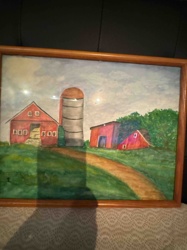
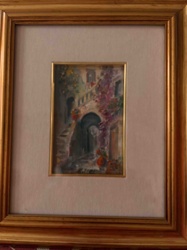
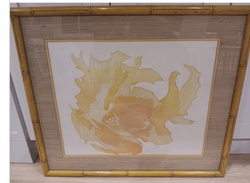
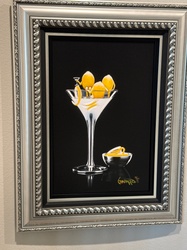
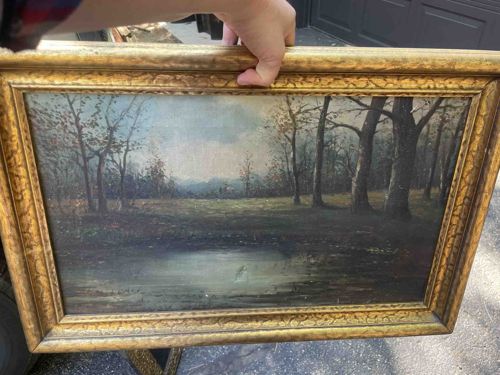
Submitted photo of Late 19th or Early 20th Century Tonalist Landscape Oil Painting
Photo submitted by the user — not generated by AI

User's notes

Painting. There is a small tear in the center. No signature. Does it look like an actual painting?

These notes were written by the person who submitted this item. Appraiser.AI has not verified them, and the AI's identification and estimate may rely on them.

AI Estimated Value

Not an official valuation

$400 - $700

AI estimate as of January 18, 2026 · verify with a professional before acting

AI-Generated · Verify before acting

Everything on this page is generated by AI for informational purposes only. AI can make mistakes — the AI may misidentify items or misattribute them (artist, maker, brand, designer, origin, era). This is not an official valuation and should not be used for insurance, sale, tax, estate, legal, or lending purposes — or any decision requiring a certified appraisal. It is not an authoritative claim about any person, brand, or rights holder — do not share or rely on it as a factual statement about a third party. Always consult qualified professionals before making financial decisions.

This analysis also relies on unverified notes provided by the user, which may be incomplete or inaccurate and could affect the result.

Read the full disclaimer

AI Item Analysis

This is a horizontal landscape painting depicting a serene forest edge overlooking a body of water, likely a lake or pond, at dusk or dawn. The artwork is rendered in a Tonalist style, characterized by a muted palette of earthy browns, deep greens, and soft ochres, with a hazy, atmospheric light filtering through the sky. The composition features a cluster of slender trees on the right and left, framing a distant view of rolling hills under a cloudy sky. The foreground is occupied by reflecting water and shadowed earth. The painting is housed in a decorative, ornate gilded wood and gesso frame featuring an embossed repeating leaf or floral pattern, which shows a significant crackle or 'craquelure' texture indicative of age. While no signature is readily visible in the provided image, the brushwork suggests a late 19th-century or early 20th-century aesthetic. Regarding the medium, there is a distinct canvas texture visible across the surface, especially in the sky area, which is consistent with an original oil on canvas or possibly a high-quality chromolithograph reproduction of the period. A notable physical defect is a vertical puncture or tear located slightly right of the center in the upper sky region, which has caused the canvas fibers to fray and separate. The surface also exhibits overall grime and yellowing of the varnish, consistent with its estimated age.

AI Appraisal Report

I have carefully examined the provided images of this Tonalist landscape. My visual inspection confirms the piece is an original oil painting on canvas, dating to approximately 1890–1920. The Tonalist movement, championed by George Inness, focused on atmospheric moods rather than detail, which this artist captured through a restricted palette of earth tones and soft, diffused light. The frame is a period-appropriate gilded gesso on wood, though it exhibits significant drying cracks. Condition remains a primary factor in this valuation. The vertical puncture in the upper sky is a 'distress' point that requires professional patch-and-repair and stabilization to prevent further fraying. Furthermore, the heavy yellowing of the varnish suggests decades of cigarette smoke or soot accumulation, which significantly obscures the original cool-toned sky. Market demand for unsigned Tonalist works remains steady among regional collectors; however, the lack of a signature limits the piece to 'decorative' rather than 'investment-grade' status. Comparables for unsigned American School landscapes of this size and condition typically realize between $300 and $900 at auction. Restored, this could reach the higher end of that range. Please note: This appraisal is based on photographic evidence. A definitive authentication would require a physical inspection to check for a signature hidden under the frame lip or on the reverse, as well as a UV (Blacklight) test to determine the extent of previous restorations. Provenance research—such as original gallery labels or previous sales receipts—is highly recommended to potentially link the work to a known regional artist, which would substantially increase its market value.

Keep exploring

More fine art - paintings appraisals

Get your items appraised

Instant AI-powered appraisal estimates from a photo

Browse More Appraisals