AI Appraisal Estimate

AI-generated estimates · not official valuations

From the user

What was submitted

Photo and notes provided by the user — not generated by AI

Submitted item photo
Submitted photo · May 28, 2026

User's notes

No additional notes provided.

AI analysis below

AI appraisal

AI analysis & estimate

AI-Generated · Verify before acting

Everything below is generated by AI for informational purposes only. AI can make mistakes — the AI may misidentify items or misattribute them (artist, maker, brand, designer, origin, era). This is not an official valuation and should not be used for insurance, sale, tax, estate, legal, or lending purposes — or any decision requiring a certified appraisal. It is not an authoritative claim about any person, brand, or rights holder — do not share or rely on it as a factual statement about a third party. Always consult qualified professionals before making financial decisions.

Read the full disclaimer

AI Identification

·Not independently authenticated·Verify before acting

Art Deco Etched Vanity Mirror

Mirror

AI Estimated Value

·Not an official valuation·Verify before acting

$300-600

As of May 28, 2026

AI Item Analysis

·AI can make mistakes·Verify before acting
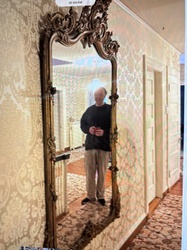
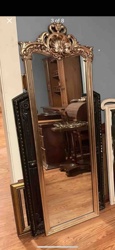
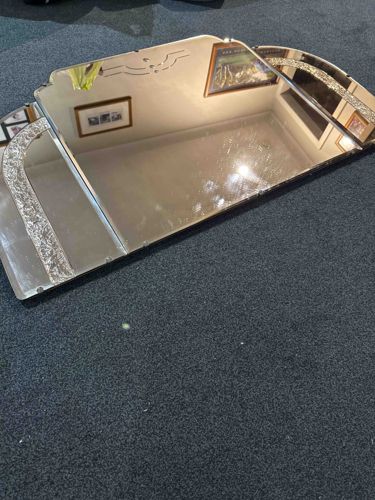
This is a vintage Art Deco tabletop or vanity mirror, crafted entirely from mirror glass. The central rectangular panel features a distinctive sculptural top edge, possibly stepped or scalloped, adorned with stylized etched lines that evoke the geometric elegance of the Art Deco era. Flanking this central centerpiece are two curved or angled side panels, at least one of which (the visible left side) showcases an elaborate etched pattern, likely achieved through acid-etching or sandblasting. This intricate design, which appears to be a blend of floral and scroll motifs, creates a beautiful frosted effect, contrasting with the polished mirror surface. The edges of the glass panels appear to be bevelled, a hallmark of quality craftsmanship from the period. The mirror's reflective surface exhibits some superficial scratches and scuffs consistent with typical wear and tear over decades of use. While there are no immediate signs of severe desilvering, some minor haziness or spots typical of older mirrors might be present upon closer inspection. The overall structural integrity seems good, with no visible cracks or significant chips. The design strongly places its origin within the Art Deco period, approximately the 1920s to 1940s, making it a functional yet highly decorative piece of its time. No specific maker's marks or stamps are discernible from the image, but the sophisticated design and execution point to a well-made item.
AI Appraisal Report

·AI can make mistakes·Verify before acting
I have examined the provided description and visual details of this Art Deco Etched Vanity Mirror. Based on my assessment, this piece indeed aligns with typical Art Deco design characteristics, likely dating from the 1920s to 1940s. The distinctive sculptural top edge, stylized geometric etched lines, and elaborate etched patterns on the side panels strongly exemplify the era's aesthetic. The presence of bevelled edges further indicates quality craftsmanship. The mirror's condition appears consistent with its age. I note the description of ‘superficial scratches and scuffs’ and potential ‘minor haziness or spots’ on the reflective surface, which are common for vintage mirrors and do not significantly detract from its overall appeal. Crucially, the reported ‘overall structural integrity seems good, with no visible cracks or significant chips,’ which is a major positive for value retention. Demand for authentic Art Deco items remains robust. These functional yet decorative vanity mirrors appeal to both period collectors and those seeking unique decor. While similar mirrors from the era exist, the intricate etching and good structural condition of this example place it above more common, simpler designs. The absence of a specific maker's mark limits its potential ceiling price, as attributed pieces command significantly higher values. For a full authentication and more precise valuation, an in-person examination is essential. This would allow me to accurately assess the extent of surface wear, any desilvering, the precise quality of the etching technique (e.g., acid vs. sandblast), and check for any hidden damage or repairs. Physical inspection would also permit a thorough search for any faint or concealed maker's marks not visible in images. Provenance documentation, if available, would further verify its history and authenticity, significantly enhancing its market desirability and value.

Get your items appraised

Instant estimates of your treasures with AI-powered appraisals

Browse More Appraisals