AI estimate as of October 2, 2025 · verify with a professional before acting
AI-Generated · Verify before acting
Everything on this page is generated by AI for informational purposes only. AI can make mistakes — the AI may misidentify items or misattribute them (artist, maker, brand, designer, origin, era). This is not an official valuation and should not be used for insurance, sale, tax, estate, legal, or lending purposes — or any decision requiring a certified appraisal. It is not an authoritative claim about any person, brand, or rights holder — do not share or rely on it as a factual statement about a third party. Always consult qualified professionals before making financial decisions.
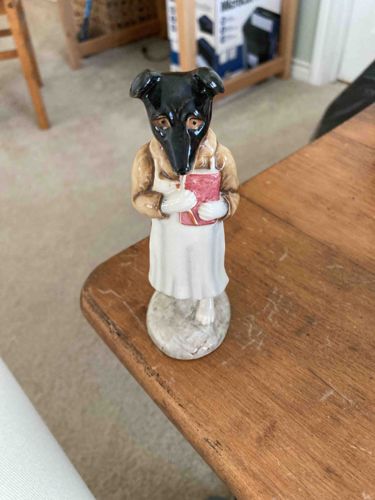
This item is a ceramic or porcelain figurine depicting an anthropomorphic dog, possibly a Smooth Fox Terrier or a similar breed, standing upright like a human. The dog's head is characterized by a glossy black snout and ears, with light brown, almost amber-colored eyes that have black pupils, giving it a somewhat solemn or serious expression. It is dressed in what appears to be a light brown or tan coat worn over a white apron, suggesting a profession such as a chef, baker, or perhaps even a scholar given the book it's holding. The 'clothing' is molded as part of the figure, not actual fabric. The dog is clutching a rectangular, reddish-pink book with visible page lines and what looks like a golden or light-colored clasp or detailing on the spine. The hands, or paws, are depicted in white, matching the apron. The figure stands on a circular, mottled grey base, designed to mimic a natural stone or unrefined surface, which provides stability. The overall construction suggests a mass-produced decorative item, likely glazed ceramic or porcelain due to its sheen and smooth finish. There are no immediately visible chips, cracks, or significant damage, though a closer inspection would be needed to confirm the absence of minor wear or crazing in the glaze. The style is somewhat whimsical and illustrative, common in decorative animal figurines from the mid-20th century to contemporary times. The craftsmanship appears good, with clear modeling and hand-painted details on the facial features and the book. The item's estimated age could range from the mid-to-late 20th century, though without maker's marks, precise dating is challenging.
AI Appraisal Report
Based on my examination of the provided image, this anthropomorphic dog figurine appears to be a mass-produced decorative ceramic or porcelain item. Its condition seems excellent, with no visible chips, cracks, or significant surface damage. The glossy finish suggests well-preserved glaze. Authenticity-wise, as a decorative item rather than a fine art piece, 'authenticity' refers more to its original manufacturing and design rather than a singular artist's hand. It clearly fits the typical aesthetic of whimsical animal figurines, likely dating from the mid-to-late 20th century.
The market for such decorative ceramic animal figurines is generally moderate. While charming, these items are not exceptionally rare and are often found in antique malls, estate sales, and online marketplaces. Demand is typically driven by collectors of specific breeds, anthropomorphic figures, or vintage decorative items. The lack of discernible maker's marks significantly limits its value, as branded pieces from well-known ceramic manufacturers (e.g., Rosenthal, Royal Doulton, specific Japanese makers) generally command higher prices. Without such marks, it's considered a generic decorative piece. Factors impacting its value negatively are its mass-produced nature and the absence of unique provenance or artist attribution. Positively, its excellent condition and appealing design contribute to its display value.
Limitations in this appraisal stem purely from the image-based assessment. A full in-person examination would be crucial to inspect for crazing in the glaze, hairline cracks, professional repairs, or any impressed/painted maker's marks often hidden on the base. Physical inspection would also allow for a tactile assessment of material quality and weight. Provenance documentation, though unlikely for such an item, could potentially add historical context if available, but scientific testing is not typically applied to items of this type or value range.