AI estimate as of July 16, 2025 · verify with a professional before acting
AI-Generated · Verify before acting
Everything on this page is generated by AI for informational purposes only. AI can make mistakes — the AI may misidentify items or misattribute them (artist, maker, brand, designer, origin, era). This is not an official valuation and should not be used for insurance, sale, tax, estate, legal, or lending purposes — or any decision requiring a certified appraisal. It is not an authoritative claim about any person, brand, or rights holder — do not share or rely on it as a factual statement about a third party. Always consult qualified professionals before making financial decisions.
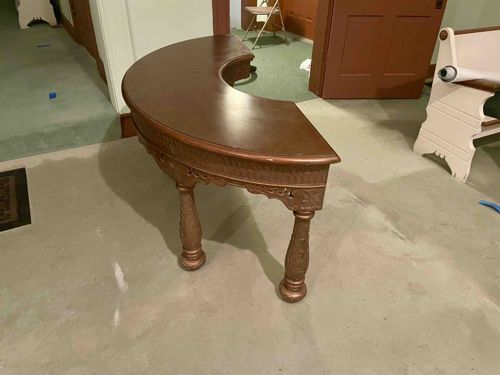
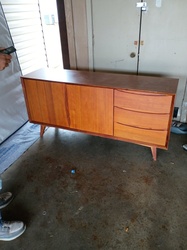
This is a semicircular console table, likely made of wood, and finished in a warm, reddish-brown tone reminiscent of cherry or mahogany, possibly with a slightly metallic bronze or copper undertone due to lighting or a specific finish choice. The tabletop is smooth and polished, exhibiting some reflections, suggesting either a varnished or lacquered surface. The table's most striking feature is its ornate design. The apron beneath the tabletop is deeply carved with an intricate frieze, appearing to be a continuous pattern of stylized foliage or scrolling motifs. This carving work indicates a decent level of craftsmanship. The two visible legs are turned and heavily carved, possibly fluted or otherwise embellished, ending in substantial, rounded feet. The carving on the legs matches the overall decorative style of the apron, suggesting a cohesive design. There appear to be no major visible condition issues such as large scratches, chips, or breaks on the main surfaces, though a more detailed inspection would be needed to confirm. The finish shows a consistent sheen, without overt signs of wear or fading, although the lighting makes it difficult to assess minor imperfections. The style points towards a classical or possibly revivalist design, perhaps late 19th or early 20th century, or a more recent reproduction seeking a traditional aesthetic. Its half-moon shape suggests it is intended to be placed against a wall, typical for a console or hall table. The quality of the carving, while not necessarily master-level, is detailed and contributes significantly to the piece's aesthetic appeal.
AI Appraisal Report
I have carefully examined the image of this semicircular carved console table. My assessment is based solely on the visual information provided. The table appears to be in very good condition, with a consistent finish and no obvious major damage such as chips, cracks, or significant abrasions. The intricate carving on the apron and legs is well-defined, suggesting good craftsmanship, likely either solid wood or a high-quality veneer over a sturdy substrate, finished in a warm reddish-brown, possibly cherry or mahogany. The style points towards a traditional or revivalist aesthetic, potentially late 19th to early 20th century, or a skillful later reproduction.
In terms of market conditions, ornamental console tables with detailed carving hold a steady but not exceptionally high demand, particularly if they are not definitively antique or by a known maker. Comparables in the secondary market suggest that well-preserved carved console tables with appealing proportions and intricate details typically range from several hundred to over a thousand dollars depending on proven age, wood type, and provenance. This piece's aesthetic appeal and apparent good condition contribute positively to its value.
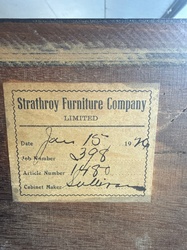
Several factors impact its value. Its specific wood species, exact age, and whether it’s a genuine antique versus a reproduction are critical. Without physical examination, I cannot definitively confirm the wood type, construction methods (solid wood vs. veneer), or the authenticity of its age. A hands-on inspection would allow me to check for construction techniques (e.g., dovetail joints, hand carving vs. machine carving), wear patterns, and the underlying quality of the wood. Provenance documentation could significantly enhance value, especially if it links the piece to a notable manufacturer or period. Scientific testing, such as carbon dating or wood analysis, would be needed for absolute authentication of age and origin. Based solely on its visual presentation, it appears to be a well-made and attractive piece of furniture with good decorative value.