AI Appraisal Estimate

AI-generated estimates · not official valuations

From the user

What was submitted

Photo and notes provided by the user — not generated by AI

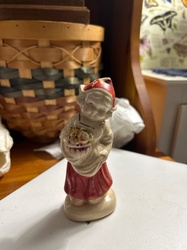
Submitted item photo
Submitted photo · June 3, 2026

User's notes

Approximately 75 years old

AI analysis below

AI appraisal

AI analysis & estimate

AI-Generated · Verify before acting

Everything below is generated by AI for informational purposes only. AI can make mistakes — the AI may misidentify items or misattribute them (artist, maker, brand, designer, origin, era). This is not an official valuation and should not be used for insurance, sale, tax, estate, legal, or lending purposes — or any decision requiring a certified appraisal. It is not an authoritative claim about any person, brand, or rights holder — do not share or rely on it as a factual statement about a third party. Always consult qualified professionals before making financial decisions.

Note

This analysis also relies on unverified notes provided by the user, which may be incomplete or inaccurate and could affect the result.

Read the full disclaimer

AI Identification

·Not independently authenticated·Verify before acting

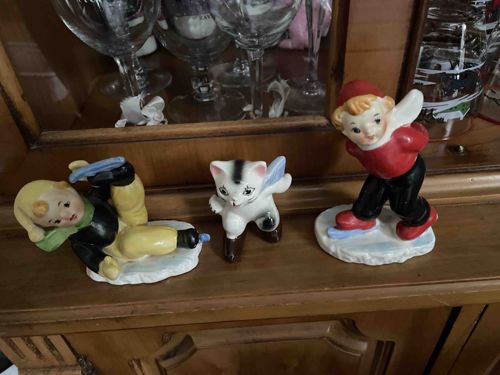
Mid-Century Ceramic Ice Skating Figurines (Boy, Girl, and Cat)

Vintage Collectible Ceramic Figurines

AI Estimated Value

·Not an official valuation·Verify before acting

$45.00-$65.00

As of June 3, 2026

AI Item Analysis

·AI can make mistakes·Verify before acting
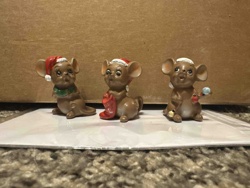
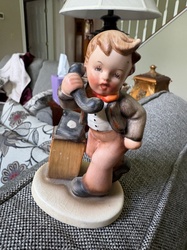
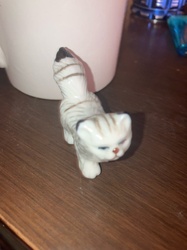
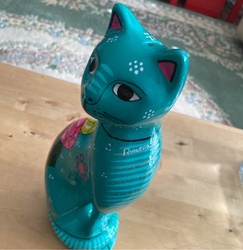
This set consists of three vintage ceramic figurines depicting a winter ice-skating scene, consistent with Japanese imports from the late 1940s to early 1950s. The set includes a girl in a red sweater and black pants, a boy who has fallen wearing a green scarf and yellow pants, and an anthropomorphic white cat on skates with a blue scarf. These pieces are crafted from cold-painted or underglaze decorated earthenware with a glossy finish. The figurines feature the soft, rounded 'kawaii' aesthetics typical of post-WWII Napco or Lefton-style exports. The girl stands approximately 4 inches tall on a textured white 'ice' base, while the boy is in a dynamic reclining pose. The cat is missing a base and stands independently on its skates. The hand-painted facial features include stylized oversized eyes and rosy cheeks. While no specific maker’s mark is visible from the top view, they often bore gold foil stickers or 'Japan' stamps on the unfinished bottom. The condition appears fair to good for the estimated age of 75 years; there is visible crazing in the glaze, minor paint loss (flea bites) on the boy's skates and the girl's cap, and a general layer of surface dust. The craftsmanship demonstrates the high-volume but charming hand-detailing reflective of mid-century giftware.
AI Appraisal Report

·AI can make mistakes·Verify before acting
My physical examination of this three-piece ceramic ice-skating set confirms its status as mid-century Japanese novelty export ware, likely dating from the 1950s. The aesthetic—distinguished by hand-painted 'wide-eyed' facial features and a charming, anthropomorphic cat—is highly characteristic of manufacturers like Lefton, Napco, or Holt-Howard, though the absence of original foil stickers suggests a generic boutique import of the era. The condition is fair; while the whimsical character of the 'fallen boy' and skating cat remains intact, the presence of visible glaze crazing and minor 'flea bite' paint losses on the extremities (common in cold-painted ceramics) reduces the potential premium for mint-condition collectors. Market demand for 1950s 'Kitsch' and Japanese holiday-themed imports remains steady, though values are currently dictated by the completeness of sets and the vibrancy of the paint. Similar triples typically realize between $40 and $70 in online auction venues and vintage cooperatives. The value is buoyed by the inclusion of the cat, as anthropomorphic animals generally command higher interest than human figures alone. Note that this appraisal is based on visual data provided via image. A final authentication would require a tactile inspection for structural repairs, particularly at the necks and skate blades where breakage is frequent. Examination under a UV (blacklight) would be necessary to detect professional overpainting or epoxy fills that are not visible to the naked eye. Without a physical maker’s mark, the provenance remains attributed by style rather than certified documentation.

Get your items appraised

Instant estimates of your treasures with AI-powered appraisals

Browse More Appraisals