Paleo-Indian Chert Knife-Scraper Tool
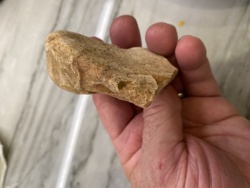
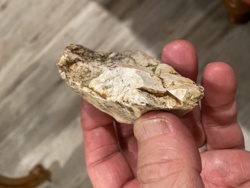
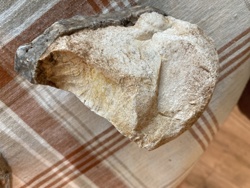
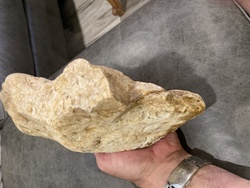
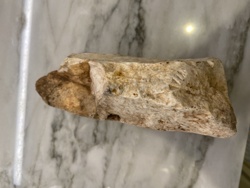
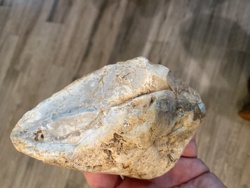
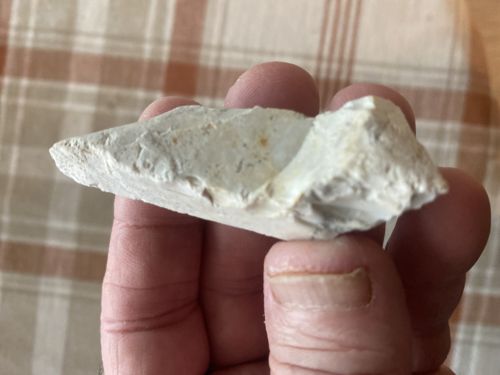
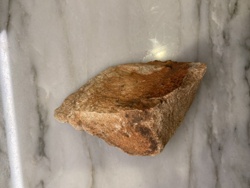
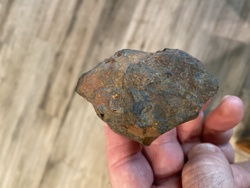
This is a hand-held lithic tool identified as a multi-functional knife and scraper, likely dating to the Paleo-Indian or Early Archaic period. Found in Guthrie, Oklahoma, the artifact measures approximately 2.50 inches in length and 0.75 inches in width. It is constructed from a high-quality, light-colored chert—possibly a variety of Keokuk or Burlington chert common to the region—characterized by its creamy white to off-white hue with subtle tan or yellowish mineral staining in the recessed flake scars. The tool features systematic unifacial and marginal retouching along the primary working edges, creating a sharp, durable blade suited for hide scraping or light cutting tasks. The physical form shows a distinct dorsal ridge and a flat ventral surface, consistent with a flake tool manufacture. The craftsmanship exhibits sophisticated percussion flaking and pressure flaking along the margins to achieve the desired taper. Condition-wise, the tool shows significant age-related patina and dulling of the working edges, indicating authentic prehistoric use and long-term environmental exposure. There are minor step fractures near the distal end and some incidental micro-chipping along the edge consistent with post-depositional movement, but the overall structural integrity remains excellent with no modern breaks or repairs visible.
AI-Generated Appraisal Disclaimer
Estimated Value
$45.00 - $75.00
Basic Information
Category
Native American Artifacts / Prehistoric Lithic Tools
Appraised On
March 2, 2026
Estimated Value
$45.00 - $75.00
Additional Details Provided By Owner
User Provided Information
Paleo chert knife scraper tool found in Guthrie OK measuring 2.50 x .75
Item Description
This is a hand-held lithic tool identified as a multi-functional knife and scraper, likely dating to the Paleo-Indian or Early Archaic period. Found in Guthrie, Oklahoma, the artifact measures approximately 2.50 inches in length and 0.75 inches in width. It is constructed from a high-quality, light-colored chert—possibly a variety of Keokuk or Burlington chert common to the region—characterized by its creamy white to off-white hue with subtle tan or yellowish mineral staining in the recessed flake scars. The tool features systematic unifacial and marginal retouching along the primary working edges, creating a sharp, durable blade suited for hide scraping or light cutting tasks. The physical form shows a distinct dorsal ridge and a flat ventral surface, consistent with a flake tool manufacture. The craftsmanship exhibits sophisticated percussion flaking and pressure flaking along the margins to achieve the desired taper. Condition-wise, the tool shows significant age-related patina and dulling of the working edges, indicating authentic prehistoric use and long-term environmental exposure. There are minor step fractures near the distal end and some incidental micro-chipping along the edge consistent with post-depositional movement, but the overall structural integrity remains excellent with no modern breaks or repairs visible.
Get Your Items Appraised
Instant estimates of your treasures with AI-powered instant appraisals