AI Appraisal Estimate

AI-generated estimates · not official valuations

From the user

What was submitted

Photo and notes provided by the user — not generated by AI

Submitted item photo
Submitted photo · June 30, 2026

User's notes

No additional notes provided.

AI analysis below

AI appraisal

AI analysis & estimate

AI-Generated · Verify before acting

Everything below is generated by AI for informational purposes only. AI can make mistakes — the AI may misidentify items or misattribute them (artist, maker, brand, designer, origin, era). This is not an official valuation and should not be used for insurance, sale, tax, estate, legal, or lending purposes — or any decision requiring a certified appraisal. It is not an authoritative claim about any person, brand, or rights holder — do not share or rely on it as a factual statement about a third party. Always consult qualified professionals before making financial decisions.

Read the full disclaimer

AI Identification

·Not independently authenticated·Verify before acting

Traditional East Asian Landscape Hanging Scroll

Fine Art - Asian Art & Paintings

AI Estimated Value

·Not an official valuation·Verify before acting

$400 - $650

As of June 30, 2026

AI Item Analysis

·AI can make mistakes·Verify before acting
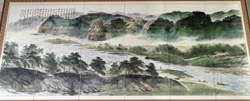
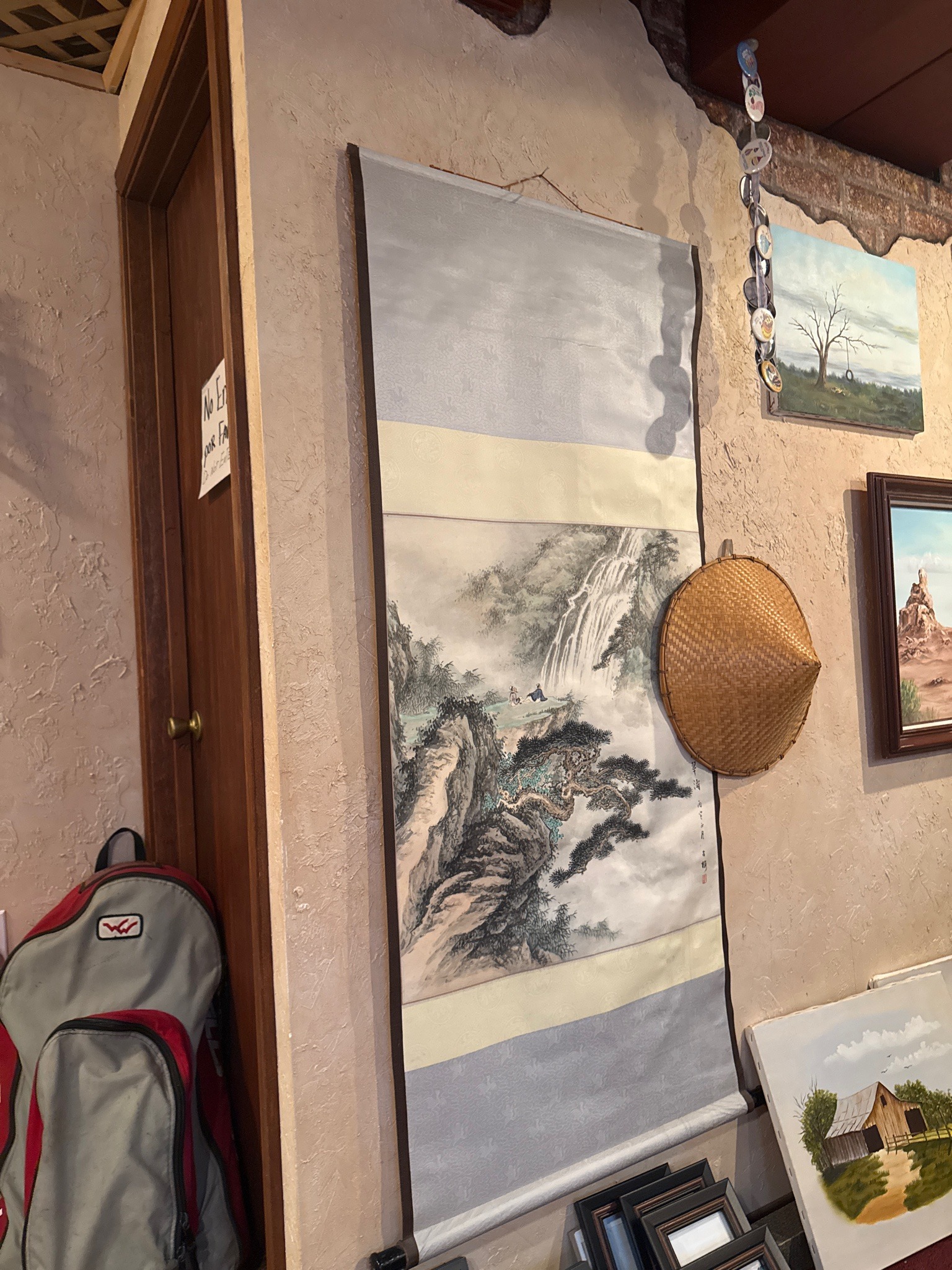
This is a vertical hanging scroll (kakemono or lizhou) featuring a traditional ink and wash landscape painting. The central artwork depicts a classic mountainous scene with a prominent waterfall cascading into a misty valley, surrounded by gnarled pine trees and jagged rock formations. Two small figures appear to be seated or standing on a rocky outcrop, providing a sense of scale typical of 'Shan Shui' style. The color palette is muted, primarily utilizing shades of gray, black, and sepia with subtle hints of green and blue in the pine needles and water. The painting is mounted on a multi-paneled silk or brocade backing composed of light blue and pale yellow sections with a faint decorative floral pattern woven into the fabric. The scroll is supported at the bottom by a weighted cylindrical roller made of wood with dark end caps. A small red artist's seal (hanko or chop) and a vertical line of calligraphic script are visible on the right side of the painting, indicating the artist's signature or a poetic inscription. The condition appears fair; there are visible horizontal creases and ripples across the surface, likely due to rolling and unrolling over time, and some light staining or foxing is present along the top and bottom fabric borders. The overall craftsmanship suggests a mid-20th-century decorative piece or a student study of classical Ming/Qing dynasty styles.
AI Appraisal Report

·AI can make mistakes·Verify before acting
I have carefully examined the provided images of this vertical hanging scroll. Stylistically, this landscape follows the traditional 'Shan Shui' (mountain-water) school, prioritizing the harmony of nature over human elements. The execution of the brushwork and the specific tonal application of ink suggest a mid-20th-century creation rather than an earlier imperial period work. While the calligraphy and seal indicate a formal signature, the aesthetics align with high-quality decorative pieces or student studies produced for the regional art market during that era. The condition is fair, though the horizontal creasing indicates a loss of paper flexibility and potential structural risk if not handled delicately; the foxing on the borders further confirms a lack of climate-controlled storage. The market for mid-century traditional scrolls is moderately stable, though value is currently constrained by the condition issues and the generic nature of the composition. Comparables of similar age and condition typically sell at boutique auctions within the cited range. A significant limitation of this appraisal is the inability to physically inspect the weight and weave of the silk or the density of the paper, which would help differentiate a hand-painted work from a sophisticated woodblock or lithographic reproduction. To provide a definitive authentication, I would require an in-person macroscopic inspection of the ink's absorption into the fibers and a verification of the 'hanko' (seal) against known artist catalogs. Provenance documentation, such as a bill of sale from a reputable mid-century gallery, would also enhance the valuation.

Get your items appraised

Instant estimates of your treasures with AI-powered appraisals

Browse More Appraisals