AI estimate as of July 6, 2025 · verify with a professional before acting
AI-Generated · Verify before acting
Everything on this page is generated by AI for informational purposes only. AI can make mistakes — the AI may misidentify items or misattribute them (artist, maker, brand, designer, origin, era). This is not an official valuation and should not be used for insurance, sale, tax, estate, legal, or lending purposes — or any decision requiring a certified appraisal. It is not an authoritative claim about any person, brand, or rights holder — do not share or rely on it as a factual statement about a third party. Always consult qualified professionals before making financial decisions.
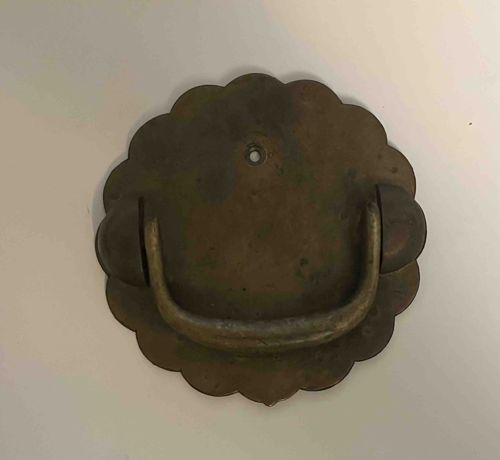
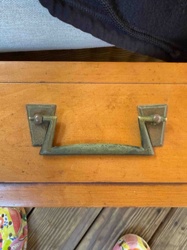
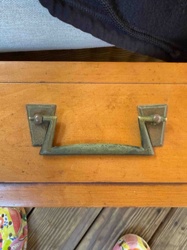
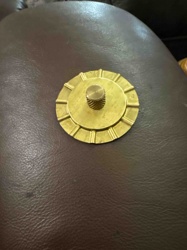
This item is a vintage or antique brass drop pull handle, likely used on furniture such as dressers, cabinets, or chests. It consists of two primary components: a backplate and a movable bail handle. The backplate is distinctly scalloped or floral-shaped, featuring approximately eight rounded lobes around its perimeter, giving it an ornate character. Its color is a dark, aged brass with a significant, uneven patina, exhibiting greenish-brown and darker brown tones, indicative of oxidation over time. There is a single, visible screw hole centered towards the top of the backplate, suggesting it was originally mounted with a single screw, allowing the backplate to pivot slightly if not further secured. The bail handle is a simple, 'U' or 'D' shaped loop, also made of brass, attached to the backplate at two points on either side. The handle itself shows wear and areas where the brass is slightly brighter due to frequent touching, indicating its function as an active pull. The construction appears sturdy, suggesting a cast or forged brass piece rather than thin stamped metal, which contributes to its perceived quality. There are no visible maker's marks or specific decorative embellishments beyond the shape of the backplate. The overall aesthetic points to a late 19th or early 20th-century design, popular during periods when brass hardware was prevalent.
AI Appraisal Report
Upon examining the image of this Scalloped Brass Drop Pull Handle, I assess its condition as good, commensurate with age and regular use. The significant, uneven patina, ranging from greenish-brown to darker tones, strongly indicates authenticity and lack of aggressive cleaning or restoration. The brighter areas on the bail handle suggest natural wear from frequent touching. The scalloped backplate and sturdy appearance align with late 19th to early 20th-century brass hardware. Without direct physical inspection, I cannot confirm the exact metal composition beyond its brass appearance, nor can I verify whether it's cast or forged, though the thickness suggests the latter over stamped metal.
The market for antique furniture hardware is steady, driven by restorers, collectors, and those seeking character for reproduction pieces. Comparables for single, ornate brass drop pulls from this era typically range from $15-$40, depending on uniqueness and condition. This particular piece's aesthetic is common enough that it doesn't present extreme rarity. Demand is moderate, primarily from niche buyers. The primary factors impacting value here are its authentic patina and good structural integrity. However, it's a single item, and value would increase if it were part of a complete matching set. Given its lack of maker's marks or truly unique design, its value is largely functional and decorative.
Limitations in authenticity verification from images alone are significant. To fully authenticate, I would need an in-person examination to assess weight, feel for casting seams or forging marks, and perform a non-destructive metal analysis (e.g., XRF) to confirm composition. Provenance documentation, such as the furniture it came from or its historical context, would also enhance its authenticity and value significantly.