AI Appraisal Estimate

AI-generated estimates · not official valuations

From the user

What was submitted

Photo and notes provided by the user — not generated by AI

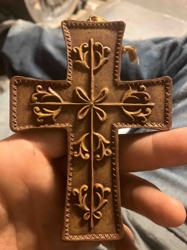
Submitted item photo
Submitted photo · June 3, 2026

User's notes

No additional notes provided.

AI analysis below

AI appraisal

AI analysis & estimate

AI-Generated · Verify before acting

Everything below is generated by AI for informational purposes only. AI can make mistakes — the AI may misidentify items or misattribute them (artist, maker, brand, designer, origin, era). This is not an official valuation and should not be used for insurance, sale, tax, estate, legal, or lending purposes — or any decision requiring a certified appraisal. It is not an authoritative claim about any person, brand, or rights holder — do not share or rely on it as a factual statement about a third party. Always consult qualified professionals before making financial decisions.

Read the full disclaimer

AI Identification

·Not independently authenticated·Verify before acting

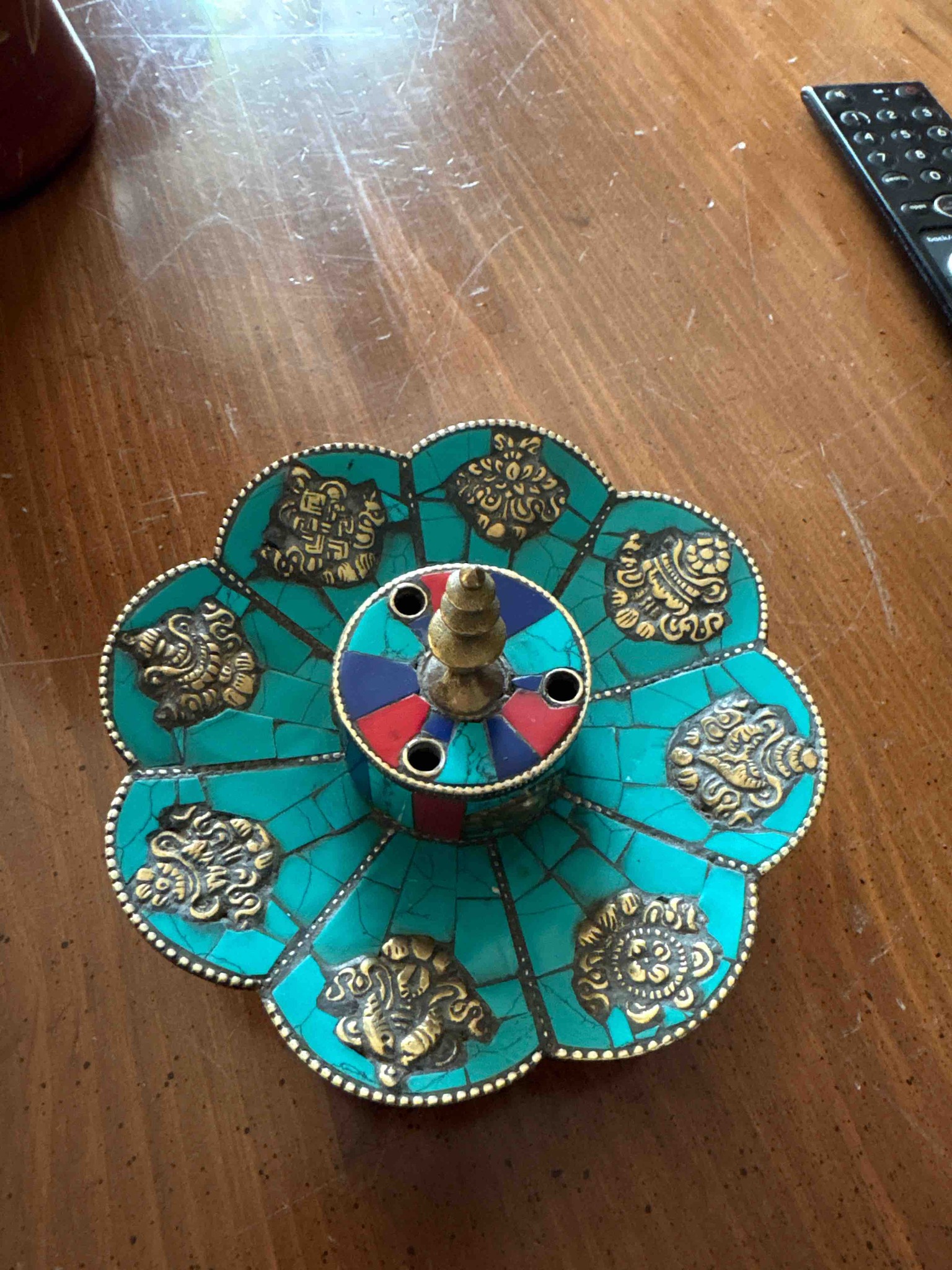
Tibetan Style Mosaic Turquoise Eight Auspicious Symbols (Ashtamangala) Incense Burner

Asian Decorative Arts / Religious & Spiritual Objects

AI Estimated Value

·Not an official valuation·Verify before acting

$45.00 - $75.00

As of June 3, 2026

AI Item Analysis

·AI can make mistakes·Verify before acting
This is a decorative Tibetan-style incense burner/holder, likely of Nepalese or Tibetan retail origin from the late 20th to early 21st century. The piece is constructed with a brass or mixed-metal base, featuring an eight-petaled lotus shape. The dish is adorned with mosaic-style turquoise stones, likely reconstituted or faux turquoise composite, set into a dark resin binder. Each of the eight petals features a raised relief brass applique representing the Ashtamangala, or the Eight Auspicious Symbols of Buddhism, including the parasol, golden fish, treasure vase, lotus, conch shell, endless knot, victory banner, and wheel. The central pillar serves as the burner housing, topped with a stupa-like finial and featuring three holes for holding incense sticks. This central portion is inlaid with multi-colored mosaic sections in shades of deep blue and red, mimicking lapis lazuli and coral. The outer edge of the dish is finished with a beaded brass texture. Condition-wise, the item shows some signs of wear consistent with use; there is visible cracking/crazing between the turquoise chips, which is common in this type of mosaic construction, and slight tarnish on the metal components. No visible hallmark or manufacturer’s stamp is present, designating this as a piece of artisan craft/souvenir-grade hollowware rather than a liturgical antique.
AI Appraisal Report

·AI can make mistakes·Verify before acting
Based on my visual examination of the Tibetan-style incense burner, I assess this as a contemporary decorative object, likely produced in the Kathmandu Valley, Nepal, or Northern India for the souvenir and export market during the last 20-30 years. The item displays the Ashtamangala (Eight Auspicious Symbols) in relief on brass petals. The turquoise and coral-colored materials are highly characteristic of composite or reconstituted stone shards set in a pigmented resin binder, rather than high-grade natural gemstones. The visible ‘crazing’ and gaps in the mosaic are indicative of the drying of this resin rather than age-related deterioration of an antique. The market for such items is currently saturated, with significant quantities available via retail import shops and online marketplaces. Demand remains stable for hobbyists and spiritual practitioners, but collectors of Himalayan liturgical art tend to avoid these mass-produced 'handicraft' items in favor of older, high-fire gilded bronzes or silver pieces. This specific item shows tarnish and wear consistent with light domestic use. Factors limiting the value include the non-precious nature of the base metal and the lack of a maker's mark or provenance. This appraisal assumes the metal is a brass/copper alloy and the stones are composite; if the metals were found to be high-grade silver, the scrap value alone would significantly increase the estimation. Full authentication would require an in-person physical inspection to test the metal purity with an XRF analyzer and a hydrothermal test to confirm whether the turquoise is natural or synthetic resin. Without documentation of the piece originating from a specific historical collection, it remains classified as a modern artisan decorative object.

Get your items appraised

Instant estimates of your treasures with AI-powered appraisals

Browse More Appraisals