AI estimate as of October 8, 2025 · verify with a professional before acting
AI-Generated · Verify before acting
Everything on this page is generated by AI for informational purposes only. AI can make mistakes — the AI may misidentify items or misattribute them (artist, maker, brand, designer, origin, era). This is not an official valuation and should not be used for insurance, sale, tax, estate, legal, or lending purposes — or any decision requiring a certified appraisal. It is not an authoritative claim about any person, brand, or rights holder — do not share or rely on it as a factual statement about a third party. Always consult qualified professionals before making financial decisions.
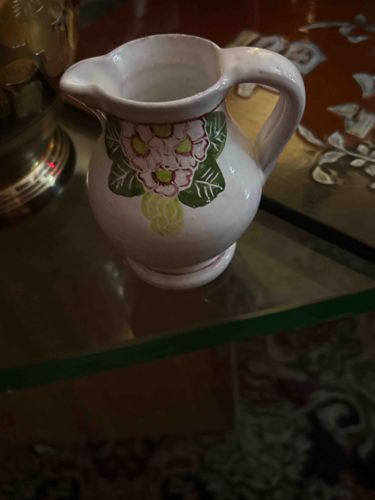
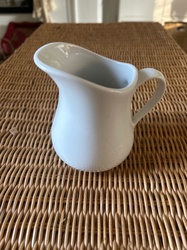
This item is a small, off-white ceramic pitcher, likely intended for individual servings of milk or cream, or perhaps as a decorative piece. It features a plump, bulbous body tapering slightly towards a narrower base and a wide, flaring spout designed for pouring. A C-shaped handle is attached to the back of the pitcher, opposite the spout, providing a comfortable grip. The ceramic material appears glazed, giving it a smooth, somewhat reflective finish, though the exact type of ceramic (e.g., earthenware, porcelain) is not definitively discernible from the image. The primary decoration consists of hand-painted floral motifs on the front body of the pitcher. These motifs depict several blush pink or light purple flowers with green centers, surrounded by distinct dark green leaves. Beneath the main floral cluster, there are additional light green or yellow, more abstract leaf or berry-like elements, suggesting a vine or trailing plant. A thin reddish-brown line circumscribes the rim of the pitcher, adding a subtle decorative touch and framing the opening. The craftsmanship appears to be folk-art inspired or commercially produced with hand-finishing, given the slightly uneven application of paint. No significant condition issues such as chips, cracks, or repairs are visible in the provided image. The style suggests a mid-20th century aesthetic, possibly from the 1940s to 1960s, a period when such decorative ceramic items were popular. There are no visible maker's marks or signatures, which is common for smaller, mass-produced or locally crafted utility ware of this era. Its diminutive size and decorative elements indicate it was likely used for serving condiments or as a small vase.
AI Appraisal Report
Upon examining the provided image of this small, off-white ceramic pitcher, I assess its condition to be quite good, with no visible chips, cracks, or significant wear. The glazed finish appears intact, and the hand-painted floral motifs remain vibrant. Authenticity-wise, it presents as a genuine piece from the mid-20th century, likely 1940s-1960s, consistent with the description of folk-art inspired or commercially produced decorative ceramics of that era. However, without physical examination, I cannot definitively confirm the ceramic type or detect any subtle repairs or hairline cracks that might not be visible in a photograph. The absence of a maker's mark, while common for such items, also limits specific attribution.
Market conditions for small, unmarked decorative ceramic pitchers of this type are generally modest. Comparables in online marketplaces and antique shops typically fall into the $10-$40 range. Demand for such items is stable but not high, primarily appealing to collectors of vintage kitchenalia, cottagecore aesthetics, or those seeking charming decorative accents. The lack of rarity, prominent artist signature, or association with a significant manufacturer prevents it from commanding a higher value. Factors impacting value negatively include its mass-produced or locally crafted nature, lack of definitive provenance, and utility rather than fine art status. A physical inspection would allow for tactile assessment of the ceramic, closer examination for marks or artist signatures, and confirmation of overall structural integrity. Provenance documentation, if available, could exceptionally enhance value by linking it to a specific maker or significant collection.