AI Appraisal Estimate

AI-generated estimates · not official valuations

From the user

What was submitted

Photo and notes provided by the user — not generated by AI

Submitted item photo
Submitted photo · June 6, 2026

User's notes

No additional notes provided.

AI analysis below

AI appraisal

AI analysis & estimate

AI-Generated · Verify before acting

Everything below is generated by AI for informational purposes only. AI can make mistakes — the AI may misidentify items or misattribute them (artist, maker, brand, designer, origin, era). This is not an official valuation and should not be used for insurance, sale, tax, estate, legal, or lending purposes — or any decision requiring a certified appraisal. It is not an authoritative claim about any person, brand, or rights holder — do not share or rely on it as a factual statement about a third party. Always consult qualified professionals before making financial decisions.

Read the full disclaimer

AI Identification

·Not independently authenticated·Verify before acting

Stretched Canvas (Reverse Side)

Art

AI Estimated Value

·Not an official valuation·Verify before acting

$5-20

As of June 6, 2026

AI Item Analysis

·AI can make mistakes·Verify before acting
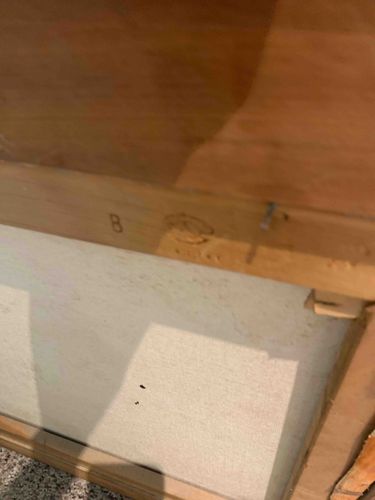
The item appears to be the reverse side of a stretched canvas art piece, likely an oil or acrylic painting, given the visible wooden stretcher bars. The stretcher bars are made of light-colored wood, possibly pine or a similar softwood, with a noticeable wood grain. They are constructed in a rectangular frame, providing tension to the canvas. The canvas itself is a natural, unprimed or lightly primed fabric, visible on the reverse, with a slight texture. There are signs of age and handling, including some dust and minor discoloration on the canvas. Two small, dark spots are visible on the canvas, which could be minor stains or specks of debris. The stretcher bars show some small indentations and scuffs, consistent with normal wear. A prominent feature is a stamped marking on one of the stretcher bars, which includes a letter 'B' followed by what appears to be a manufacturer's or framer's mark, though it is not fully legible. This mark may indicate the canvas size, type, or a specific brand. A metal nail or tack is partially visible protruding from one of the stretcher bars, suggesting it was used in the assembly or to affix something to the frame. The overall condition suggests a vintage piece, likely from the mid to late 20th century, but without seeing the front of the artwork, a more precise age or style period is difficult to ascertain. The craftsmanship of the stretcher appears standard for commercially produced canvases of that era.

AI Appraisal Report

·AI can make mistakes·Verify before acting
Upon examining the image provided, which displays the reverse side of a stretched canvas, I can only offer a preliminary assessment. The item consists of light-colored wooden stretcher bars, likely pine, and a natural, unprimed or lightly primed canvas fabric. The construction appears to be standard for a commercially produced canvas, possibly from the mid to late 20th century, based on the materials and signs of wear. A stamped mark including the letter 'B' is present, but its full meaning cannot be deciphered from the image, though it likely relates to the manufacturer or size. The condition shows minor age-related discoloration and handling scuffs. Without viewing the artwork on the front, any valuation is purely speculative and based solely on the material components as a used art supply. The primary factor determining the value of a painting is the artwork itself—the artist, period, subject matter, and execution—none of which are visible. Market value for an unknown, anonymous painting's raw materials is extremely low. For a comprehensive appraisal, physical inspection is essential. This would involve examining the front of the artwork, searching for a signature, and assessing the artistic quality. Further research into the manufacturer's stamp would be necessary. Full authentication and significant value would depend entirely on identifying the artist and establishing provenance through documentation like receipts or exhibition history. At present, I am appraising this as a used, blank, or anonymous decorative art object.

Get your items appraised

Instant estimates of your treasures with AI-powered appraisals

Browse More Appraisals