AI Appraisal Estimate

AI-generated estimates · not official valuations

From the user

What was submitted

Photo and notes provided by the user — not generated by AI

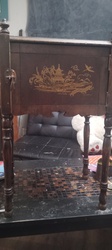
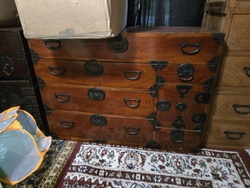
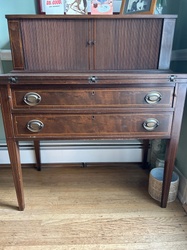
Submitted item photo
Submitted photo · June 17, 2026

User's notes

No additional notes provided.

AI analysis below

AI appraisal

AI analysis & estimate

AI-Generated · Verify before acting

Everything below is generated by AI for informational purposes only. AI can make mistakes — the AI may misidentify items or misattribute them (artist, maker, brand, designer, origin, era). This is not an official valuation and should not be used for insurance, sale, tax, estate, legal, or lending purposes — or any decision requiring a certified appraisal. It is not an authoritative claim about any person, brand, or rights holder — do not share or rely on it as a factual statement about a third party. Always consult qualified professionals before making financial decisions.

Read the full disclaimer

AI Identification

·Not independently authenticated·Verify before acting

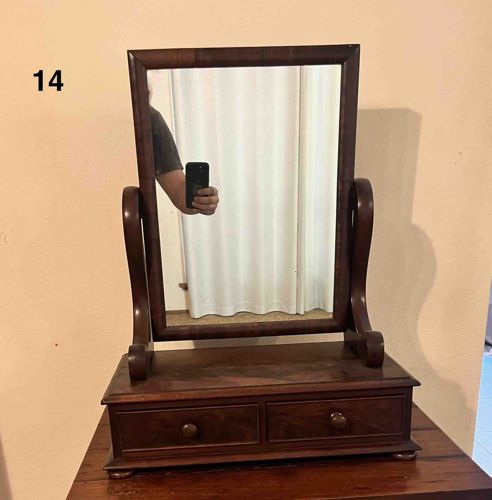
Empire Style Mahogany Tabletop Dressing Mirror with Drawers

Antique Furniture

AI Estimated Value

·Not an official valuation·Verify before acting

$450 - $650

As of June 17, 2026

AI Item Analysis

·AI can make mistakes·Verify before acting
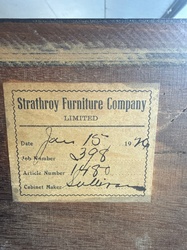
This item is a 19th-century American Empire style tabletop dressing mirror, also commonly referred to as a vanity or shaving mirror. It is constructed from solid wood and likely mahogany veneers, exhibiting a deep, rich reddish-brown finish. The piece features a rectangular pivoting mirror plate held within a simple molded frame, suspended between two elegantly curved 'S' scroll upright supports. These supports are anchored to a rectangular base box that contains two side-by-side drawers. Each drawer is fitted with a simple turned wooden knob. The base sits upon low bun feet, a classic design element of the period. The wood shows beautiful grain patterns, particularly on the top surface of the drawer box and the drawer fronts. In terms of condition, there is visible wear consistent with age, including minor scuffs, light surface scratches, and a subtle patina on the wood finish. The mirror glass appears to be in good functional condition without significant desilvering or 'foxing' visible in the reflection. The craftsmanship is indicative of the mid-to-late 1800s, where functional elegance and durable joinery were prioritized for bedroom furniture accessories. There are no obvious maker's marks visible in the photograph, though the construction style suggests a professional workshop or early industrial manufacture.
AI Appraisal Report

·AI can make mistakes·Verify before acting
I have completed a visual assessment of this mid-19th-century American Empire tabletop dressing mirror. The piece exhibits the characteristic 'S' scroll supports and mahogany veneer typical of the period (c. 1840-1860). Based on the grain patterns and the use of turned wooden knobs and bun feet, the item appears to be an authentic example of domestic bedroom furniture from this era. The condition is very good for its age; while there is expected surface wear and minor scuffs to the base, the mirror plate’s lack of significant desilvering is a positive factor for functional use, though it may indicate a later replacement. The market for Empire-style smalls remains stable, though softer than late-20th-century peaks. Comparables at auction and in antique malls typically range from $300 for specimens requiring restoration to $800 for signed or pristine pieces. The lack of visible maker's marks is common for this type of furniture, which was often produced by regional cabinetmakers or early manufacturing hubs like those in New York or Boston. Value is driven by the rich book-matched mahogany veneers and the structural integrity of the pivoting mechanism. Limitations of this virtual appraisal include the inability to inspect drawer joinery (such as dovetail construction) or the secondary woods used for the drawer liners, which would further confirm its origin. Full authentication would require an in-person inspection of the wood's underside to check for hand-saw marks and wood oxidization, as well as provenance records to trace its ownership history. For insurance purposes, I would value this piece at the higher end of the provided range.

Get your items appraised

Instant estimates of your treasures with AI-powered appraisals

Browse More Appraisals