AI estimate as of December 14, 2025 · verify with a professional before acting
AI-Generated · Verify before acting
Everything on this page is generated by AI for informational purposes only. AI can make mistakes — the AI may misidentify items or misattribute them (artist, maker, brand, designer, origin, era). This is not an official valuation and should not be used for insurance, sale, tax, estate, legal, or lending purposes — or any decision requiring a certified appraisal. It is not an authoritative claim about any person, brand, or rights holder — do not share or rely on it as a factual statement about a third party. Always consult qualified professionals before making financial decisions.
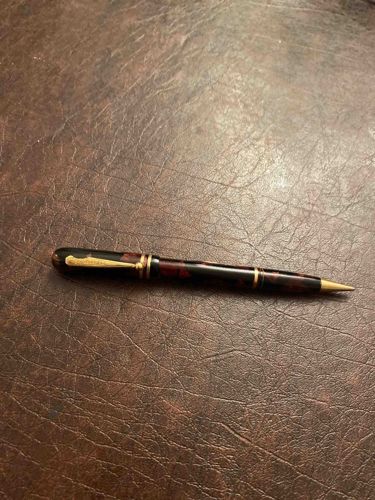
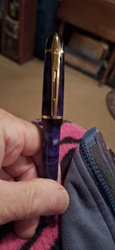
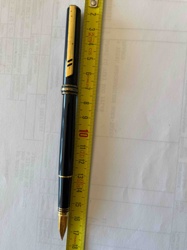
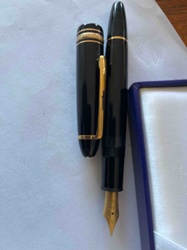
This appears to be a vintage writing instrument, either a fountain pen or a mechanical pencil, characterized by its striking marbleized body. The primary colors of the body are a deep, rich burgundy and black, swirled together to create an attractive, organic pattern. The overall shape is tapered at both ends, with a slightly wider middle section for comfortable gripping. The cap and barrel are adorned with several gold-toned accents. There is a prominent gold-colored pocket clip attached to the cap, which shows some signs of wear and possibly minor tarnishing, consistent with age and handling. Near the joint between the cap and the barrel, there are two thin gold bands, and another slightly wider gold band on the cap itself. The tip of the writing instrument, visible at the far right, is also gold-toned, suggesting it could be a nib if it's a fountain pen, or the lead dispensing mechanism if it's a mechanical pencil. The material likely consists of a type of resin or celluloid, common in vintage pens for its durability and ability to mimic natural stone patterns. The finish appears glossy, though some faint surface scratches or scuffs might be present from use. The craftsmanship suggests a mid-20th century piece, potentially from the 1940s-1960s, given the materials and design aesthetic. No specific maker's marks or inscriptions are discernible from the provided image, which would be crucial for a definitive identification and valuation. The uniform wear on the gold-toned elements and the overall presentation suggest it has been used and cherished.
AI Appraisal Report
I have carefully examined the provided image of this vintage writing instrument, noting its striking marbleized burgundy and black body, gold-toned accents, and tapered design. Visually, the condition appears good for its age, suggesting moderate use rather than abuse. The gold-toned pocket clip exhibits some wear and possible tarnishing, which is consistent with a piece from the mid-20th century. The glossy finish of the resin or celluloid body seems largely intact, though minor surface scuffs or scratches are likely present, undetectable from the image alone.
Authenticity, based solely on this image, seems probable in terms of its vintage nature and construction methods typical of the 1940s-1960s. The design elements are consistent with numerous manufacturers of that era. However, without discernible maker's marks or inscriptions, definitive attribution to a specific brand or model is impossible. This significantly impacts its potential value.
The market for unbranded or unidentified vintage writing instruments of this type is generally moderate. Comparables would include similar fountain pens or mechanical pencils from less prominent manufacturers or those where branding is absent. Demand is present among collectors of vintage writing tools, but rarity is low for generic examples. The lack of a brand name, known provenance, or unique design elements prevents it from commanding premium prices.
To fully authenticate and maximize value, an in-person examination is crucial. This would allow me to inspect for hidden hallmarks, nib engravings (if a fountain pen), filling mechanisms, and material composition more closely. Provenance documentation, such as original purchase receipts or family records, would also add significant value. Without these, the appraisal remains an estimate for an attractive, yet unidentifiable, vintage piece.