AI estimate as of July 19, 2025 · verify with a professional before acting
AI-Generated · Verify before acting
Everything on this page is generated by AI for informational purposes only. AI can make mistakes — the AI may misidentify items or misattribute them (artist, maker, brand, designer, origin, era). This is not an official valuation and should not be used for insurance, sale, tax, estate, legal, or lending purposes — or any decision requiring a certified appraisal. It is not an authoritative claim about any person, brand, or rights holder — do not share or rely on it as a factual statement about a third party. Always consult qualified professionals before making financial decisions.
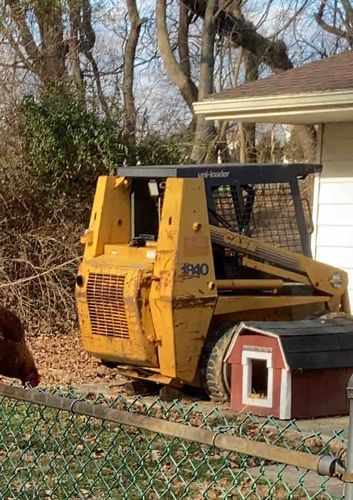
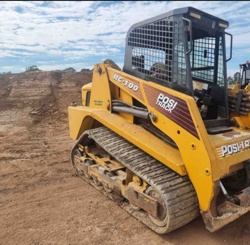
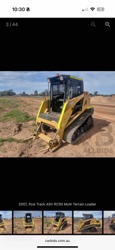
The item is a Case 1840 Uni-Loader skid steer loader, identifiable by the prominent '1840' model number visible on the rear side panel, along with the 'uni-loader' branding on the overhead protective structure. The primary color of the machine is a faded and worn industrial yellow, typical of construction equipment, indicating significant use and exposure to outdoor elements. Physical characteristics include a robust, heavy-duty steel frame, large pneumatic tires on both sides (one visible), and a rear-mounted engine compartment with a louvered grate for ventilation. The protective operator's cage, painted in a contrasting dark color (likely black or dark grey), features a mesh or grated structure for safety and visibility, with hydraulic arms extending forward to support an unseen attachment (likely a bucket, though not visible in this view).
Visible condition issues include extensive paint chipping, scratches, and surface rust on the yellow body panels, especially around edges and high-wear areas, suggesting an operational history in rough environments. There are dirt and grime accumulations, further indicating regular use and lack of recent detailed cleaning. The tires appear well-worn but still functional, with visible tread patterns. The overall appearance points to a machine that has seen considerable use but is likely still in working order, though cosmetic condition is fair at best. No obvious severe structural damage or major repairs are evident from this angle, but the general patina of wear is significant. The model number '1840' strongly suggests a manufacturing period roughly from the early 1990s to the early 2000s, as this model was produced during that time frame. The quality of construction is typical for heavy machinery, designed for durability and functionality rather than aesthetic appeal.
AI Appraisal Report
Upon my visual inspection of the Case 1840 Uni-Loader skid steer loader, I can confirm its authenticity based on the visible '1840' model numbering and 'uni-loader' branding, consistent with Case manufacturing from the early 1990s to early 2000s. The machine exhibits significant wear, with extensive paint chipping, surface rust, and accumulated dirt, indicative of considerable operational use in typical construction environments. Cosmetically, it is in fair condition at best. Mechanically, while the tires appear worn, no severe structural damage is immediately evident from this angle, suggesting it is likely still operational.
Market conditions for used skid steer loaders like the Case 1840 are generally stable, driven by demand from small contractors, farmers, and individuals seeking cost-effective utility equipment. This model, while older, benefits from Case's reputation for durability and readily available parts, making it a viable option for those needing functional equipment without a large capital outlay. Rarity is not a significant factor here; these models were mass-produced.
Key factors impacting value are its age, observable wear, and cosmetic condition. The lack of visible attachments (like a bucket) also slightly suppresses value, as these are often sold as a package. If the engine, hydraulics, and transmission are in good working order, its utility value is maintained. However, without a physical inspection, I cannot ascertain the operational status of these critical components, nor can I identify potential fluid leaks, excessive engine hours, or internal wear that would drastically affect performance and necessitate costly repairs.
To fully authenticate and assess its complete condition, a hands-on examination is crucial. This would involve starting the machine to check engine function, hydraulic responsiveness, and operational noises, as well as a thorough inspection for leaks, rust perforation in critical areas, and proper functioning of all controls. Service records or provenance documentation, if available, would further verify its maintenance history and operational hours, significantly impacting its ultimate market value.