AI estimate as of August 17, 2025 · verify with a professional before acting
AI-Generated · Verify before acting
Everything on this page is generated by AI for informational purposes only. AI can make mistakes — the AI may misidentify items or misattribute them (artist, maker, brand, designer, origin, era). This is not an official valuation and should not be used for insurance, sale, tax, estate, legal, or lending purposes — or any decision requiring a certified appraisal. It is not an authoritative claim about any person, brand, or rights holder — do not share or rely on it as a factual statement about a third party. Always consult qualified professionals before making financial decisions.
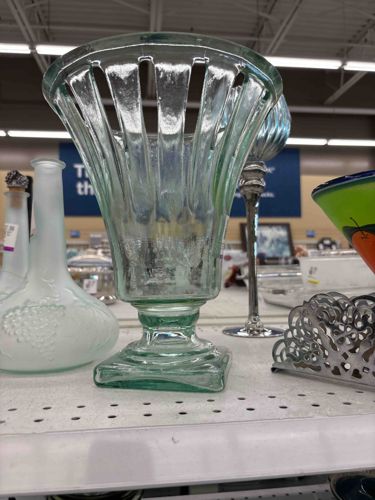
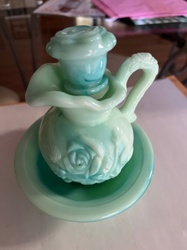
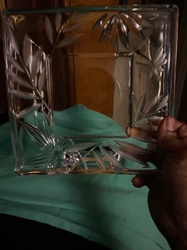
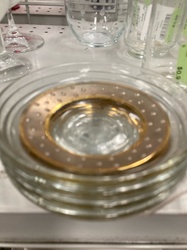
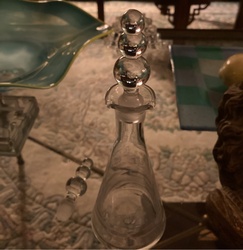
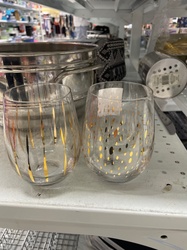
This item is a decorative glass vase or compote, characterized by its translucent, pale green or aqua tint, typical of recycled or Depression-era glass, though its exact age is hard to pinpoint without further markings. It stands on a squared, stepped pedestal base, giving it stability and a formal appearance. The body of the vessel is flared, tapering from a wider top opening down to a narrower stem that connects to the base. A distinctive feature of its design is the ribbed or fluted effect created by vertical, concave channels extending from the rim down towards the waist. These channels are widely spaced, allowing light to beautifully interact with the glass. Notably, the rim of the vase has small, evenly spaced cutout sections along its edge, giving it a somewhat perforated or scalloped look, enhancing its decorative appeal and suggesting it might have been intended for holding flowers. The glass appears to be machine-made, consistent with mass production, and it shows some typical imperfections like slight variations in thickness and possibly small air bubbles, which are common in this type of glass. There are no immediate visible signs of major damage like chips or cracks, and the glass maintains a good overall clarity despite the tint, indicating fair to good condition with a natural patina from age or handling.
AI Appraisal Report
This pale green fluted glass vase/compote with a pedestal base presents as a charming piece of decorative glassware. Based on my visual examination of the provided image, its condition appears to be fair to good. I observe no obvious chips, cracks, or significant damage, which is a positive factor for its value. The glass exhibits characteristics consistent with Depression-era or mid-20th-century mass-produced glass, such as the pale aqua/green tint, fluted design, and the subtle imperfections like potential variations in thickness and small air bubbles. The squared, stepped pedestal base and the scalloped rim add to its aesthetic appeal. The machine-made nature is apparent, suggesting factory production rather than artisanal craftsmanship.
Regarding authenticity, solely based on images, I can confirm it is a piece of pressed glass. However, validating its precise age (e.g., Depression-era vs. later reproduction) requires in-person examination for pontil marks, mold lines, and specific glass composition analysis. Without physical handling, I cannot definitively determine if it's a genuine antique from the Depression era or a more recent vintage piece. Provenance documentation, if available, would significantly aid in this determination.
The market for vintage and antique decorative glassware, particularly Depression glass, is generally stable but not experiencing a surge in demand. Items like this vase/compote are relatively common, which impacts rarity. Comparables would include similar fluted or paneled glass vases and compotes in colors like green, pink, and clear. Pieces with unique designs or from highly sought-after manufacturers tend to fetch higher prices. This piece, while attractive, doesn't appear to possess exceptionally rare design elements or identifiable maker's marks that would elevate it into a high-value category. Its decorative appeal, good condition, and potential vintage age are the primary value drivers. If provenience or a specific desirable manufacturer were confirmed, the value could increase.