KEY-BAK Retractable Key Reel
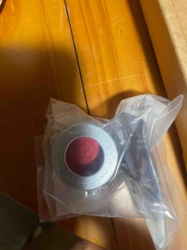
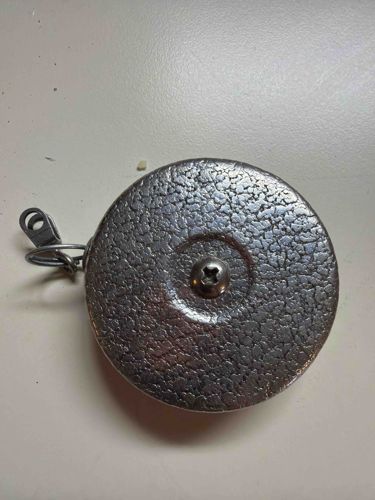
This is a heavy-duty retractable key reel, commonly known by the brand name KEY-BAK. The item features a circular chrome-plated steel housing with an architectural 'crackle' or hammertone-textured finish, designed for durability and to mask fingerprints. It measures approximately 2 inches in diameter. The construction consists of two stamped steel halves joined by a central Phillips-head screw and nut assembly, which allows for internal maintenance of the spring mechanism. From the side, a stainless steel split ring is attached to a swiveling metal end-fitting, which would connect to a Kevlar or steel internal chain/cord. The condition is used, showing minor surface oxidation in the crevices of the texture and light abrasions consistent with frequent utility use. These tools were popularized in the mid-20th century (circa 1948 onwards) for use by janitors, security guards, and maintenance workers. The craftsmanship is industrial-grade, prioritizing mechanical function and longevity over aesthetic refinement. No specific maker's marks are visible on this side, though they are typically embossed on the reverse belt-clip side.
AI-Generated Appraisal Disclaimer
Estimated Value
$15.00 - $25.00
Basic Information
Category
Safety and Security Hardware / Utility Tools
Appraised On
March 7, 2026
Estimated Value
$15.00 - $25.00
Item Description
This is a heavy-duty retractable key reel, commonly known by the brand name KEY-BAK. The item features a circular chrome-plated steel housing with an architectural 'crackle' or hammertone-textured finish, designed for durability and to mask fingerprints. It measures approximately 2 inches in diameter. The construction consists of two stamped steel halves joined by a central Phillips-head screw and nut assembly, which allows for internal maintenance of the spring mechanism. From the side, a stainless steel split ring is attached to a swiveling metal end-fitting, which would connect to a Kevlar or steel internal chain/cord. The condition is used, showing minor surface oxidation in the crevices of the texture and light abrasions consistent with frequent utility use. These tools were popularized in the mid-20th century (circa 1948 onwards) for use by janitors, security guards, and maintenance workers. The craftsmanship is industrial-grade, prioritizing mechanical function and longevity over aesthetic refinement. No specific maker's marks are visible on this side, though they are typically embossed on the reverse belt-clip side.
Get Your Items Appraised
Instant estimates of your treasures with AI-powered instant appraisals