AI Appraisal Estimate

AI-generated estimates · not official valuations

From the user

What was submitted

Photo and notes provided by the user — not generated by AI

Submitted item photo
Submitted photo · May 27, 2026

User's notes

Mid century

AI analysis below

AI appraisal

AI analysis & estimate

AI-Generated · Verify before acting

Everything below is generated by AI for informational purposes only. AI can make mistakes — the AI may misidentify items or misattribute them (artist, maker, brand, designer, origin, era). This is not an official valuation and should not be used for insurance, sale, tax, estate, legal, or lending purposes — or any decision requiring a certified appraisal. It is not an authoritative claim about any person, brand, or rights holder — do not share or rely on it as a factual statement about a third party. Always consult qualified professionals before making financial decisions.

Note

This analysis also relies on unverified notes provided by the user, which may be incomplete or inaccurate and could affect the result.

Read the full disclaimer

AI Identification

·Not independently authenticated·Verify before acting

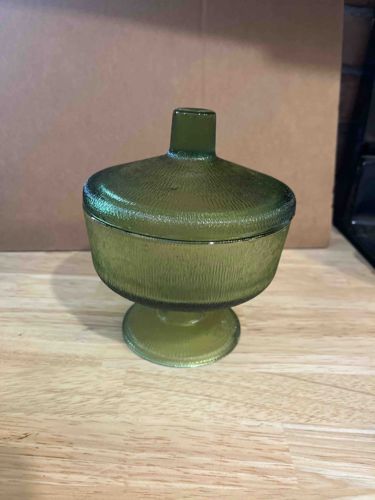
Mid-Century Olive Green Bark Textured Glass Lidded Candy Dish / Compote

Decorative Glassware / Serveware

AI Estimated Value

·Not an official valuation·Verify before acting

$25-40

As of May 27, 2026

AI Item Analysis

·AI can make mistakes·Verify before acting
This item is a Mid-Century Modern lidded candy dish or compote, crafted from olive green pressed glass. It features a textured surface, often referred to as 'bark' or 'tree bark' texture, which is characterized by irregular vertical ridges that create a tactile and visually interesting effect. The dish comprises two main parts: a bowl with a footed base and a fitted lid with a stubby, cylindrical finial or handle. The bowl has a footed design, elevating it slightly from the resting surface, typical of compotes or candy dishes. The color is a distinct olive green, popular in Mid-Century decor, which can sometimes appear darker or lighter depending on the lighting. The glass is opaque enough to obscure contents somewhat but still allows for light to play across its textured surface, highlighting the ridges. There are no visible chips, cracks, or significant wear indicative of notable damage. The surface appears to have a consistent finish with no apparent repairs. The craftsmanship suggests mass production typical of pressed glass items from the mid-20th century, though the texture adds a dimension of quality. The construction is solid, indicating durability. Given the context of 'Mid-Century', this piece likely dates from the 1950s to 1970s.
AI Appraisal Report

·AI can make mistakes·Verify before acting
Upon examining the images and details provided for this Mid-Century lidded candy dish, my assessment is as follows. The piece presents as a characteristic example of mid-20th century decorative glassware, likely from the 1960s or 1970s. The olive green color and 'bark' texture are iconic design elements of that era. Based on the visual information, the item appears to be in excellent condition, with no visible chips, cracks, or repairs, which is a primary driver of its value. The glass appears clean and the texture well-defined, suggesting it was well-cared-for. Market analysis of comparable items reveals that similar pressed glass candy dishes in this style are relatively common. Pieces from well-known manufacturers like Anchor Hocking (in their 'Tree Bark' pattern) or Indiana Glass often fetch prices in this range. The value for this specific item is modest, reflecting its mass-produced nature rather than designer attribution or rarity. The current market shows steady but not high demand for this type of collectible glassware, primarily from decorators and enthusiasts of Mid-Century Modern style. The excellent condition is the key factor supporting its valuation at the higher end of the typical range for such pieces. However, this appraisal is based solely on images. A definitive attribution to a specific manufacturer (e.g., Anchor Hocking, Indiana Glass, or another contemporary) would require an in-person examination to identify any maker's marks on the base or subtle variations in the pattern or glass quality. Without physical inspection, I cannot fully authenticate its origin.

Get your items appraised

Instant estimates of your treasures with AI-powered appraisals

Browse More Appraisals