AI estimate as of August 9, 2025 · verify with a professional before acting
AI-Generated · Verify before acting
Everything on this page is generated by AI for informational purposes only. AI can make mistakes — the AI may misidentify items or misattribute them (artist, maker, brand, designer, origin, era). This is not an official valuation and should not be used for insurance, sale, tax, estate, legal, or lending purposes — or any decision requiring a certified appraisal. It is not an authoritative claim about any person, brand, or rights holder — do not share or rely on it as a factual statement about a third party. Always consult qualified professionals before making financial decisions.
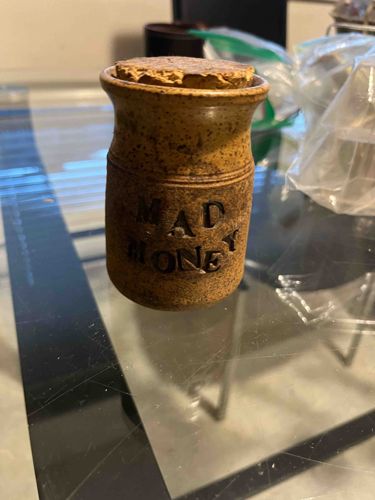
This item is a small, cylindrical stoneware container with a slightly flared rim at the top and a distinct shoulder leading to the main cylindrical body. The primary material appears to be a reddish-brown stoneware or pottery with a speckled, rustic glaze that gives it a mottled, earthy appearance. The color varies from a lighter tan to darker brown spots, suggesting a naturalistic or 'salt-glaze' type finish, often associated with artisanal ceramics. The word "MAD" is prominently embossed or incised on the upper portion of the body, and "MONEY" is similarly displayed below it, both in a blocky, somewhat irregular sans-serif font, suggesting a handcrafted or kitsch aesthetic. The surface shows some slight wear and scuffing consistent with age and handling, but no major cracks or chips are visible, indicating a relatively good, used condition. The container is topped with a roughly cut, thick cork stopper, which fits snugly into the opening, further emphasizing its utilitarian yet decorative purpose. There are no discernible maker's marks or signatures visible from the provided images. The overall style and text suggest it is a novelty or whimsical item, likely from the late 20th or early 21st century, designed for humorous saving of \"mad money.\" The craftsmanship appears to be sturdy and functional, typical of small-batch pottery or souvenir ware.
AI Appraisal Report
I have examined the provided image of the stoneware 'Mad Money' jar with a cork stopper.
**Condition and Authenticity:** Based on the visual evidence, the item appears to be in relatively good, used condition. I observe slight wear and scuffing consistent with age and handling, but no major cracks or chips are visible. The rustic glaze and embossed text suggest a novelty or handcrafted item. Without a physical examination, I cannot definitively confirm the authenticity of the material or the exact manufacturing process (e.g., hand-thrown vs. molded).
**Market Conditions and Comparables:** This item falls into the category of novelty pottery or decorative containers. Similar utilitarian stoneware items, especially those without notable artisan marks or historical significance, typically command modest prices in the secondary market. Comparables would include other small, mass-produced or studio pottery money jars, decorative crocks, or souvenir ware.
**Demand and Rarity:** The demand for such a specific novelty item is niche. Its rarity is low; while this exact design might not be ubiquitous, the concept of a 'mad money' jar is common, and many similar stoneware pieces exist. The lack of a discernible maker's mark or unique artistic quality limits its collectibility.
**Factors Impacting Value:** The primary value is decorative and functional. Factors that would increase value (and are absent here) include age verified as antique, renowned pottery maker, unique artistic merit, or historical provenance. The wear, while not severe, further positions it as a used decorative item.
**Limitations and Further Verification:** My assessment of authenticity and condition is limited to what is discernible from the image. For full authentication, I would require a physical examination to properly assess the texture, weight, and internal condition, which could reveal hairline cracks or repairs not visible here. Scientific testing (e.g., thermoluminescence for age) would be needed for precise dating, and a search for maker's marks, if they exist but are obscured, would necessitate in-person handling. Provenance documentation, if available, would provide invaluable context to its history and origin.