AI Appraisal Estimate

AI-generated estimates · not official valuations

From the user

What was submitted

Photo and notes provided by the user — not generated by AI

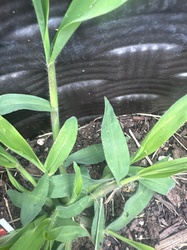
Submitted item photo
Submitted photo · May 22, 2026

User's notes

No additional notes provided.

AI analysis below

AI appraisal

AI analysis & estimate

AI-Generated · Verify before acting

Everything below is generated by AI for informational purposes only. AI can make mistakes — the AI may misidentify items or misattribute them (artist, maker, brand, designer, origin, era). This is not an official valuation and should not be used for insurance, sale, tax, estate, legal, or lending purposes — or any decision requiring a certified appraisal. It is not an authoritative claim about any person, brand, or rights holder — do not share or rely on it as a factual statement about a third party. Always consult qualified professionals before making financial decisions.

Read the full disclaimer

AI Identification

·Not independently authenticated·Verify before acting

Glechoma hederacea (Ground Ivy)

Botanical Specimens

AI Estimated Value

·Not an official valuation·Verify before acting

$0.00 - $5.00

As of May 22, 2026

AI Item Analysis

·AI can make mistakes·Verify before acting
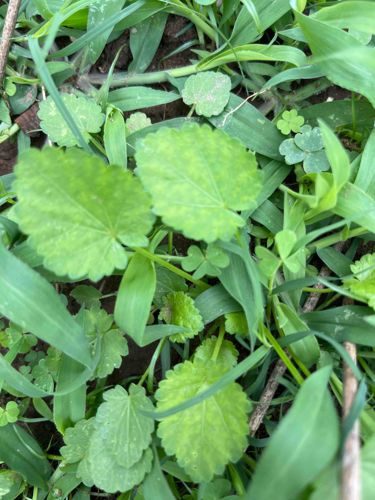
This living specimen features the distinct foliage of Glechoma hederacea, commonly known as Ground Ivy, Creeping Charlie, or Gill-over-the-ground. The leaves are characterized by their reniform (kidney-shaped) to cordate (heart-shaped) structure with crenate, or rounded, tooth-like margins. They exhibit a light to medium green color with a slightly textured, matte surface and prominent palmate venation branching from the petiole. The individual leaves are roughly 1 to 3 centimeters in diameter, growing in an opposite pattern along creeping, square-shaped stems which are typical of the Lamiaceae (mint) family. Interspersed among the ground ivy are long, linear blades of grass and small trifoliate leaves suggestive of clover (Trifolium), indicating a mixed herbaceous ground cover. The Ground Ivy appears to be in its vegetative growth stage, showing healthy green coloration with some minor mottling or light spots on the upper leaf surfaces, likely due to natural environmental factors or early-season insect activity. No flowers are visible in this view, though the species typically produces small, funnel-shaped violet-blue blooms in the spring. There are no signs of synthetic manufacturing or human-made labels; this is a naturally occurring plant specimen found in a residential or wild lawn environment.

AI Appraisal Report

·AI can make mistakes·Verify before acting
Upon visual examination of the provided photograph, I have identified the specimen as Glechoma hederacea, commonly known as Ground Ivy. The specimen appears in a healthy, vegetative state, displaying the characteristic kidney-shaped leaves and square stems indicative of the Lamiaceae family. The condition is consistent with naturally occurring wild flora; I observe minor chlorotic mottling on some leaf surfaces, which is typical for outdoor specimens exposed to environmental stressors and common pathogens. Authenticity of the species is confirmed through morphological primary characteristics, though I must note that this is a ubiquitous, invasive perennial in many temperate regions. From a market perspective, Ground Ivy holds negligible commercial value as a collectible botanical. It is often classified as a common lawn weed rather than a sought-after ornamental or rare specimen. Unlike rare variegated cultivars or scientifically preserved herbarium sheets with historical provenance, this living ground cover lacks the scarcity required to command a professional market price. Factors such as its rapid stoloniferous growth and invasive nature further depress its valuation. Limitations of this appraisal include the inability to perform genetic sequencing or microscopic analysis to rule out hybrid variations. A definitive valuation would require physical inspection of the root system and soil quality to determine viability for transplant, though such efforts would likely exceed the plant's inherent value. For high-value botanical appraisals, documentation regarding legal collection or historical nursery lineage would be standard, neither of which is applicable here.

Related Tags

Explore similar items and categories

Get your items appraised

Instant estimates of your treasures with AI-powered appraisals

Browse More Appraisals