These notes were written by the person who submitted this item. Appraiser.AI has not verified them, and the AI's identification and estimate may rely on them.
AI Estimated Value
Not an official valuation
$1,400 - $1,800
AI estimate as of August 30, 2025 · verify with a professional before acting
AI-Generated · Verify before acting
Everything on this page is generated by AI for informational purposes only. AI can make mistakes — the AI may misidentify items or misattribute them (artist, maker, brand, designer, origin, era). This is not an official valuation and should not be used for insurance, sale, tax, estate, legal, or lending purposes — or any decision requiring a certified appraisal. It is not an authoritative claim about any person, brand, or rights holder — do not share or rely on it as a factual statement about a third party. Always consult qualified professionals before making financial decisions.
This analysis also relies on unverified notes provided by the user, which may be incomplete or inaccurate and could affect the result.
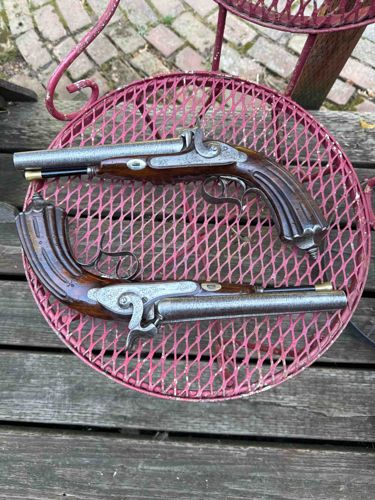
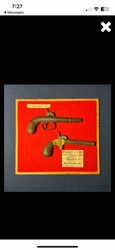
This pair of firearms consists of two Belgian double-barrel percussion pistols, likely dating to the mid-19th century, possibly around the 1840s to 1860s. Each pistol features two side-by-side barrels, suggesting they were designed for situations requiring quick follow-up shots. The metal components, including the barrels, locks, and trigger guards, appear to be made of steel or iron, exhibiting a greyish patina consistent with significant age and storage. Some areas show pitting and surface corrosion, particularly on the barrels and around the hammers and percussion nipples, indicating exposure to moisture or neglect over time, but generally appear structurally sound. The wooden stocks are crafted from a dark, possibly walnut, wood with a rich grain, showing multiple fluted channels along the grip for enhanced handling and aesthetic appeal. The buttcaps on both pistols are made of metal, possibly steel, and are decoratively shaped, adding a distinctive touch. The hammers are external and percussion-cap operated, typical for the era. The triggers are single or double, with a simple trigger guard. The craftsmanship, though showing utilitarian features, also incorporates some decorative elements on the metalwork, such as light engraving around the lock plates and hammers, enhancing their visual appeal. The overall condition suggests these pistols were used but maintained somewhat, although showing clear signs of antique status and natural wear. There are no readily apparent manufacturer marks visible from the provided images, which is common for some Belgian-made firearms of this period which were often produced for export or by smaller workshops. The loading ramrods are present, appearing in brass and dark wood or horn, mounted beneath the barrels, which is essential for muzzle-loading percussion pistols. The pistols are of a medium size, suitable for personal defense or dueling, and represent a period of transition in firearm technology.
AI Appraisal Report
Upon examining this pair of Belgian double-barrel percussion pistols, I find them to be authentic examples from the mid-19th century, likely produced between 1840 and 1860. The side-by-side barrel configuration, external hammers, and overall design are consistent with firearms from this period. The condition is fair to good for their age, exhibiting a consistent grey patina on the steel components, along with expected pitting and minor surface corrosion. Such wear is typical for antique firearms and does not significantly detract from their value, instead adding to their character. The fluted walnut stocks appear original and intact, though showing signs of handling. The presence of the original or period-appropriate ramrods is a positive factor.
The market for antique percussion firearms is stable. Matched pairs, such as this, are more desirable and command a premium over single pistols. Comparable pairs of Belgian percussion boxlock or back-action pistols in similar condition typically sell in the $1,200 to $2,000 range. The decorative elements, such as the shaped buttcaps and light engraving, enhance their appeal to collectors. The lack of visible maker's marks is not unusual for Belgian-made firearms of this era, which were often produced by guilds or smaller workshops for export, but it does limit the ability to attribute them to a renowned gunsmith, which could have increased their value.
My appraisal is based on the visual information provided. A definitive authentication would require an in-person examination to assess the mechanical function of the locks, check the bores for condition, and search for hidden proof marks or maker's marks under the barrels. Without physical inspection, I cannot confirm the structural integrity or firing condition, which are critical valuation factors.