AI estimate as of November 30, 2025 · verify with a professional before acting
AI-Generated · Verify before acting
Everything on this page is generated by AI for informational purposes only. AI can make mistakes — the AI may misidentify items or misattribute them (artist, maker, brand, designer, origin, era). This is not an official valuation and should not be used for insurance, sale, tax, estate, legal, or lending purposes — or any decision requiring a certified appraisal. It is not an authoritative claim about any person, brand, or rights holder — do not share or rely on it as a factual statement about a third party. Always consult qualified professionals before making financial decisions.
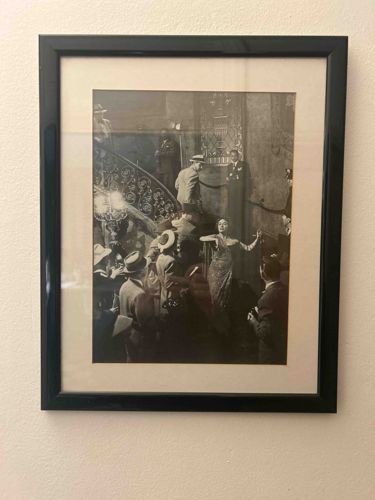
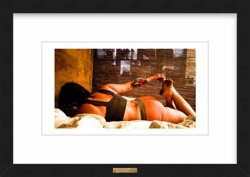
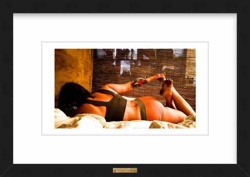
This item is a framed black and white photograph depicting a dynamic scene on a grand staircase, likely from the early to mid-20th century. The photograph captures a moment of activity, possibly a social gathering or a performance, with numerous individuals dressed in period attire. In the center-right of the lower half, a woman in a patterned dress appears to be singing or performing, gesturing with her arms, and drawing attention from the surrounding crowd. Many figures are seen on the staircase and landing, with some looking towards the central performing figure and others interacting among themselves. Men are predominantly wearing suits and hats, while the women's attire suggests formal or semi-formal occasions. The staircase itself is an impressive feature, with ornate, possibly wrought-iron, railings and decorative architectural elements visible in the background, including lighting fixtures that cast glares and reflections, indicating a well-lit interior space. The print exhibits a clear distinction in tones, characteristic of black and white photography, with good contrast. The photograph is housed within a contemporary, simple black wooden or plastic frame with a smooth finish, and is matted with a clean white border, effectively separating the image from the frame. No significant damage or wear is discernible on the visible surface of the photograph itself, though reflections on the protective glazing obscure some finer details. The frame also appears to be in good condition, hanging on a textured, light-colored wall. The overall presentation is clean and well-maintained.
AI Appraisal Report
Based on my visual examination of the framed black and white photograph, the item appears to be in good overall condition. The print itself exhibits good contrast and tonal range, characteristic of period black and white photography, and I observe no significant damage or wear on its visible surface. The contemporary black frame and white mat are clean and well-maintained, presenting the image effectively, though reflections on the glazing obscure some fine details. Authenticity, based solely on this image, suggests a period print, likely an original gelatin silver print, given the apparent age of the scene (early to mid-20th century) and the photographic quality. However, without physical inspection, I cannot confirm the printing process (e.g., modern reprint vs. vintage original) nor the photographer's identity.
Market conditions for unsigned, unidentified vintage black and white photographs of generic social scenes like this are generally moderate. Comparables often fall into the general decorative art market rather than fine art photography, unless a notable photographer, event, or location can be definitively identified. Demand for such pieces is present, particularly for those seeking period aesthetics or interesting narrative content, though it is not considered rare. The lack of an identifiable photographer, printmaker, or specific event significantly limits its value as a fine art piece. Factors positively impacting value are the compelling narrative and good condition; however, the lack of provenance and the inability to conclusively identify it as a vintage print, rather than a later reproduction, are major limiting factors.
For full authentication, an in-person examination is crucial to determine print type (e.g., gelatin silver, albumen, gravure) and its age, assess physical condition more precisely, and search for any hidden signatures, stamps, or edition numbers. Provenance documentation, such as collection history or original acquisition records, would also significantly aid in verifying its authenticity and potentially increasing its value. Without such verification, it remains a decorative period piece.