AI estimate as of September 20, 2025 · verify with a professional before acting
AI-Generated · Verify before acting
Everything on this page is generated by AI for informational purposes only. AI can make mistakes — the AI may misidentify items or misattribute them (artist, maker, brand, designer, origin, era). This is not an official valuation and should not be used for insurance, sale, tax, estate, legal, or lending purposes — or any decision requiring a certified appraisal. It is not an authoritative claim about any person, brand, or rights holder — do not share or rely on it as a factual statement about a third party. Always consult qualified professionals before making financial decisions.
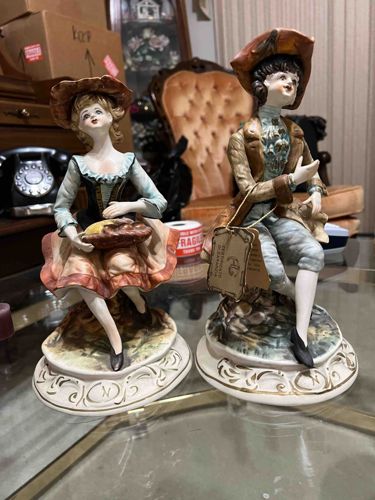
This set of two porcelain figurines depicts a man and a woman dressed in 18th-century style attire, likely representing a pastoral or rococo theme. Each figure is seated on a small, naturalistic base with painted moss and foliage details, which in turn rests on an ornate, cream-colored circular plinth with raised scrollwork decoration, highlighted with gold accents. The female figurine wears a light blue bodice with lighter sleeves and a ruffled neckline, paired with a flowing skirt that transitions from a creamy beige to a rust or coral hue. Her hair is styled up and covered by a brown, wide-brimmed hat. She holds a basket containing yellow fruit. The male figurine is dressed in a light brown coat, possibly a tricorn hat (also brown), a patterned blue and white waistcoat, and light blue breeches. He clutches a brown bag or satchel with a tag attached, suggesting a traveler's motif. Both figures have pale skin tones, dark hair (where visible), and delicate facial features, including painted eyes and rosy cheeks. Their footwear appears to be dark, possibly black, slip-on shoes. The overall construction is ceramic or porcelain with a glossy glaze. There are no immediately apparent significant damages like chips or cracks, but closer inspection would be needed to confirm. There is a tag hanging from the male figure's satchel which might provide maker's marks or origin information, but the text is not fully legible from the image. The style suggests a revival of 18th-century European porcelain, possibly mid-20th century production, aiming for a classic and elegant decorative aesthetic. The craftsmanship appears to be of good quality, with attention to detail in the clothing folds, facial expressions, and hand-painted elements.
AI Appraisal Report
Based on my visual examination of the provided image, this set of two porcelain figurines, depicting an 18th-century style couple, appears to be in very good condition. I detect no immediate chips, cracks, or significant losses to the painted decoration, which suggests careful handling or recent production. The glossy glaze is intact on both figures. The detailed painting of the attire, facial features, and base elements like moss and scrollwork indicates a good level of craftsmanship. The style, aiming for a revival of 18th-century European porcelain, particularly rococo or pastoral themes, points towards a likely mid-20th century production. The ornate bases with gold accents enhance their decorative appeal.
Market conditions for decorative porcelain figurines of this type are generally moderate. While appealing, they are not typically considered high-value antiques unless provenance can link them to a significant past owner or established, highly collectible manufacturers like Meissen, Capodimonte, or Dresden. Demand for mid-20th century reproductions, while steady, doesn't command premium prices. Comparables in the market, often referred to as 'parlor figurines,' typically fall within a modest range, reflecting their decorative rather than fine art status.
The primary factor impacting value is the lack of a discernible maker's mark or definitive identification. The tag on the male figure's satchel is a crucial element for authentication, but its text is illegible from the image. Without knowing the manufacturer, region of origin, or precise age, it's difficult to elevate their value beyond decorative collectibles. Rarity is not overtly suggested; similar reproductions are relatively common.
To fully authenticate these pieces and determine their true value, an in-person examination is essential. I would need to inspect for any subtle repairs, assess the quality of the porcelain body and hand-painting up close, and crucially, fully decipher any manufacturer's marks or tags. Provenance documentation, if available, would also be invaluable. Without this, my appraisal remains largely based on their decorative appeal and assumed production period.