AI estimate as of September 15, 2025 · verify with a professional before acting
AI-Generated · Verify before acting
Everything on this page is generated by AI for informational purposes only. AI can make mistakes — the AI may misidentify items or misattribute them (artist, maker, brand, designer, origin, era). This is not an official valuation and should not be used for insurance, sale, tax, estate, legal, or lending purposes — or any decision requiring a certified appraisal. It is not an authoritative claim about any person, brand, or rights holder — do not share or rely on it as a factual statement about a third party. Always consult qualified professionals before making financial decisions.
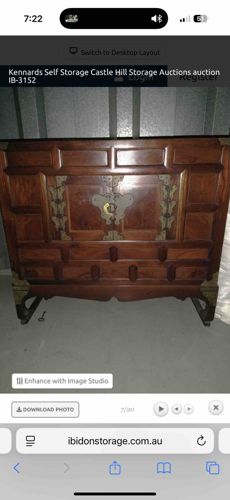
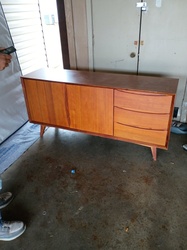
This is a rectangular-shaped chest or cabinet, likely crafted from a dark, rich wood, possibly rosewood or a similar hardwood, given its color and apparent density. The primary color is a deep reddish-brown, characteristic of many antique East Asian furniture pieces. The construction features a paneled design on the front surface, creating a visually segmented facade. Overlaid on the woodworking are significant brass or bronze hardware elements. These include an elaborate central lock plate and escutcheon, shaped somewhat like a stylized bat or butterfly, with a crescent-shaped pull or lock mechanism. Flanking this central hardware are decorative brass corner plates or appliqués, which appear to have an intricate, possibly floral or geometric, embossed pattern. The chest stands on splayed legs, which are reinforced and decorated with substantial brass or bronze brackets at the corners, extending from the body of the chest down to the feet. Small, dark, round pulls are visible on what appear to be lower drawers or false drawer fronts. The overall style suggests an East Asian origin, possibly Chinese or Korean, and could be late 19th to mid-20th century in age. Visible condition issues are minimal from the provided image, but some surface wear and patina on the brass hardware are expected given its age and material. The wood finish appears relatively well-maintained, though a thorough inspection would be needed to identify any scratches, dents, or repairs. The craftsmanship seems robust, with sturdy construction and detailed metalwork, indicative of traditional furniture-making techniques.
AI Appraisal Report
Based on my visual examination of the provided image, this East Asian style chest/cabinet appears to be a well-crafted piece, likely dating from the late 19th to mid-20th century. The deep reddish-brown wood, indicative of rosewood or a similar dense hardwood, along with the detailed brass hardware, suggests good quality construction. The elaborate central lock plate, corner plates, and splayed legs with brass brackets are characteristic features of this style. Condition appears good from the image, with expected patina on the brass and a seemingly well-maintained wood finish. However, a physical inspection would be crucial to confirm any surface wear, scratches, dents, or repairs not visible here.
Market conditions for East Asian furniture, particularly those with ornate details and solid construction, remain stable. Comparable pieces often fetch prices within the high hundreds to low thousands, depending on origin, age, and condition. The demand for authentic, well-preserved pieces is moderate, and its appeal leans towards collectors or individuals seeking statement pieces for interior design. The intricate metalwork and robust build contribute positively to its desirability and value.
Factors significantly impacting value include the precise wood species, the true age, and the extent of any restoration. Without in-person examination, I cannot definitively confirm the wood type or assess the structural integrity and hidden repairs. Provenance documentation, such as original purchase records or family history, would significantly aid in authenticating its age and origin. Scientific testing of the wood or metal could also provide definitive age and material identification, which would further refine this appraisal.