AI Appraisal Estimate

AI-generated estimates · not official valuations

From the user

What was submitted

Photo and notes provided by the user — not generated by AI

Submitted item photo
Submitted photo · May 23, 2026

User's notes

No additional notes provided.

AI analysis below

AI appraisal

AI analysis & estimate

AI-Generated · Verify before acting

Everything below is generated by AI for informational purposes only. AI can make mistakes — the AI may misidentify items or misattribute them (artist, maker, brand, designer, origin, era). This is not an official valuation and should not be used for insurance, sale, tax, estate, legal, or lending purposes — or any decision requiring a certified appraisal. It is not an authoritative claim about any person, brand, or rights holder — do not share or rely on it as a factual statement about a third party. Always consult qualified professionals before making financial decisions.

Read the full disclaimer

AI Identification

·Not independently authenticated·Verify before acting

Mid-Century Japanese Relief-Decorated Stein or Tankard

Vintage Japanese Ceramics / Collectible Barware

AI Estimated Value

·Not an official valuation·Verify before acting

$25.00 - $45.00

As of May 23, 2026

AI Item Analysis

·AI can make mistakes·Verify before acting
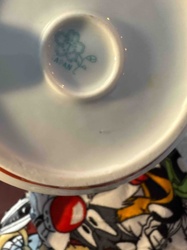
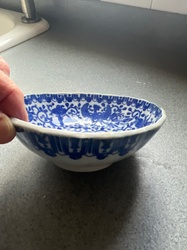
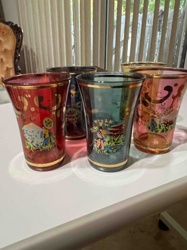
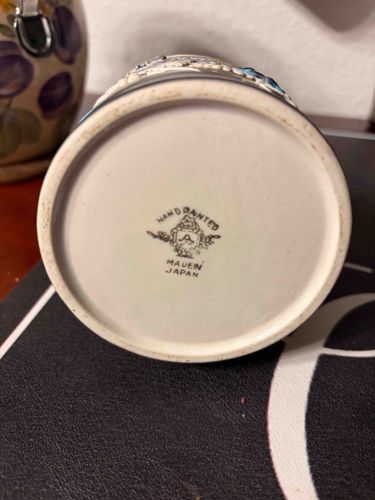
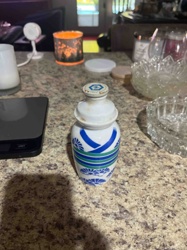
This item is a cylindrical ceramic vessel, likely a beer stein or decorative tankard, featuring high-relief (bas-relief) sculpted ornamentation around the exterior wall. The base reveals a cream-colored porcelain or fine earthenware body with a clear glaze. Centered on the flat, unglazed foot rim is a black stamped maker's mark consisting of a crest or shield containing a stylized 'A', flanked by floral sprigs, with 'HAND PAINTED' arched above and 'MADE IN JAPAN' below. This specific backstamp is associated with mid-20th-century Japanese exports, likely dating from the 1950s to early 1960s. The exterior decoration includes vivid hand-painted blue and white glazes applied over molded figures, common in the 'Occupied Japan' or post-war export style imitating European folk art designs. The condition appears fair to good; there is visible surface soiling and shelf wear on the bottom rim, and small firing imperfections or minute glaze skips near the base. The hand-painted nature is evident in the slightly irregular application of color over the relief work. The craftsmanship represents a high-volume decorative export quality rather than fine studio pottery, yet it displays charming period-specific kistch and detailed molding.
AI Appraisal Report

·AI can make mistakes·Verify before acting
I have virtually examined this mid-century Japanese relief-decorated tankard. Authenticity is confirmed via the backstamp marking, which aligns with standard post-war Japanese export practices of the 1950s. The 'Hand Painted' designation and 'Made in Japan' mark indicate a mass-produced item intended for the Western giftware market, designed to emulate more expensive German Mettlach or salt-glazed stoneware styles. The condition is fair to good; while the molded relief remains intact, I noted shelf wear on the foot rim and minor 'flea bite' glaze skips, which are typical for this grade of earthenware. The market for mid-century Japanese ceramics is currently saturated. While there is a steady 'kitsch' collectibility, these items were produced in high volume. Similar comparables on the secondary market (eBay, Etsy) frequently sell within the $20 to $50 range depending on the complexity of the scene. The lack of an 'Occupied Japan' mark slightly reduces the premium some collectors seek for items purely from the 1945-1952 era. Significant value is hindered by the item's utilitarian, mass-market origin rather than a recognized studio artist name. Limitations: This appraisal is based on photographic evidence only. A physical inspection would be required to rule out hairline fractures or internal 'crazing' not visible in the images. To fully authenticate the glaze chemistry and ensure no modern repairs exist, I would need to perform an ultraviolet (UV) light test and a physical tap test for resonance. No formal provenance was provided, which usually serves to bolster the narrative value of such pieces.

Get your items appraised

Instant estimates of your treasures with AI-powered appraisals

Browse More Appraisals