AI identification & appraisal estimate

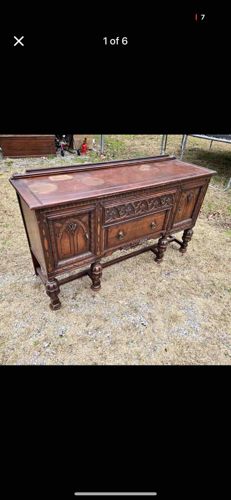
Tudor Revival Oak Sideboard

Submitted photo of Tudor Revival Oak Sideboard
Photo submitted by the user — not generated by AI

AI Estimated Value

Not an official valuation

$450 - $700

AI estimate as of February 25, 2026 · verify with a professional before acting

AI-Generated · Verify before acting

Everything on this page is generated by AI for informational purposes only. AI can make mistakes — the AI may misidentify items or misattribute them (artist, maker, brand, designer, origin, era). This is not an official valuation and should not be used for insurance, sale, tax, estate, legal, or lending purposes — or any decision requiring a certified appraisal. It is not an authoritative claim about any person, brand, or rights holder — do not share or rely on it as a factual statement about a third party. Always consult qualified professionals before making financial decisions.

Read the full disclaimer

AI Item Analysis

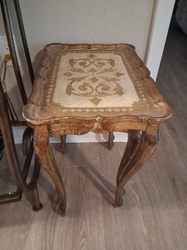
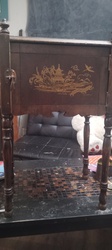
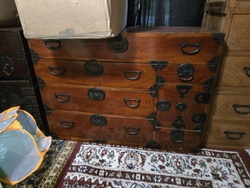
This is a heavy, rectangular Tudor Revival style sideboard, likely dating from the early to mid-20th century (circa 1920-1940). Constructed from solid oak and oak veneers, the piece features a dark walnut or dark oak finish. The front facade is divided into three sections: two side cupboards flanking a central drawer. The drawer and cupboard doors are heavily decorated with ornate relief carvings, including Gothic-arched tracery and floral motifs characteristic of Jacobean and Tudor influences. It rests on six substantial bulbous, turned 'cup-and-cover' legs, which are interconnected by a low, recessed perimeter stretcher for stability. The drawer is fitted with two patinated brass or bronze drop-pull handles. Regarding condition, the top surface shows significant water damage, including circular ring marks and areas of finish loss where the wood has lightened sustainably due to moisture or heat exposure. There is visible wear and scuffing along the lower stretchers and feet, consistent with age and use. The craftsmanship is high, evidenced by the intricate carving and robust joinery, though the surface requires professional restoration to address the top finish issues.
AI Appraisal Report

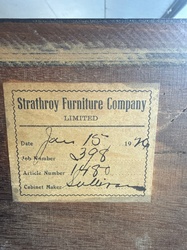
I have conducted a visual examination of this Tudor Revival oak sideboard, dating from the early-to-mid 20th century. The piece exhibits characteristic Jacobean-inspired elements, including 'cup-and-cover' bulbous legs and ornate relief carvings with Gothic tracery. While the cabinetry reflects the robust craftsmanship of the revival era, the valuation is heavily impacted by the condition of the top surface. The significant water staining and 'blooming' of the finish indicate moisture penetration that necessitates professional refinishing. Such damage typically reduces the fair market value by 40-50% compared to a mint-condition example, as collectors prioritize surface integrity. In the current market, heavy revival furniture faces moderate demand; while the scale and decorative carving are desirable for traditional interiors, the logistical costs of moving such a heavy item often cap its auction potential. Comparables in restored condition often reach $1,200, but in 'as-found' condition with visible surface degradation, the price point lowers significantly. It is important to note that this appraisal is based solely on digital images. A physical inspection is necessary to verify joinery techniques (such as presence of machine vs. hand-dovetailing) and to confirm if the primary wood is solid oak throughout or uses composite cores. To fully authenticate the age and origin, I would need to examine the undersides of the drawers for wear patterns and inspect the hardware for original casting marks. Provenance documentation regarding the original manufacturer or previous ownership would further solidify the valuation.

Keep exploring

More antique furniture appraisals

Get your items appraised

Instant AI-powered appraisal estimates from a photo

Browse More Appraisals