Marigold Iridescent Swung Glass Vase
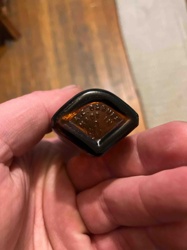
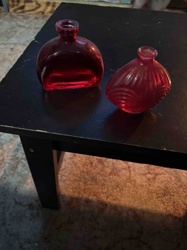
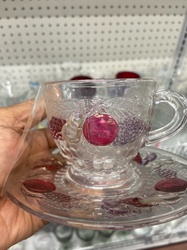
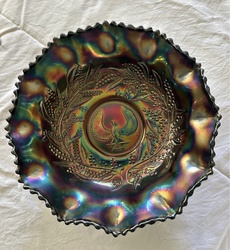
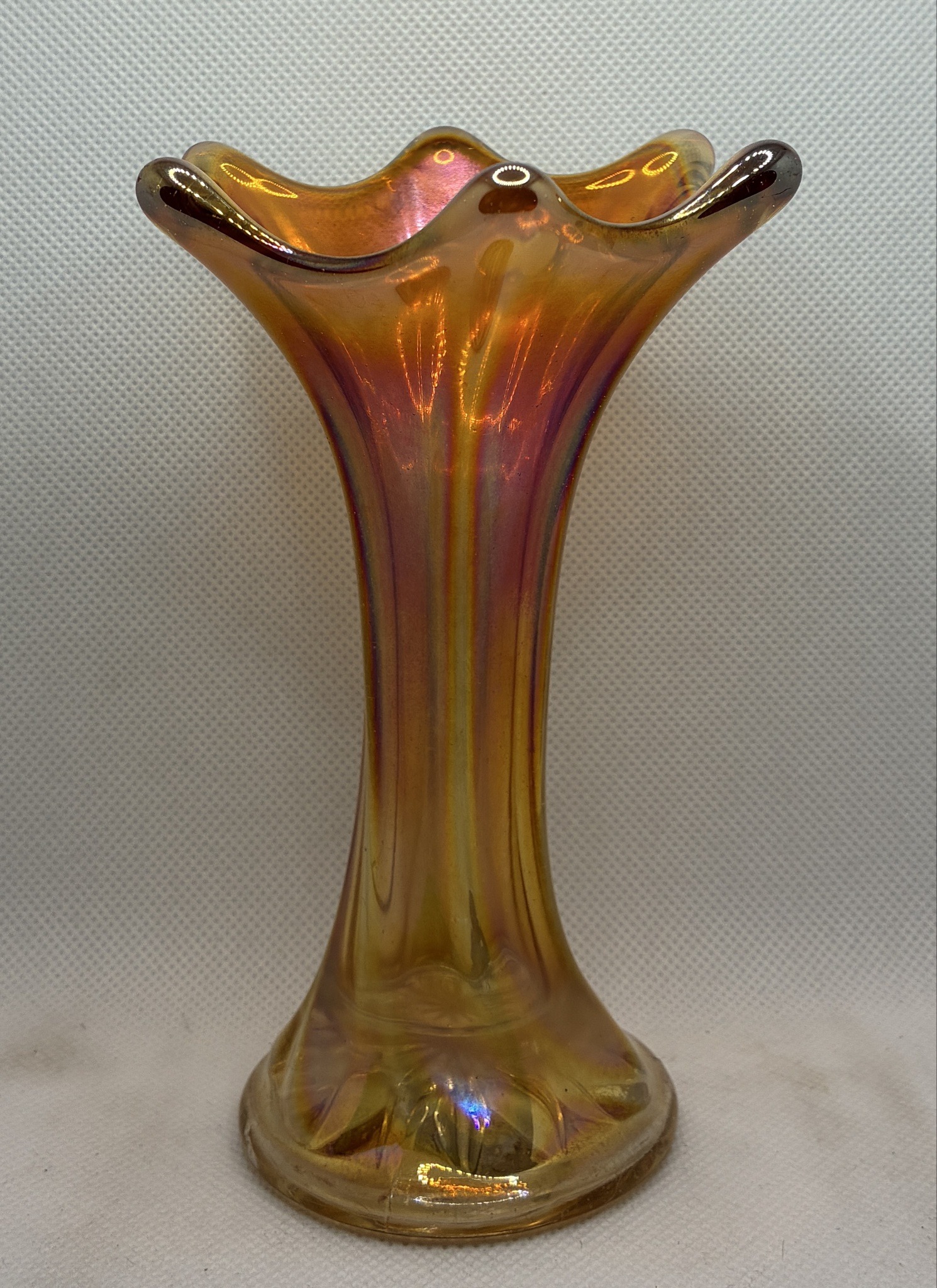
This item is a classic carnival glass swung vase, characterized by its vibrant marigold iridescent finish. The piece features a traditional trumpet shape that flares significantly at the pedestal base and tapers toward the middle before expanding into a dramatic, multi-pointed ruffled rim. The iridescence displays a spectrum of metallic hues, primarily golden-orange with strong flashes of pink, magenta, and soft violet when light hits the surface. The construction is pressed glass, as evidenced by the vertical mold lines running down the body and the petal-like geometric pattern embossed on the base. The 'swung' technique is evident in the elongated, slightly asymmetrical profile that was achieved by swinging the glass while molten to stretch the neck and rim. It likely dates to the early 20th century (circa 1910-1930), a style popularized by manufacturers like Fenton, Northwood, or Imperial. The condition appears very good with no visible chips or cracks. The surface retains a high-gloss luster, though there is a faint circular wear mark at the very bottom edge of the base, typical of age and shelf contact. The glass exhibits good clarity in the non-iridized portions, and the color application is consistent throughout the body, reflecting high-quality American glassmaking during the Arts and Crafts or Art Deco transition period.
AI-Generated Appraisal Disclaimer
Estimated Value
$45.00 - $75.00
Basic Information
Category
Antique Art Glass / Collectible Glassware
Appraised On
April 19, 2026
Estimated Value
$45.00 - $75.00
Additional Details Provided By Owner
User Provided Information
Carnival glass
Item Description
This item is a classic carnival glass swung vase, characterized by its vibrant marigold iridescent finish. The piece features a traditional trumpet shape that flares significantly at the pedestal base and tapers toward the middle before expanding into a dramatic, multi-pointed ruffled rim. The iridescence displays a spectrum of metallic hues, primarily golden-orange with strong flashes of pink, magenta, and soft violet when light hits the surface. The construction is pressed glass, as evidenced by the vertical mold lines running down the body and the petal-like geometric pattern embossed on the base. The 'swung' technique is evident in the elongated, slightly asymmetrical profile that was achieved by swinging the glass while molten to stretch the neck and rim. It likely dates to the early 20th century (circa 1910-1930), a style popularized by manufacturers like Fenton, Northwood, or Imperial. The condition appears very good with no visible chips or cracks. The surface retains a high-gloss luster, though there is a faint circular wear mark at the very bottom edge of the base, typical of age and shelf contact. The glass exhibits good clarity in the non-iridized portions, and the color application is consistent throughout the body, reflecting high-quality American glassmaking during the Arts and Crafts or Art Deco transition period.
Get Your Items Appraised
Instant estimates of your treasures with AI-powered instant appraisals