AI Appraisal Estimate

AI-generated estimates · not official valuations

From the user

What was submitted

Photo and notes provided by the user — not generated by AI

Submitted item photo
Submitted photo · June 1, 2026

User's notes

No additional notes provided.

AI analysis below

AI appraisal

AI analysis & estimate

AI-Generated · Verify before acting

Everything below is generated by AI for informational purposes only. AI can make mistakes — the AI may misidentify items or misattribute them (artist, maker, brand, designer, origin, era). This is not an official valuation and should not be used for insurance, sale, tax, estate, legal, or lending purposes — or any decision requiring a certified appraisal. It is not an authoritative claim about any person, brand, or rights holder — do not share or rely on it as a factual statement about a third party. Always consult qualified professionals before making financial decisions.

Read the full disclaimer

AI Identification

·Not independently authenticated·Verify before acting

Fenton Glass Hobnail Pattern Vase

Vintage Glassware & Collectibles

AI Estimated Value

·Not an official valuation·Verify before acting

$45-65

As of June 1, 2026

AI Item Analysis

·AI can make mistakes·Verify before acting
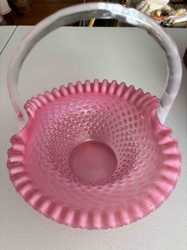
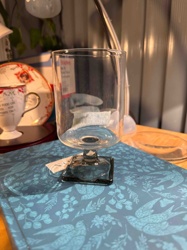
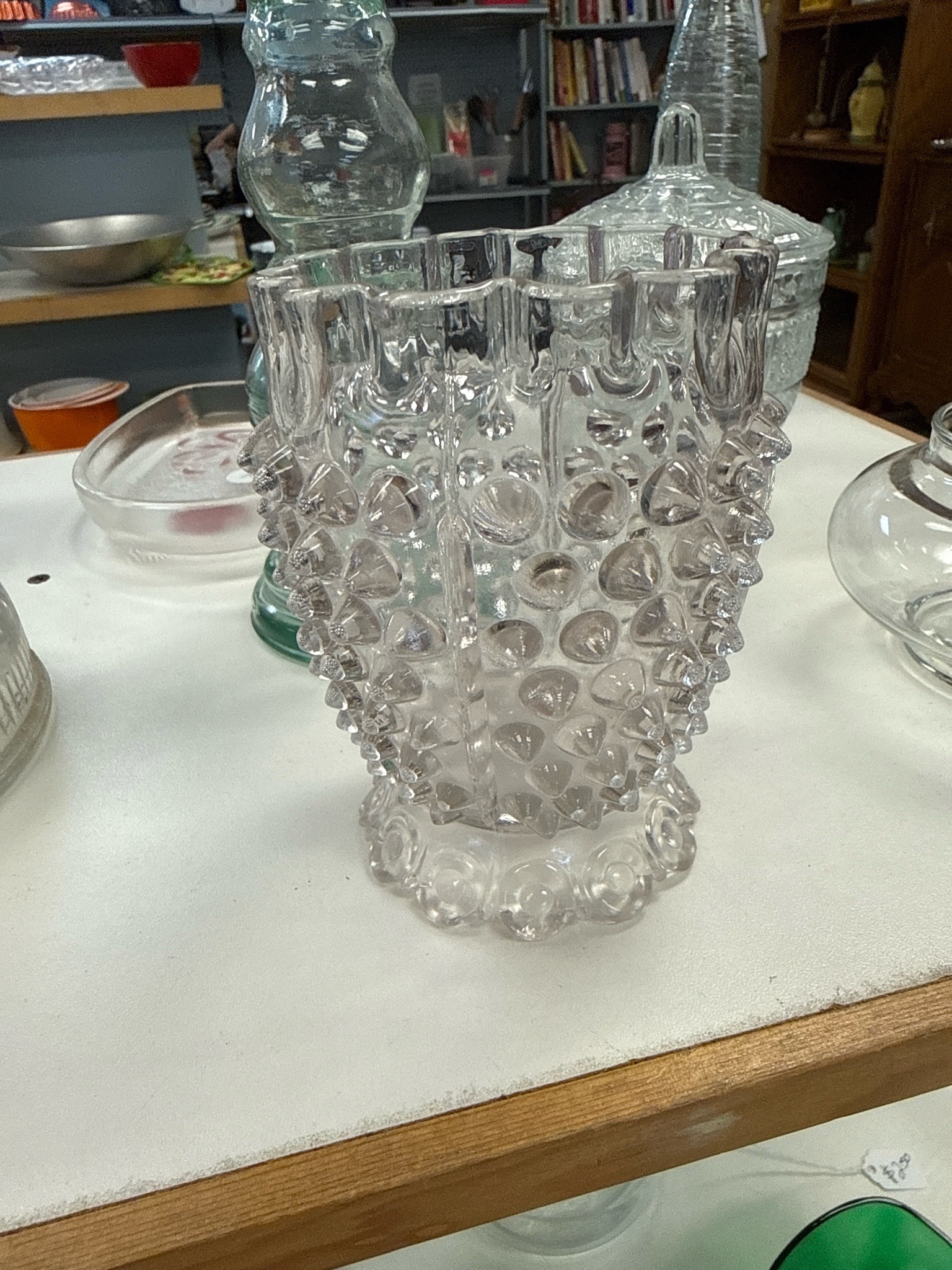
This is a medium-sized clear press-molded glass vase featuring a prominent hobnail pattern, which is a classic design characterized by raised, rounded protrusions covering the exterior body. The object is constructed from thick, transparent glass and stands on a scalloped circular pedestal base. The body tapers slightly from a wide, ruffled or crimped rim down toward the base. Vertically oriented mold seams are visible, indicating the manufacturing process. The style is synonymous with mid-century American decorative glassware, likely produced by the Fenton Art Glass Company during the mid-20th century (circa 1940s-1960s). The glass appears to have a slight grayish or purplish tint, which can sometimes occur in vintage glass due to sunlight exposure or chemical composition (manganese content). The overall condition appears excellent with no visible chips to the delicate 'hobs' or the ruffled rim. The base exhibits a scalloped ring of larger rounded nodes providing stability and an ornate finish. This type of utilitarian yet decorative art glass was a staple in American households for floral arrangements and remains a popular collectible for its tactile texture and light-refracting qualities.

AI Appraisal Report

·AI can make mistakes·Verify before acting
I have conducted a visual examination of the medium-sized clear hobnail glass vase, attributed to the Fenton Art Glass Company, circa 1950. The piece displays the hallmark characteristics of Fenton’s mid-century production, specifically the 'hobnail' motif and the 'double-crimped' or ruffled rim. The glass exhibits a slight solarized tint, suggesting the presence of manganese, a common decolorizing agent in vintage glass prone to slight purple/gray shifting over decades. The condition is excellent; the 'hobs' remain sharp without the typical 'flea bites' or impact chips common in press-molded pieces, and the scalloped pedestal base shows no visible stress fractures. The market for Fenton's clear hobnail line is stable but voluminous. Because these were produced in large quantities for utilitarian and giftware use, they do not command the high prices of Fenton’s opalescent or 'Crest' lines. Recent auction results for similar 6-to-8-inch clear vases range between $35 and $75, depending on the complexity of the crimp and the clarity of the glass. The demand remains driven by 'shabby chic' decor trends and a dedicated secondary market for mid-century Americana. Limitations: This appraisal is based solely on high-resolution imagery. Visual inspection cannot definitively rule out internal sickness (permanent cloudiness) or verify the presence of the 'Fenton' logo, which was added to molds starting in 1970. To confirm authenticity and absolute 'mint' status, an in-person examination is required to check for internal mineral deposits, feel for tactile imperfections, and verify the weight and mold-seam alignment. No provenance was provided; documentation regarding original purchase or subsequent ownership would further solidify its history.

Get your items appraised

Instant estimates of your treasures with AI-powered appraisals

Browse More Appraisals