AI estimate as of October 7, 2025 · verify with a professional before acting
AI-Generated · Verify before acting
Everything on this page is generated by AI for informational purposes only. AI can make mistakes — the AI may misidentify items or misattribute them (artist, maker, brand, designer, origin, era). This is not an official valuation and should not be used for insurance, sale, tax, estate, legal, or lending purposes — or any decision requiring a certified appraisal. It is not an authoritative claim about any person, brand, or rights holder — do not share or rely on it as a factual statement about a third party. Always consult qualified professionals before making financial decisions.
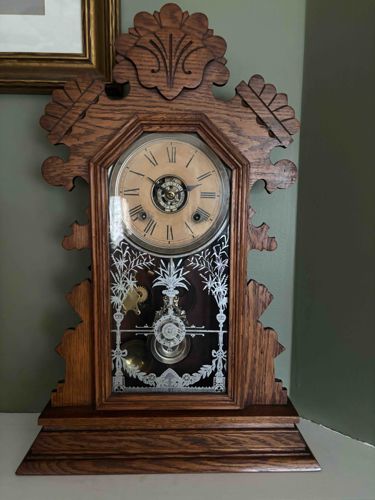
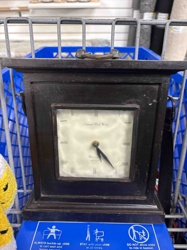
This is an antique mantel clock, likely dating from the late 19th to early 20th century, characterized by its robust oak case and decorative elements. The case is constructed from solid oak, displaying a rich, medium-brown finish with visible wood grain, indicative of quarter-sawn oak, which was popular during the Victorian and Arts and Crafts periods. The top of the case features an elaborate, carved pediment with foliate motifs, and the sides are adorned with complementary stylized scrolled cutouts. The clock face is octagonal, framed by a brass or gilt bezel, and features an off-white or aged 'parchment' colored dial with black Roman numerals for hours and smaller Arabic numerals for every five minutes. The hands are black, simple, and elegant, complementing the classic aesthetic. A visible escapement mechanism with intricate gears and an ornate pendulum bob is seen directly above the '6' position, adding a kinetic element to the face. Below the main clock face, a transparent glass panel allows a view into the movement. This glass is beautifully reverse-etched with intricate gilt (gold-colored) floral and foliate designs, creating a visually striking frame for the brass pendulum, which is visible swinging in the lower section of the case. The base of the clock is substantial, with multiple stepped moldings providing stability and a further decorative accent. The overall condition appears to be good for its age, with a consistent patina on the wood. There are no immediately obvious signs of major damage or repairs from the provided images, though closer inspection would be required to identify minor wear, scratches, or potential restoration. The craftsmanship, particularly the detailed carving and the etched glass, suggests a high-quality manufacture.
AI Appraisal Report
Based on my visual examination of the provided description, this Antique Oak Mantel Clock with Gilt Etched Glass appears to be a fine example from the late 19th to early 20th century. The robust oak case, particularly the visible quarter-sawn grain and detailed carved pediment with foliate motifs, aligns well with the aesthetic prevalent during the Victorian and Arts and Crafts periods. The overall condition looks good, with a consistent patina, suggesting careful preservation. The octagonal face with Roman and Arabic numerals, brass bezel, and especially the visible escapement and gilt etched glass with floral designs, are key features enhancing its decorative appeal and market desirability.
Current market conditions for antique mantel clocks are somewhat selective. While mass-produced pieces often fetch lower prices, clocks with distinctive aesthetic qualities, such as detailed carving, unusual design elements like the gilt etched glass, and a well-preserved original finish, tend to hold stronger interest. Comparable sales of similar high-quality oak mantel clocks with ornate details typically fall within the $400-$800 range, depending heavily on the maker and working condition. The visual kinetic element of the escapement and pendulum, combined with the elegant etched glass, make this piece more desirable than plainer examples.
Factors significantly impacting value include the functionality of the clock mechanism, the presence of the original key, and the absence of significant repairs or replacements. The detailed craftsmanship suggests a good manufacturer, but without a maker's mark, attribution remains speculative. Demand for such pieces remains steady among collectors of period decor and antique clock enthusiasts. The etched glass panel and visible escapement add rarity and visual interest, elevating its appeal.
It is crucial to note that this appraisal is based entirely on the provided textual description. A definitive assessment of authenticity and value would require a hands-on examination to inspect the internal movement for originality, condition, and any potential repairs. Verification of maker's marks, assessment of wood type and finish for originality, and a thorough check for damage, restoration, or parts replacement are vital. Physical inspection would also confirm the extent of wear and tear, and the working order of the mechanism, which significantly impacts the final valuation.