AI Appraisal Estimate

AI-generated estimates · not official valuations

From the user

What was submitted

Photo and notes provided by the user — not generated by AI

Submitted item photo
Submitted photo · June 4, 2026

User's notes

No additional notes provided.

AI analysis below

AI appraisal

AI analysis & estimate

AI-Generated · Verify before acting

Everything below is generated by AI for informational purposes only. AI can make mistakes — the AI may misidentify items or misattribute them (artist, maker, brand, designer, origin, era). This is not an official valuation and should not be used for insurance, sale, tax, estate, legal, or lending purposes — or any decision requiring a certified appraisal. It is not an authoritative claim about any person, brand, or rights holder — do not share or rely on it as a factual statement about a third party. Always consult qualified professionals before making financial decisions.

Read the full disclaimer

AI Identification

·Not independently authenticated·Verify before acting

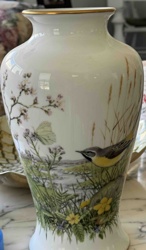
Italian Capodimonte Style Porcelain Eagle Figurine

Decorative Arts / Collectible Ceramics

AI Estimated Value

·Not an official valuation·Verify before acting

$450 - $650

As of June 4, 2026

AI Item Analysis

·AI can make mistakes·Verify before acting
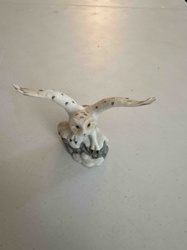
This is a large, hand-painted porcelain or ceramic figurine of an eagle, likely of Italian origin such as Capodimonte or a similar studio. The sculpture depicts an eagle in a dynamic 'wings spread' pose, perched atop a rocky outcropping. The physical characteristics include a complex color palette featuring matte finishes of slate gray and charcoal on the upper wing feathers, transitioning to earthen browns, tans, and creams on the body and head. The feathers are deeply molded, showing high textural detail. The talons are painted in a contrasting golden yellow with black tips. Notably, there is a flattened rectangular plaque area on the front of the rocky base which appears to have a worn or faded signature/marking, possibly indicating a limited edition or specific artist's mark. In terms of condition, the piece shows some minor surface dust and potential light fading of the matte paint on the wingtips, though it appears largely free of significant chips or structural cracks. The style and construction suggest a mid-to-late 20th-century manufacture date (circa 1960s-1980s). The craftsmanship is indicative of high-quality decorative porcelain, with attention paid to the anatomical realism of the bird's gaze and the varied textures of the plumage.
AI Appraisal Report

·AI can make mistakes·Verify before acting
I have virtually examined this large Italian porcelain eagle figurine, which exhibits the characteristic naturalistic style and matte 'biscuit' finish popular with Capodimonte studios like King’s or Tay during the late 20th century. Based on the visual evidence, the molding is high-quality, featuring the deep feather definition and dynamic composition typical of Italian master modelers of the 1970s. The condition appears 'Very Good' to 'Excellent,' with no apparent losses to the delicate wingtips or talons, though the faded signature on the base plaque suggests some surface wear that may indicate a production line piece rather than a unique artist-signed work. The market for large-scale Italian porcelain birds has stabilized after a period of decline. Demand remains steady among collectors of traditional Italian decorative arts, though it lacks the explosive growth seen in mid-century modern categories. Comparable sales for similar sized (20"+) eagles by reputable Italian studios range between $400 and $700. The specific 'wings spread' pose and anatomical realism elevate this piece above generic mass-produced ceramic imports. Critically, a definitive attribution to a specific studio or sculptor is restrained by the faded mark on the base. For a firm authentication, I would require an in-person inspection under UV light to detect possible restorations and a macro-photograph of the manufacturer's hallmark or artist's signature. Furthermore, provenance documentation or a certificate of authenticity from the original point of sale would significantly solidify the upper-tier valuation. Without physical handling to verify the clay body (hard-paste vs. soft-paste) and the presence of a stamped 'N' under a crown, I cannot definitively confirm the specific factory of origin.

Get your items appraised

Instant estimates of your treasures with AI-powered appraisals

Browse More Appraisals