Anchor Hocking Wexford Clear Glass Vase
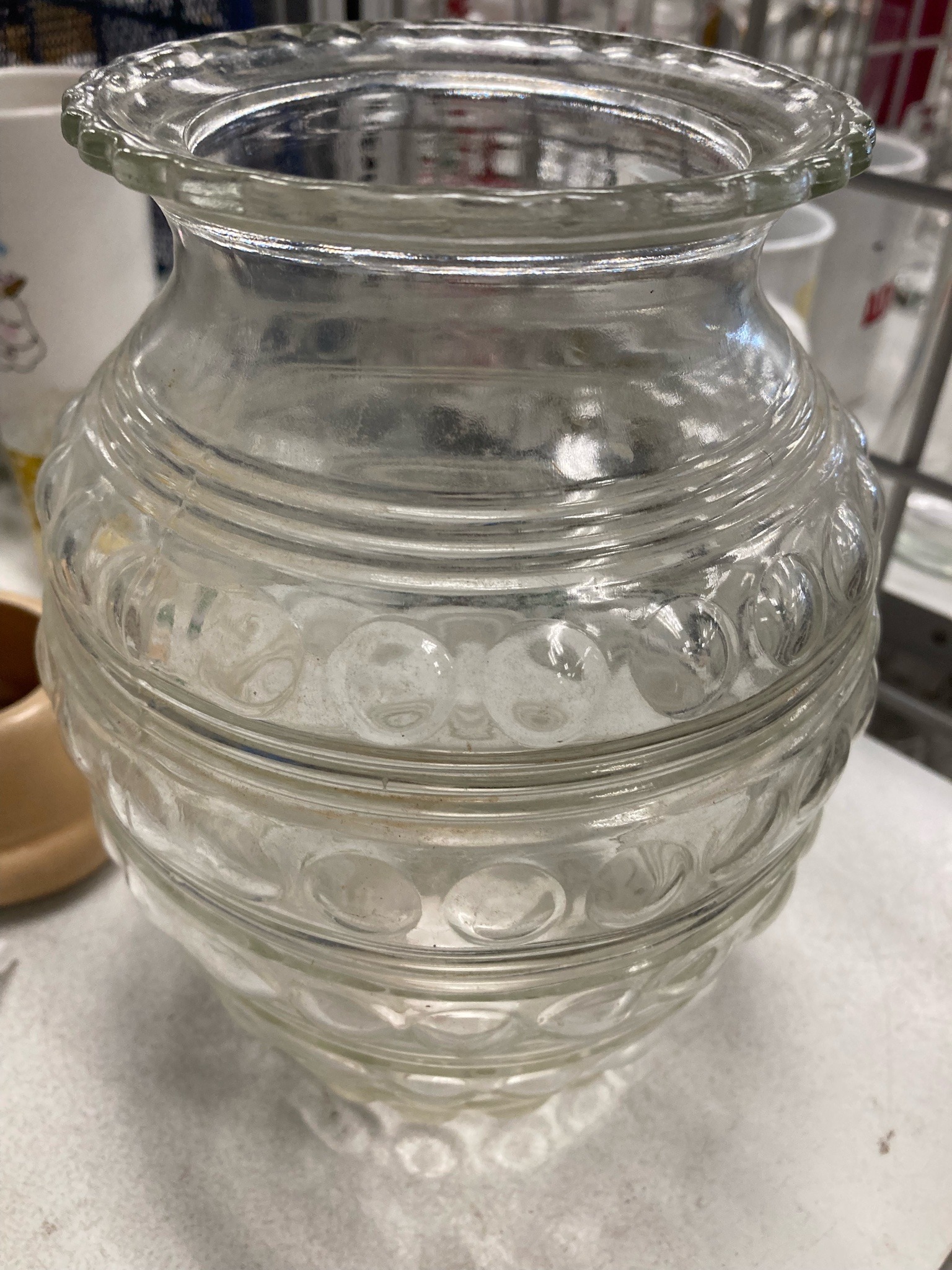
This is a vintage bulbous-shaped vase made of heavy clear pressed glass, specifically matching the popular 'Wexford' pattern produced by Anchor Hocking between 1967 and 1998. The piece features a distinct textured design consisting of horizontal bands and rows of raised circular or bubble-like indentations (often referred to as 'beaded' or 'thumbprint' style). The rim is flared with a scalloped or notched edge, which is characteristic of this mid-century glass line. Physically, the vase is medium-sized and appears to be made from soda-lime glass, exhibiting a clear, colorless appearance without significant yellowing. The construction shows some vertical mold seams, typical of mass-produced machine-made glassware of the late 20th century. Condition-wise, the glass maintains good clarity, though there is visible surface residue or cloudiness on the interior, likely due to water mineral deposits from previous use. No significant chips or cracks are immediately visible on the exterior pattern, although minor flea bites along the notches of the rim or base would be common for this age. This style was highly popular for its durability and brilliant reflective properties, often used for everyday floral arrangements.
AI-Generated Appraisal Disclaimer
Estimated Value
$10.00 - $22.00
Basic Information
Category
Collectible Glassware and Home Decor
Appraised On
April 25, 2026
Estimated Value
$10.00 - $22.00
Item Description
This is a vintage bulbous-shaped vase made of heavy clear pressed glass, specifically matching the popular 'Wexford' pattern produced by Anchor Hocking between 1967 and 1998. The piece features a distinct textured design consisting of horizontal bands and rows of raised circular or bubble-like indentations (often referred to as 'beaded' or 'thumbprint' style). The rim is flared with a scalloped or notched edge, which is characteristic of this mid-century glass line. Physically, the vase is medium-sized and appears to be made from soda-lime glass, exhibiting a clear, colorless appearance without significant yellowing. The construction shows some vertical mold seams, typical of mass-produced machine-made glassware of the late 20th century. Condition-wise, the glass maintains good clarity, though there is visible surface residue or cloudiness on the interior, likely due to water mineral deposits from previous use. No significant chips or cracks are immediately visible on the exterior pattern, although minor flea bites along the notches of the rim or base would be common for this age. This style was highly popular for its durability and brilliant reflective properties, often used for everyday floral arrangements.
Get Your Items Appraised
Instant estimates of your treasures with AI-powered instant appraisals