AI Appraisal Estimate

AI-generated estimates · not official valuations

From the user

What was submitted

Photo and notes provided by the user — not generated by AI

Submitted item photo
Submitted photo · June 17, 2026

User's notes

Japan

AI analysis below

AI appraisal

AI analysis & estimate

AI-Generated · Verify before acting

Everything below is generated by AI for informational purposes only. AI can make mistakes — the AI may misidentify items or misattribute them (artist, maker, brand, designer, origin, era). This is not an official valuation and should not be used for insurance, sale, tax, estate, legal, or lending purposes — or any decision requiring a certified appraisal. It is not an authoritative claim about any person, brand, or rights holder — do not share or rely on it as a factual statement about a third party. Always consult qualified professionals before making financial decisions.

Note

This analysis also relies on unverified notes provided by the user, which may be incomplete or inaccurate and could affect the result.

Read the full disclaimer

AI Identification

·Not independently authenticated·Verify before acting

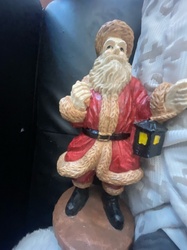
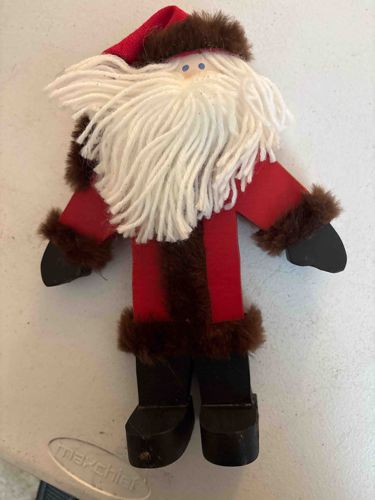
Vintage Japanese Folk Art Wooden Santa Claus Ornament

Holiday Decor / Vintage Christmas Collectibles

AI Estimated Value

·Not an official valuation·Verify before acting

$35.00 - $55.00

As of June 17, 2026

AI Item Analysis

·AI can make mistakes·Verify before acting
This is a vintage Santa Claus decorative figure or large ornament, likely produced in Japan during the mid-20th century (circa 1950s-1970s). The piece is constructed from cut wood segments and mixed media textiles. It stands approximately 5 to 7 inches tall. The body and limbs are crafted from flat-cut wood painted in a vibrant red for the suit and a matte black for the mittens and large, blocky boots. A distinctive feature is the use of brown faux fur or chenille trim on the hat, sleeve cuffs, and hemline, which provides a textural contrast to the hard wooden body. The facial area is painted cream with two simple blue dot eyes, almost entirely obscured by a thick, cascading beard made of looped white cotton yarn. Santa wears a red fabric cap that slumps to the side. The craftsmanship reflects a folk-art aesthetic, typical of Japanese export novelty items of that era. Condition-wise, the piece shows moderate age-related wear including some thinning of the yarn beard, minor paint loss on the edge of the left boot, and some flattening of the fur trim. There are no visible maker's marks on the front, though 'Japan' is often stamped on the underside of such pieces' feet or on a paper label on the reverse. The overall quality is characteristic of mass-produced holiday decorations meant for the Western market, valued today for their kitsch appeal and nostalgic design.

AI Appraisal Report

·AI can make mistakes·Verify before acting
I have conducted a visual examination of this vintage Japanese folk-art Santa Claus ornament. The piece demonstrates hallmarks of mid-century Japanese novelty production, specifically the combination of flat-cut wood and mixed media common between 1950 and 1965. The use of looped cotton yarn for the beard and the specific 'blocky' boot silhouette are consistent with export items from this period. The condition is fair to good; while the base structure remains intact, the noted paint loss on the boots and the compression of the faux fur trim are typical signs of age. The market for mid-century Japanese 'Kitsch' remains stable, driven by collectors of 'PutZ' style displays and nostalgic holiday decor. Comparables for similar wooden figures from Japan generally range from $25 to $60 depending on the complexity and condition of the textile elements. The presence of the 'Japan' designation is a key identifier, though the lack of a specific manufacturer's mark limits the value to that of a general collectible rather than a branded piece. Without a physical inspection, I cannot verify the stability of the adhesive used for the yarn or check for internal wood rot/pest damage. A full authentication would require a tactile assessment of the wood's density and an ultraviolet light test to ensure there are no modern acrylic pigment repairs or recent fabric replacements. Provenance identifying the original import house (such as Napco or Commodore) would further solidify this valuation.

Get your items appraised

Instant estimates of your treasures with AI-powered appraisals

Browse More Appraisals