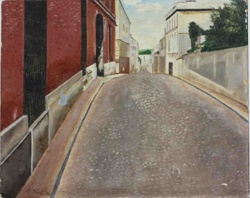
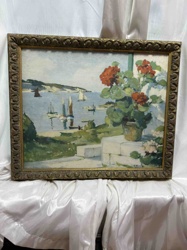
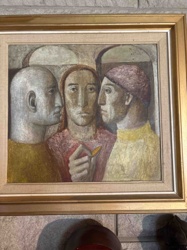
These notes were written by the person who submitted this item. Appraiser.AI has not verified them, and the AI's identification and estimate may rely on them.
AI Estimated Value
Not an official valuation
$1,800 - $2,500
AI estimate as of August 16, 2025 · verify with a professional before acting
AI-Generated · Verify before acting
Everything on this page is generated by AI for informational purposes only. AI can make mistakes — the AI may misidentify items or misattribute them (artist, maker, brand, designer, origin, era). This is not an official valuation and should not be used for insurance, sale, tax, estate, legal, or lending purposes — or any decision requiring a certified appraisal. It is not an authoritative claim about any person, brand, or rights holder — do not share or rely on it as a factual statement about a third party. Always consult qualified professionals before making financial decisions.
This analysis also relies on unverified notes provided by the user, which may be incomplete or inaccurate and could affect the result.
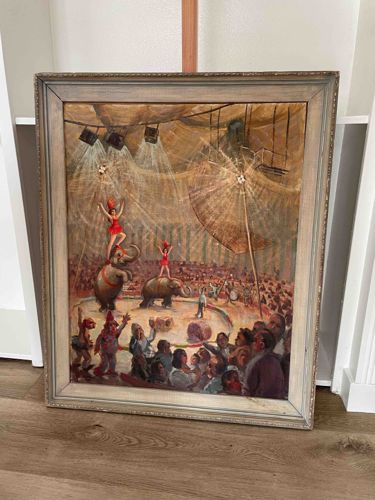
This is an oil painting titled "Circus Act" by the artist Markowski, painted in 1966. The artwork depicts a lively circus scene, focusing on an elephant act under vibrant spotlighting. The composition is dynamic, featuring two elephants with female performers balanced on their backs, surrounded by a ringmaster, a band, and an eager audience. The colors are rich and warm, dominated by browns, reds, and creams, creating a classic circus ambiance. Notably, the painting captures the spectacle with radiating light beams from several overhead spotlights, illuminating the main performance area. The artistic style appears to be representational with a degree of expressive brushwork, particularly noticeable in the rendering of the crowd and background elements. The overall condition of the painting seems good, though some minor wear or age-related patina on the frame is discernible. The frame itself is made of wood, painted in a light, possibly distressed, grayish-cream color, with a slight gold metallic inner edge, complementing the warm tones of the artwork. The choice of subject matter, combined with the detailed execution and evident skill, indicates a work of good quality craftsmanship typical of 20th-century figurative art.
AI Appraisal Report
Based on my visual examination of the provided image and the owner's details, I've assessed this "Circus Act" oil painting by Markowski, dated 1966. The condition appears good; the colors are vibrant, and the details coherent. Minor age-related patina on the frame is noted, which is a common and acceptable sign of age for a piece from 1966. The frame complements the artwork well with its distressed grayish-cream and gold inner edge.
Authenticity, based solely on imagery, is challenging. While the depicted style and subject matter align with what one might expect from a mid-20th-century figurative artist, definitive attribution requires more. Without direct physical inspection, I cannot confirm the paint's texture, canvas type, or Markowski's specific brushwork nuances. Therefore, this appraisal is based on the presumptive authenticity indicated by the owner and the image.
Regarding market conditions, 20th-century figurative art with engaging, narrative subjects like circus scenes often finds a stable market, particularly if the artist has established auction records or gallery representation. Works by artists like Markowski, who may not be widely known, typically appeal to collectors interested in decorative arts or specific thematic collections. Comparable sales for similar-sized oil paintings from this era, by artists of comparable renown (or lack thereof), suggest a moderate value range.
Demand for unique, well-executed pieces like this is generally consistent. While it may not be a "rare" piece in the sense of a masterwork, its originality and subject matter contribute to its desirability. The value is significantly impacted by the artist's market standing, which is not fully ascertainable from the information provided.
For full authentication, a hands-on examination is crucial to assess pigment quality, brushstroke authenticity, and any potential conservation issues. Provenance documentation (e.g., bills of sale, exhibition history) would solidify its authenticity. Scientific testing, such as pigment analysis or UV light examination, could confirm age and artistic techniques. Without these, the appraisal remains conditional on the assumed authenticity.