AI identification & appraisal estimate

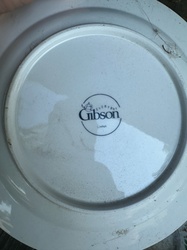
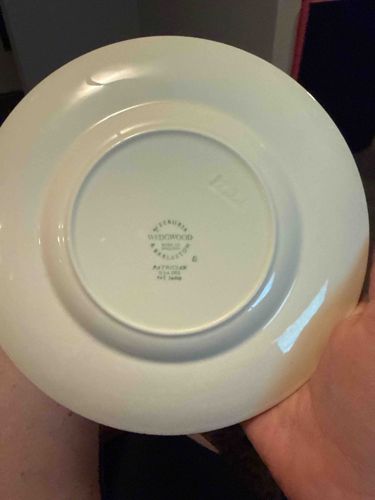
Wedgwood Barlaston of Etruria 'Patrician' Dinner Plate

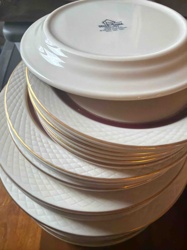
Submitted photo of Wedgwood Barlaston of Etruria 'Patrician' Dinner Plate
Photo submitted by the user — not generated by AI

AI Estimated Value

Not an official valuation

$15 - $25

AI estimate as of October 4, 2025 · verify with a professional before acting

AI-Generated · Verify before acting

Everything on this page is generated by AI for informational purposes only. AI can make mistakes — the AI may misidentify items or misattribute them (artist, maker, brand, designer, origin, era). This is not an official valuation and should not be used for insurance, sale, tax, estate, legal, or lending purposes — or any decision requiring a certified appraisal. It is not an authoritative claim about any person, brand, or rights holder — do not share or rely on it as a factual statement about a third party. Always consult qualified professionals before making financial decisions.

Read the full disclaimer

AI Item Analysis

This item is the underside of a ceramic dinner plate, identified by its circular shape and the characteristic foot ring. The plate is made of white or off-white ceramic, likely earthenware or fine china, given the visible manufacturing marks. The color appears consistent across the surface, with a slight sheen indicating a glazed finish. The overall condition, as seen from the underside, appears good, with no obvious chips, cracks, or significant crazing visible. There might be some minor surface wear or discoloration on the edge, possibly from stacking or use, but this is not definitive from the image provided. The most prominent feature is the green backstamp located within the foot ring. The backstamp is circular and reads "WEDGWOOD" at the top, followed by "BARLASTON OF ETRURIA" underneath, indicating its manufacturer and a key period or style type. Below this, it is marked "PARTRICIAN" (likely 'Patrician' as the pattern name) directly above "OVEN TO TABLE" and "MADE IN ENGLAND". The 'OVEN TO TABLE' marking often suggests durability and versatility in modern ceramics. The lettering is clear and legible, indicating good preservation of the mark. There's also a faint impressed or embossed mark on the glaze surface, partially visible to the right of the printed backstamp, but it is too indistinct to decipher. Based on the 'Barlaston' and 'Etruria' markings, this plate likely dates from the mid-20th century, specifically after Wedgwood moved its production to Barlaston in the 1940s. The 'Patrician' pattern is known for its classic and often minimalist design, reinforcing its estimated age and style. The craftsmanship appears to be of high quality, typical of Wedgwood products.
AI Appraisal Report

I have examined the image of this Wedgwood Barlaston of Etruria 'Patrician' Dinner Plate's underside. Visually, the plate appears to be in good overall condition, with no overt chips, cracks, or significant crazing visible from this perspective. The legibility of the green printed backstamp, reading "WEDGWOOD," "BARLASTON OF ETRURIA," "PARTRICIAN (likely Patrician)," "OVEN TO TABLE," and "MADE IN ENGLAND," strongly supports its authenticity as a genuine Wedgwood piece from the mid-20th century (post-1940s). The 'Oven to Table' marking suggests durability. The impressed mark is too indistinct to decipher, but this is common. The quality of the manufacturing appears consistent with Wedgwood standards. Market conditions for individual mid-20th century Wedgwood dinner plates from common patterns like 'Patrician' are generally moderate. While Wedgwood is a respected brand, single plates rarely command high prices unless they are part of a rare pattern or a complete, pristine set. Comparables for individual plates in good condition typically fetch between $10-$30. Demand for 'Patrician' is stable but not exceptionally high. Rarity is low as this was a mass-produced pattern for everyday use. Factors impacting value positively include its good apparent condition and clear backstamp. The primary limitation in authenticity verification from an image alone is the inability to conduct a physical inspection for hairline cracks, chips on the rim, surface wear, crazing that might not be evident in direct lighting, or to assess the weight and feel of the ceramic. A full, in-person examination would involve checking the plate's front surface for decoration, wear, and overall appeal. Provenance documentation is not typically required for common dinnerware pieces of this type. Scientific testing would be excessive for an item of this value.

Keep exploring

More dinnerware appraisals

Get your items appraised

Instant AI-powered appraisal estimates from a photo

Browse More Appraisals