These notes were written by the person who submitted this item. Appraiser.AI has not verified them, and the AI's identification and estimate may rely on them.
AI Estimated Value
Not an official valuation
$20-40
AI estimate as of August 18, 2025 · verify with a professional before acting
AI-Generated · Verify before acting
Everything on this page is generated by AI for informational purposes only. AI can make mistakes — the AI may misidentify items or misattribute them (artist, maker, brand, designer, origin, era). This is not an official valuation and should not be used for insurance, sale, tax, estate, legal, or lending purposes — or any decision requiring a certified appraisal. It is not an authoritative claim about any person, brand, or rights holder — do not share or rely on it as a factual statement about a third party. Always consult qualified professionals before making financial decisions.
This analysis also relies on unverified notes provided by the user, which may be incomplete or inaccurate and could affect the result.
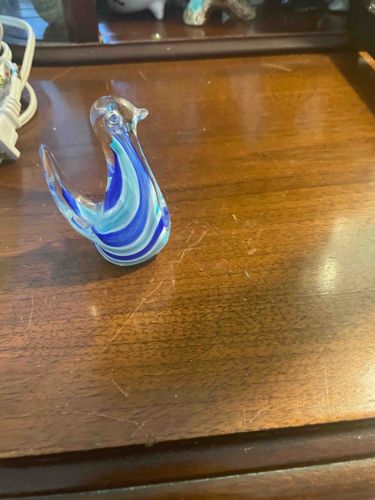
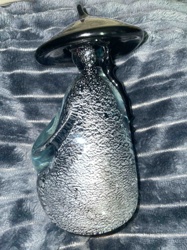
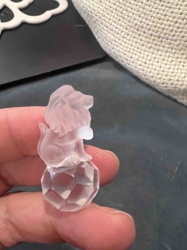
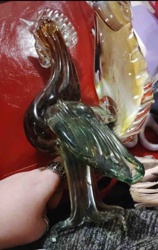
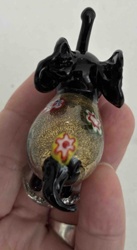
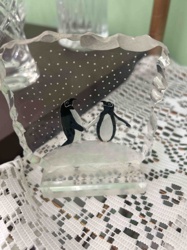
This item is a miniature glass figurine, sculpted to resemble a swan or similar waterfowl. It is small in stature, likely no more than a few inches in height and length, designed as a decorative accent. The main body of the swan is crafted from clear glass, through which swirling patterns of opaque white, light blue, and royal blue glass are visible. These colors are integrated within the molten glass during the blowing or lampworking process, creating fluid, organic stripes that suggest movement or water. The swan has a distinct head and beak, a graceful curving neck, and a fanned tail, all formed from the clear glass, with some of the colored swirls extending into the tail section. The craftsmanship appears to be typical of art glass produced for decorative retail, possibly hand-blown or lampworked, which would involve shaping the glass while molten using heat and tools. There are no immediately visible maker's marks, signatures, or stamps, which is common for smaller, mass-produced decorative glass pieces. The condition appears good, with no obvious chips, cracks, or significant abrasions visible from the provided image. The surface appears smooth and glossy, indicative of well-maintained glass. Given the style and common availability of such items, it likely dates from the late 20th century to early 21st century. The quality is consistent with decorative glass often found in gift shops or craft markets, emphasizing color and form over intricate detail or rare materials. The overall aesthetic is whimsical and aquatic, reflecting a popular type of decorative glass art.
AI Appraisal Report
I have examined the provided image of the Miniature Swirl-Pattern Glass Swan Figurine, along with the detailed description. Based on this visual inspection, the item appears to be in good condition, showing no obvious chips, cracks, or significant abrasions. The glossy surface suggests it has been well-maintained. The craftsmanship, featuring clear glass with integrated swirls of opaque white, light blue, and royal blue, is consistent with decorative art glass produced by hand-blowing or lampworking.
Authenticity, when based solely on images, is always limited. While the style and execution are typical of decorative glass, without physical examination, I cannot definitively confirm the material composition, detect subtle imperfections, or verify manufacturing techniques with 100% certainty. The absence of maker's marks is common for such items, making attribution difficult without provenance documentation. In-person examination would allow for tactile inspection, detailed magnification to assess craftsmanship depth, and potential UV light testing for material consistency; however, given the nature of the item, specific scientific testing is unlikely to be warranted.
Concerning market conditions, miniature decorative glass figurines like this swan generally fall into the affordable collectibles or giftware category. Demand is steady but not exceptional, driven by aesthetic appeal rather than historical significance or rarity. Comparable items, often found in gift shops, craft markets, or online platforms, typically range from modest prices. Factors impacting value include the quality of the glass, the intricacy of the swirling patterns, and overall condition. Without association with a renowned maker, brand, or unique design, its value remains primarily decorative. Its aesthetic appeal is charming, but it lacks the rarity or historical context to command a high price.