AI estimate as of August 11, 2025 · verify with a professional before acting
AI-Generated · Verify before acting
Everything on this page is generated by AI for informational purposes only. AI can make mistakes — the AI may misidentify items or misattribute them (artist, maker, brand, designer, origin, era). This is not an official valuation and should not be used for insurance, sale, tax, estate, legal, or lending purposes — or any decision requiring a certified appraisal. It is not an authoritative claim about any person, brand, or rights holder — do not share or rely on it as a factual statement about a third party. Always consult qualified professionals before making financial decisions.
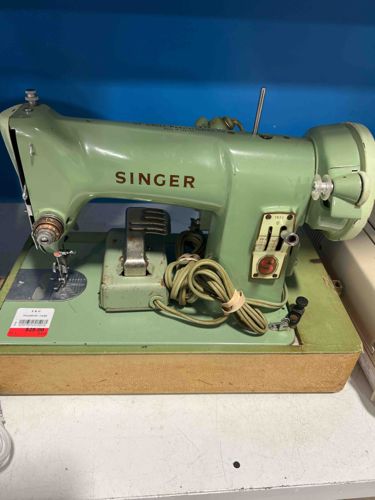
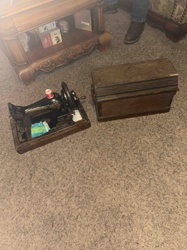
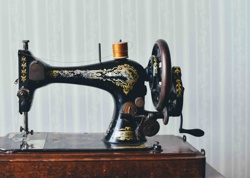
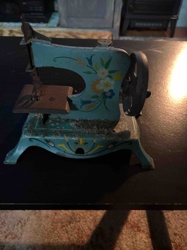
This item is a vintage Singer sewing machine, likely dating from the mid-20th century, possibly the 1950s or 1960s, given its distinctive pastel green color and overall design. The machine head is constructed from metal, painted in a light, soft green, which was a popular color for home appliances of that era. The 'SINGER' logo is prominently displayed in a contrasting dark color, likely white or cream, on the side of the machine head. It features a visible foot pedal made of metal, possibly chrome or polished steel, with a matching painted base that integrates with the machine. An electrical cord, appearing to be original and wrapped with a rubber band, extends from the foot pedal. The machine is housed within a wooden base, which shows some signs of wear and discoloration, suggesting it's made from a light-colored wood like birch or maple, possibly with a clear varnish. The base appears integrated rather than a separate carrying case. Notable features include a thread spool pin at the top, various adjustment dials and levers on the right side of the machine head, typical for stitch length and tension control. There are some visible signs of use and age, including minor scuffs on the painted surfaces and wear on the wooden base. A red and white sticker with a barcode and 'S29.99' indicates it was likely purchased from a thrift store or second-hand vendor. The machine's robust metal construction suggests good quality and durability, characteristic of Singer machines from this period. The overall condition appears to be good for its age, with no apparent major damage or repairs, only typical superficial wear.
AI Appraisal Report
I have examined the provided image of the Vintage Singer Sewing Machine (Green). Based on the visual evidence, this appears to be an authentic Singer machine, likely from the 1950s or early 1960s, a period when colored appliances, particularly pastel shades like this green, were popular. The "SINGER" logo, machine head design, and foot pedal style are consistent with models produced during this era.
From the image, the condition appears to be good for its age. There are visible signs of use, including minor scuffs on the painted surfaces and wear on the wooden base, which is expected for an item of this vintage. The electrical cord appears original, and the machine seems complete with its foot pedal and integrated wooden base. The "S29.99" sticker suggests a prior secondary market purchase, likely from a thrift store, which is not uncommon for such items.
In terms of market conditions, vintage Singer sewing machines are generally stable. While not exceptionally rare, machines in good working order, especially those with appealing colors like this pastel green, attract hobbyists, collectors, and those seeking durable, functional machines. Comparables would include other mid-century Singer models such as the 185 (often found in green) or 201.
Factors impacting value include its attractive color, apparent completeness, and relatively good condition. The main limitation with image-based appraisal is the inability to test functionality. Without physically examining the machine, I cannot verify if it is in working order, if the motor runs smoothly, or if any internal components are seized or damaged. I also cannot assess the integrity of the electrical components, which would require in-person inspection and possibly testing by a qualified technician to ensure safety and functionality. Provenance documentation beyond the sticker would also be helpful but is often absent for such items.
Full authentication would require a physical inspection to: 1) Verify serial numbers for precise dating, 2) Test electrical components for safety and function, 3) Assess internal mechanical condition and completeness, and 4) Confirm the absence of non-original repairs or significant internal damage.