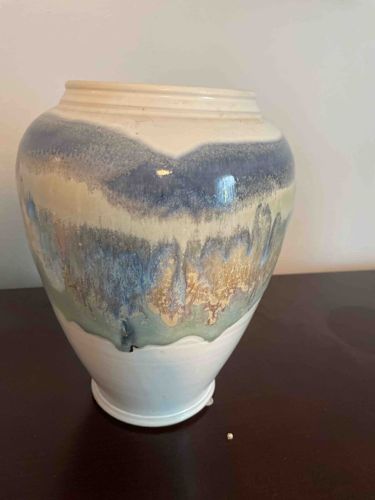
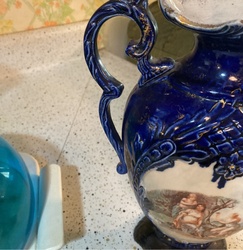
Sturbridge Pottery Large Vase. Not from historic site gift shop 2007
These notes were written by the person who submitted this item. Appraiser.AI has not verified them, and the AI's identification and estimate may rely on them.
AI Estimated Value
Not an official valuation
$150-250
AI estimate as of August 4, 2025 · verify with a professional before acting
AI-Generated · Verify before acting
Everything on this page is generated by AI for informational purposes only. AI can make mistakes — the AI may misidentify items or misattribute them (artist, maker, brand, designer, origin, era). This is not an official valuation and should not be used for insurance, sale, tax, estate, legal, or lending purposes — or any decision requiring a certified appraisal. It is not an authoritative claim about any person, brand, or rights holder — do not share or rely on it as a factual statement about a third party. Always consult qualified professionals before making financial decisions.
This analysis also relies on unverified notes provided by the user, which may be incomplete or inaccurate and could affect the result.
The item is a large ceramic vase, identified through context as a 'Sturbridge Pottery Large Vase'. It features a bulbous, slightly ovoid body that tapers towards a narrower foot and a slightly wider, everted rim. The primary material is pottery, likely stoneware or earthenware, given its substantial appearance and the nature of the glazes. The color palette of the glazes is striking, featuring a drip-glaze or pour-over technique. The lower portion of the vase is unadorned, a creamy off-white or light beige, providing a solid base. Above this, a transition of glazes flows downwards, starting with a muted, dusty blue, transitioning into streaks of creamy yellow or pale gold, and then into seafoam green and deeper teal tones. The glazes exhibit varying opacities and textures, with some areas appearing more matte and others glossy and reflective, indicating a reactive or crystalline glaze effect, especially in the golden and blue sections. There are visible horizontal ridged lines near the rim, suggesting it was thrown on a potter's wheel, indicative of handcrafted manufacturing. The overall construction appears robust and well-executed, with no obvious signs of major cracks or chips visible from the presented angle. One notable feature is the organic flow of the glazes, which suggests a unique, artisan-made piece rather than mass production. The base shows a slight indentation or foot ring, common in pottery. While specific maker's marks are not visible, the 'Sturbridge Pottery' designation implies a regional studio or collective. Based on the context provided, the piece is not from a historic site gift shop and was explicitly dated 2007. This suggests a relatively modern creation, likely late 20th to early 21st century. The quality of the glaze work and form indicates skilled craftsmanship.
AI Appraisal Report
Upon examining the provided image of the 'Sturbridge Pottery Large Vase,' I note its robust, handcrafted appearance. The bulbous form tapering to a narrower foot, combined with the distinct horizontal ridged lines near the everted rim, strongly indicates it was wheel-thrown. The drip-glaze technique, featuring flowing transitions from creamy off-white to muted blue, yellow, seafoam green, and teal, showcases considerable artistic skill. The varying opacities and evident reactive or crystalline effects in the glazes further suggest a unique artisan piece. Its apparent excellent condition, with no visible chips or cracks from this angle, contributes positively to its value.
Given the "Sturbridge Pottery" designation and the 2007 date, this is a relatively modern, regional studio pottery piece. While not antique, there is a consistent market for well-executed contemporary art pottery. Demand for unique, quality handcrafted ceramics remains steady, particularly pieces with distinctive glaze work like this. Its rarity is typical for artisan-made items, as each piece is unique.
Factors impacting value include the artistic quality of the glazes, the substantial size, and its overall display appeal. While the general market for studio pottery can vary, pieces from known regional potteries with strong aesthetics perform well. I would place this piece in the mid-range for contemporary studio pottery.
Limitations: My authenticity verification is based purely on visual assessment of the image. For full authentication and a more precise valuation, an in-person examination is crucial. This would allow for a thorough condition report, tactile assessment of materials, and examination of the base for potential maker's marks or signatures that are not visible here. Provenance documentation, such as original sales receipts, could also further solidify its origins and potentially enhance value. Without physical inspection, I cannot confirm materials, the exact quality of all glaze surfaces, or detect any subtle damage not apparent in the photo. Furthermore, while the 2007 date is provided, an in-person inspection would allow me to verify if there is any date mark on the actual piece.