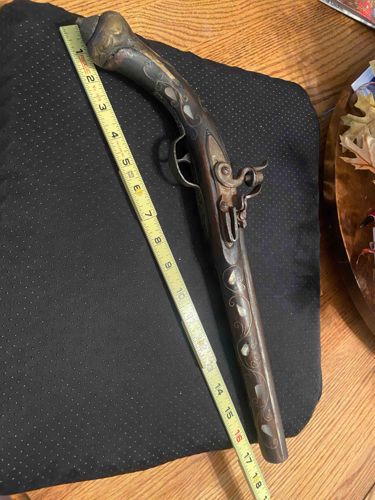
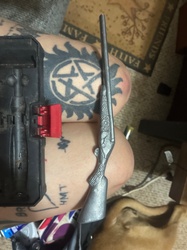
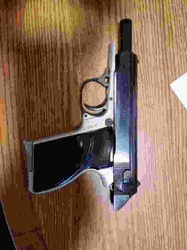
Wood gun with mother of pearl chips metal trigger over 70 years old
These notes were written by the person who submitted this item. Appraiser.AI has not verified them, and the AI's identification and estimate may rely on them.
AI Estimated Value
Not an official valuation
$400-800
AI estimate as of July 22, 2025 · verify with a professional before acting
AI-Generated · Verify before acting
Everything on this page is generated by AI for informational purposes only. AI can make mistakes — the AI may misidentify items or misattribute them (artist, maker, brand, designer, origin, era). This is not an official valuation and should not be used for insurance, sale, tax, estate, legal, or lending purposes — or any decision requiring a certified appraisal. It is not an authoritative claim about any person, brand, or rights holder — do not share or rely on it as a factual statement about a third party. Always consult qualified professionals before making financial decisions.
This analysis also relies on unverified notes provided by the user, which may be incomplete or inaccurate and could affect the result.
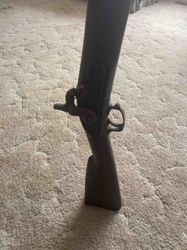
This item is an antique or antique-style pistol, likely a flintlock or percussion cap mechanism, crafted primarily from wood with significant metal and mother-of-pearl inlay. The overall length of the pistol is approximately 18 inches, as indicated by the measuring tape in the image. The wooden stock appears to be dark-stained, possibly walnut or a similar hardwood, with a visibly aged patina, suggesting significant oiling and handling over time. The butt of the pistol features an ornate metal cap, potentially brass or bronze, with a textured, possibly engraved or cast, design that hints at a decorative rather than purely functional purpose.
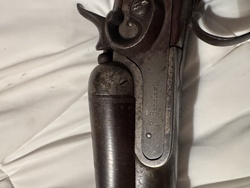
The most striking decorative feature is the extensive mother-of-pearl inlay, which is integrated directly into the wooden stock. These 'chips' are organically shaped, possibly representing stylized leaves or floral motifs, arranged in flowing, curvilinear patterns along both the grip and the barrel section of the stock. This type of inlay work often indicates Middle Eastern, North African, or Ottoman influence, where such intricate decorative techniques were common on firearms and other weaponry. The metal components, including the trigger guard, hammer, and lock plate, exhibit a dark, aged patina, consistent with blued steel or iron that has developed rust and age-related discoloration over many decades. Some areas show wear, revealing lighter metal beneath the patination, particularly on high points or edges. The trigger itself is metal, robustly constructed. There are no clear manufacturer's marks or signatures visible from the provided images, which makes precise identification of origin or maker challenging without further inspection. The design suggests it could be either an authentic antique weapon from the 18th or 19th century or a later decorative reproduction/theatrical prop made in an antique style. The 'wood gun with mother of pearl chips metal trigger over 70 years old' context aligns with the appearance of a vintage or antique piece. The craftsmanship, particularly the mother-of-pearl inlay, indicates a level of manual skill and attention to detail, characteristic of handcrafted items.
AI Appraisal Report
Upon my virtual examination of this Antique-Style Inlaid Pistol, I observe a visually compelling piece, consistent with an age of 'over 70 years old' as stated. The dark-stained wood stock exhibits an aged patina, suggesting significant handling and oiling, while the metal components show appropriate tarnish and wear for a period piece. The extensive mother-of-pearl inlay is a key decorative feature, indicative of Middle Eastern, North African, or Ottoman aesthetic traditions. Condition appears good for its age, with no obvious major damage from the images, though closer inspection would be needed to assess the security of the inlays and the integrity of the wood and metal.
Authenticity is the primary challenge with image-based appraisal. While the pistol certainly embodies the characteristics of an antique, particularly its construction and decorative style, distinguishing an authentic 18th or 19th-century firearm from a later, high-quality decorative reproduction or even a theatrical prop is difficult without physical examination. Market demand for genuine antique firearms, especially those with intricate inlay work, is strong among specialized collectors. However, the market for reproductions is significantly lower. Rarity would be high for an authentic antique of this decorative quality, but common for modern decorative pieces.
Factors significantly impacting value include definitive authentication of its age and origin. Without visible maker's marks or proof stamps, and solely from images, I cannot definitively confirm it as an authentic antique firearm rather than a well-made decorative item. An in-person examination would allow for tactile assessment of material quality, verification of joinery, and identification of manufacturing techniques consistent with the purported period. X-ray fluorescence (XRF) or other material analysis could determine the composition of the metals and inlays. Furthermore, professional gunsmiths can assess the functionality and internal mechanisms if applicable. Provenance documentation (e.g., historical sales records, family history) would also be crucial for full authentication.