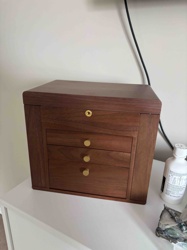
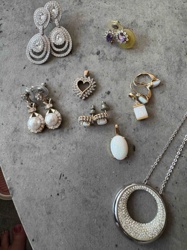
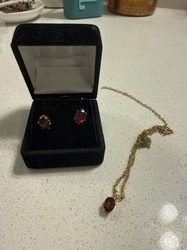
These notes were written by the person who submitted this item. Appraiser.AI has not verified them, and the AI's identification and estimate may rely on them.
AI Estimated Value
Not an official valuation
$450-650
AI estimate as of November 22, 2025 · verify with a professional before acting
AI-Generated · Verify before acting
Everything on this page is generated by AI for informational purposes only. AI can make mistakes — the AI may misidentify items or misattribute them (artist, maker, brand, designer, origin, era). This is not an official valuation and should not be used for insurance, sale, tax, estate, legal, or lending purposes — or any decision requiring a certified appraisal. It is not an authoritative claim about any person, brand, or rights holder — do not share or rely on it as a factual statement about a third party. Always consult qualified professionals before making financial decisions.
This analysis also relies on unverified notes provided by the user, which may be incomplete or inaccurate and could affect the result.
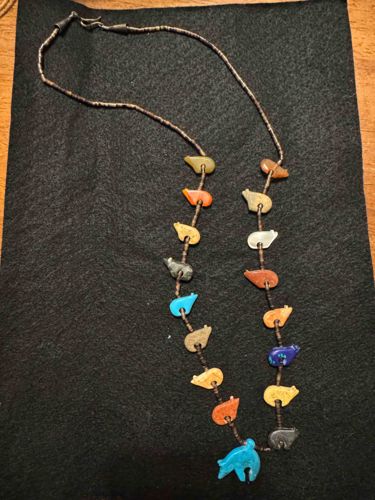
This is a multicolored Native American Zuni fetish necklace featuring hand-carved bear figures. The necklace consists of approximately 16 individual bear fetishes, each carved from a different type of stone, exhibiting a wide array of natural colors including various shades of turquoise, white, amber, rust, olive green, gray, and dark blue (lapis lazuli perhaps). Each bear is uniquely shaped, typically ranging from approximately 0.5 to 1 inch in length, with the largest, a vibrant blue bear, appearing as a focal point at the bottom center. The bears are strung individually along a thin, dark brown cord, likely leather or a synthetic equivalent, with small, possibly heishi-style, spacer beads between each fetish. The bears themselves are drilled through from back to front, allowing them to hang horizontally. The cord extends upwards, transitioning into a segment of tiny, cylindrical, dark-colored beads (possibly hematite or another dark stone) that form the upper part of the necklace. The necklace is fastened with a simple hook-and-eye style clasp, which appears to be made of a dark-toned metal, possibly copper or oxidized silver, correlating with traditional Native American jewelry findings. The overall craftsmanship suggests a handcrafted origin, indicative of Zuni or other tribal artistry known for fetish carvings. There are no obvious signs of significant damage, repairs, or excessive wear visible in the images; the stones appear generally smooth with natural variations and some slight surface patina might be present on the cord or clasp due to age and handling. The carving style is somewhat simplified but clearly represents bear forms, prized for their symbolic meaning of strength and courage in many Native American cultures. Given the 'jewelry box of Native American items' context, this piece likely dates from the mid to late 20th century.
AI Appraisal Report
Upon my visual examination of this Native American Zuni fetish necklace, I assess its value based on the provided images and description. The piece features approximately 16 hand-carved bear fetishes, a style strongly associated with Zuni Pueblo artisans. The use of diverse, colorful stones like turquoise, lapis lazuli, and various jaspers is characteristic of this art form. The individual carving of each bear, while somewhat simplified, is consistent with authentic, handcrafted Zuni work from the mid-to-late 20th century. The condition appears to be very good, with no visible damage to the stones and only minor signs of age-appropriate wear on the cord and clasp.
The market for authentic Zuni fetish necklaces is steady, with strong demand from collectors of Native American art. Similar multi-stone, multi-strand fetish necklaces from recognized Zuni artists or families can command significantly higher prices. This piece, being a single strand with a good number of well-carved fetishes, places it in a competitive mid-range category. Its value is positively impacted by the variety and quality of the stones used and the overall craftsmanship.
However, this appraisal is limited by the inability to physically inspect the item. A definitive authentication would require an in-person examination to confirm the stone types (e.g., verifying natural vs. treated turquoise), identify the artist via a signature or hallmark on a bear or the findings, and confirm the material of the clasp and beads. Without a known artist or provenance, the value is based on its quality as a well-made example of the genre. Should an artist like the Leekya or Panteah family be identified, the value could increase substantially.