AI Appraisal Estimate

AI-generated estimates · not official valuations

From the user

What was submitted

Photo and notes provided by the user — not generated by AI

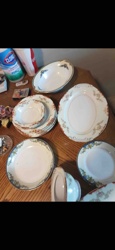
Submitted item photo
Submitted photo · June 3, 2026

User's notes

No additional notes provided.

AI analysis below

AI appraisal

AI analysis & estimate

AI-Generated · Verify before acting

Everything below is generated by AI for informational purposes only. AI can make mistakes — the AI may misidentify items or misattribute them (artist, maker, brand, designer, origin, era). This is not an official valuation and should not be used for insurance, sale, tax, estate, legal, or lending purposes — or any decision requiring a certified appraisal. It is not an authoritative claim about any person, brand, or rights holder — do not share or rely on it as a factual statement about a third party. Always consult qualified professionals before making financial decisions.

Read the full disclaimer

AI Identification

·Not independently authenticated·Verify before acting

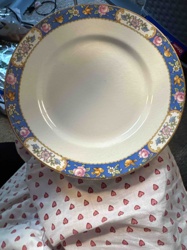
Vintage Oval Porcelain Serving Platter with Floral Border

Antique/Vintage Tableware & Ceramics

AI Estimated Value

·Not an official valuation·Verify before acting

$45.00-$75.00

As of June 3, 2026

AI Item Analysis

·AI can make mistakes·Verify before acting
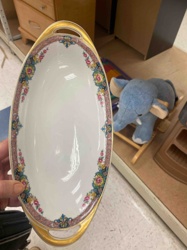
This is a vintage oval serving platter, likely crafted from white bone china or porcelain. The piece features a shallow well and a wide, sloping rim typical of service ware from the early to mid-20th century. The decorative scheme consists of a delicate transfer-printed floral border featuring small pink and yellow blossoms interspersed with green foliage. These floral vignettes are separated by geometric, lattice-style panels containing yellow accents, all framed by thin, elegant black or dark grey scrollwork. A fine metallic trim line, possibly silver or platinum, is visible along the outer scalloped edge and the inner rim of the well, indicating a higher quality of manufacture intended for formal dining. Based on the aesthetic, it reflects a blend of late Art Deco and mid-century traditional styles. The surface appears to have a high-gloss glaze finish. Regarding condition, there are no immediate signs of large chips or cracks visible on the upward-facing surface; however, there appears to be slight rubbing or wear to the metallic trim on the rim, which is consistent with age and occasional domestic use. The white ground remains bright, suggesting it has been well-maintained. The craftsmanship is refined, with the symmetrical placement of the transfer patterns indicating a professional factory production, possibly by a European or American maker such as Noritake, Haviland, or a similar porcelain house.
AI Appraisal Report

·AI can make mistakes·Verify before acting
Upon my visual inspection of this vintage oval porcelain serving platter, I find it to satisfy the aesthetic markers of mid-century fine china, likely dating between 1940 and 1960. The transfer-printed floral vignettes and lattice-style panels suggest a production influenced by European dinnerware traditions, though common to high-volume manufacturers like Noritake or various Bavarian porcelain houses. The bright white ground and high-gloss glaze remain in excellent condition. My examination reveals minor silver/platinum trim wear, a common 'use-wear' trait that slightly lowers the collectible tier but does not negate its functional or decorative appeal. The current market for mid-century traditional porcelain is saturated, characterized by high supply and moderate demand. Comparables for un-marked or common-patterned platters of this size typically hammer at auction or retail in the $40 to $80 range. Rarity is low, as these were often part of 12-place setting services produced in large quantities. Critically, a definitive valuation is limited by the lack of a visible backstamp or maker’s mark in the images provided. A physical inspection is required to check for 'pilling' in the glaze, microscopic 'flea bites' on the foot ring, and to confirm the composition (bone china vs. hard-paste porcelain). Authentic provenance or an original box would increase the value toward the higher end of the range. Full authentication would involve verifying the metallic content of the trim and identifying the specific pattern via a catalog raisonné or a registry such as Replacements, Ltd. Without seeing the underside, this remains an estimated market value based on style and visible condition alone.

Get your items appraised

Instant estimates of your treasures with AI-powered appraisals

Browse More Appraisals